
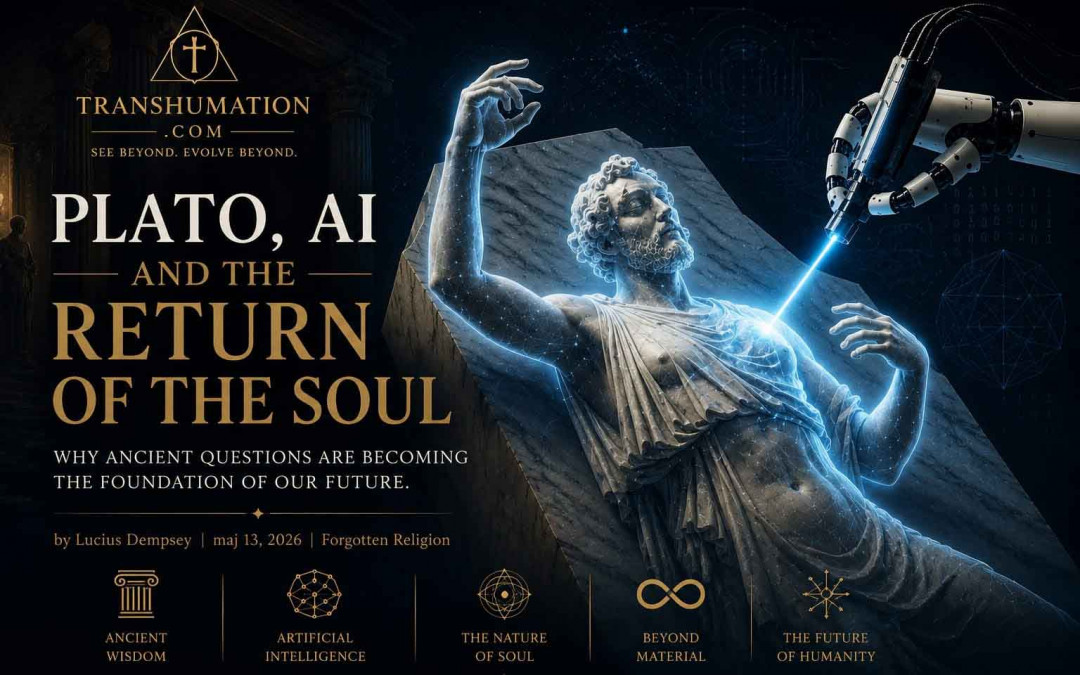
For centuries, modern civilization treated the soul as intellectual debris left behind by religion.
It belonged to priests, poets and ancient philosophers: an invisible substance supposedly occupying the body, surviving death and preserving the identity of a person after matter had failed. As biology and neuroscience became more powerful, the concept appeared increasingly unnecessary. Thought could be associated with the brain. Personality could be altered by injury, disease and chemistry. Memory could fail when biological structures failed.
The soul seemed to retreat wherever science advanced.
Then technology changed the direction of the argument.
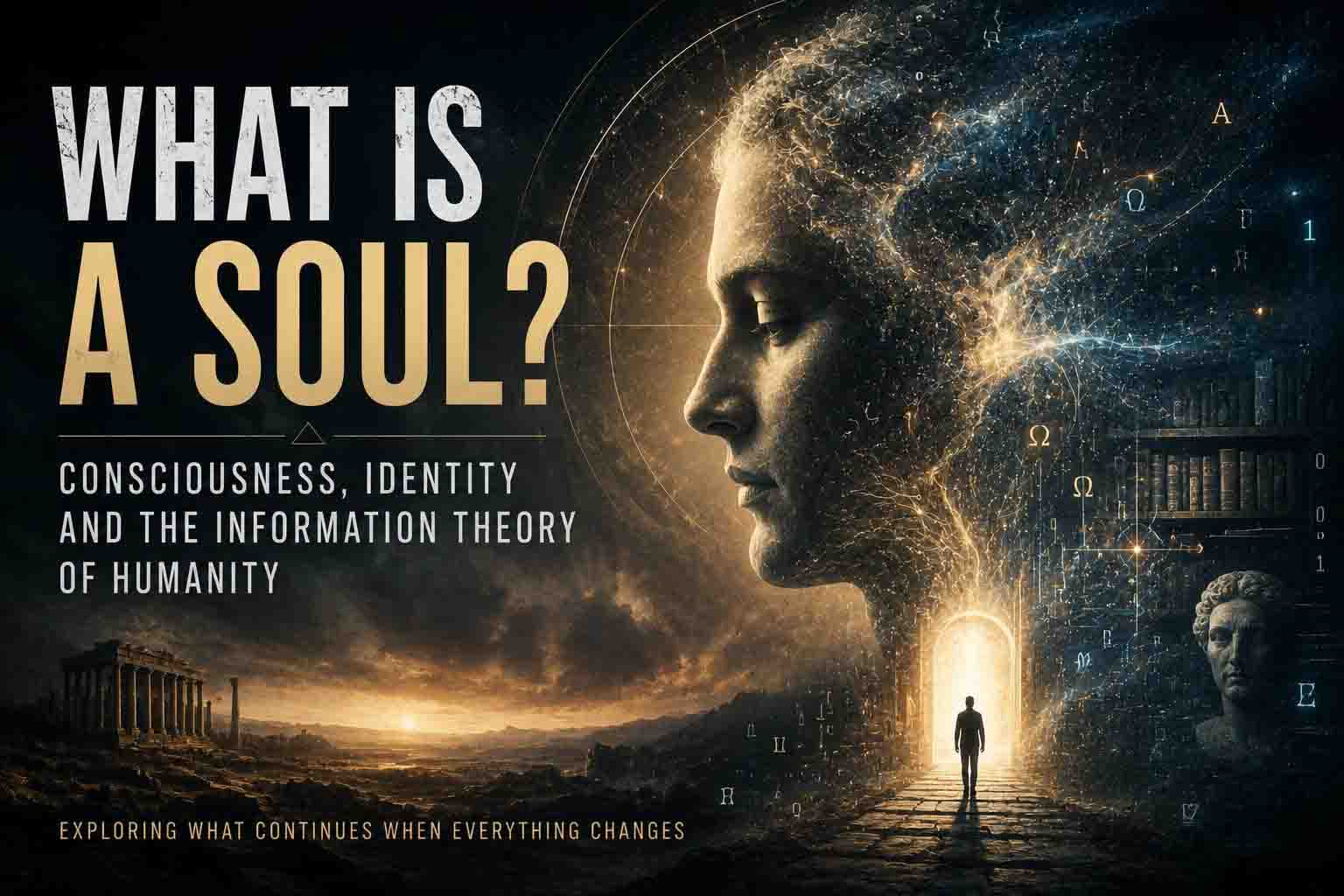
Artificial intelligence, digital memory, brain–computer interfaces, virtual identity and speculation about mind uploading have forced an older question back into serious discussion:
What must continue for a human being to remain the same person?
Not which atoms.
Not which legal documents.
Not even which memories in isolation.
What structure must survive?
The word soul may never recover its traditional religious meaning. But the problem it carried has not disappeared. Technology is making it harder to avoid.
The Problem Plato Tried to Describe
Plato should not be turned into a premature computer scientist. His philosophy belonged to a radically different intellectual and religious world, and his arguments about the soul cannot be translated directly into information theory.
Yet one aspect of his thought now feels unexpectedly familiar.
Plato repeatedly distinguished between changing physical things and the more stable forms through which they can be understood. A drawn triangle is imperfect. The geometrical relationship it expresses is not identical with the chalk, stone or ink carrying it. A beautiful object changes and decays, yet the question of beauty appears to exceed any single example.
This does not prove the independent existence of Platonic Forms. Philosophers have disputed that interpretation for more than two thousand years.
But the distinction between carrier and structure has become central to modern life.
A melody can be played on a piano, violin or computer without becoming the same physical vibration. A text can move from parchment to print to digital storage while remaining recognizably the same work. Software can be transferred between machines even though no individual piece of hardware contains its identity permanently.
The material implementation changes.
A relationship persists.
Plato did not solve the problem of personal identity. But he understood that the thing we recognize may not be reducible to the temporary matter through which it appears.
A Body That Never Stands Still
The human body is not a fixed object.
Cells divide and die at different rates. Proteins are replaced. Memories are reconstructed rather than replayed like perfect recordings. The brain changes through experience, injury and aging. Some biological components remain for extraordinarily long periods, while others are renewed constantly.
A person therefore continues through change rather than through material stillness.
This creates a puzzle.
The child, adult and elderly person may differ in body, knowledge, personality and memory, yet society and subjective experience usually treat them as stages of one life. Continuity does not require complete sameness.
But it cannot tolerate unlimited difference either.
If every memory, preference, relationship and capacity changed simultaneously, would the same person remain? If a perfect biological duplicate were created, would there be one identity or two? If memories were transferred to another system, would the transfer preserve the person—or produce a new being convinced that it was the original?
These are no longer questions reserved for theology.
They sit increasingly close to engineering.
Information Is Not Yet a Person
The language of information can make the problem appear easier than it is.
DNA carries information. Neural activity can be described through signals and patterns. Language, memory and culture depend on structures that can survive across different physical media. Civilization itself preserves continuity by copying information from one generation to another.
It is tempting to conclude that a human being is therefore simply data.
That conclusion is premature.
A digital file can be copied without ambiguity because its identity is usually defined by reproducible content. A conscious person appears to possess something more difficult: a continuous first-person perspective.
If a file is copied ten times, there are ten usable copies.
If a mind were copied ten times, which one would be the original continuation of the person who entered the process?
All ten might contain the same memories. Each might sincerely claim to be the same individual. From the moment they began receiving different experiences, however, they would become separate centers of consciousness.
Information may explain how identity is represented.
It does not automatically explain how subjective continuity is preserved.
That distinction is the boundary between copying a pattern and continuing a life.
The Soul as Philosophical Infrastructure
The concept of the soul historically carried many different meanings. It could refer to life, breath, reason, personality, moral identity or an immortal principle separable from the body. There was never one universal ancient definition.
Yet the term performed an important intellectual function.
It allowed civilizations to discuss what remained when the body changed, slept, suffered, aged or died. It provided a place for questions that biology alone could not yet formulate precisely:
What is the bearer of experience?
Why does one life feel continuous?
Can identity survive radical transformation?
What separates a person from a convincing copy?
Modern thought often rejected the traditional answer and assumed that the question had been removed with it.
Technology reveals the mistake.
We may decide that no immaterial soul exists. Even then, we must still identify the conditions under which continuity survives.
The old concept may have been metaphysically wrong while functioning as philosophical infrastructure for a real problem.
Humanity abandoned the proposed object.
It retained the unresolved relationship.
From Stone Inscriptions to Digital Continuity
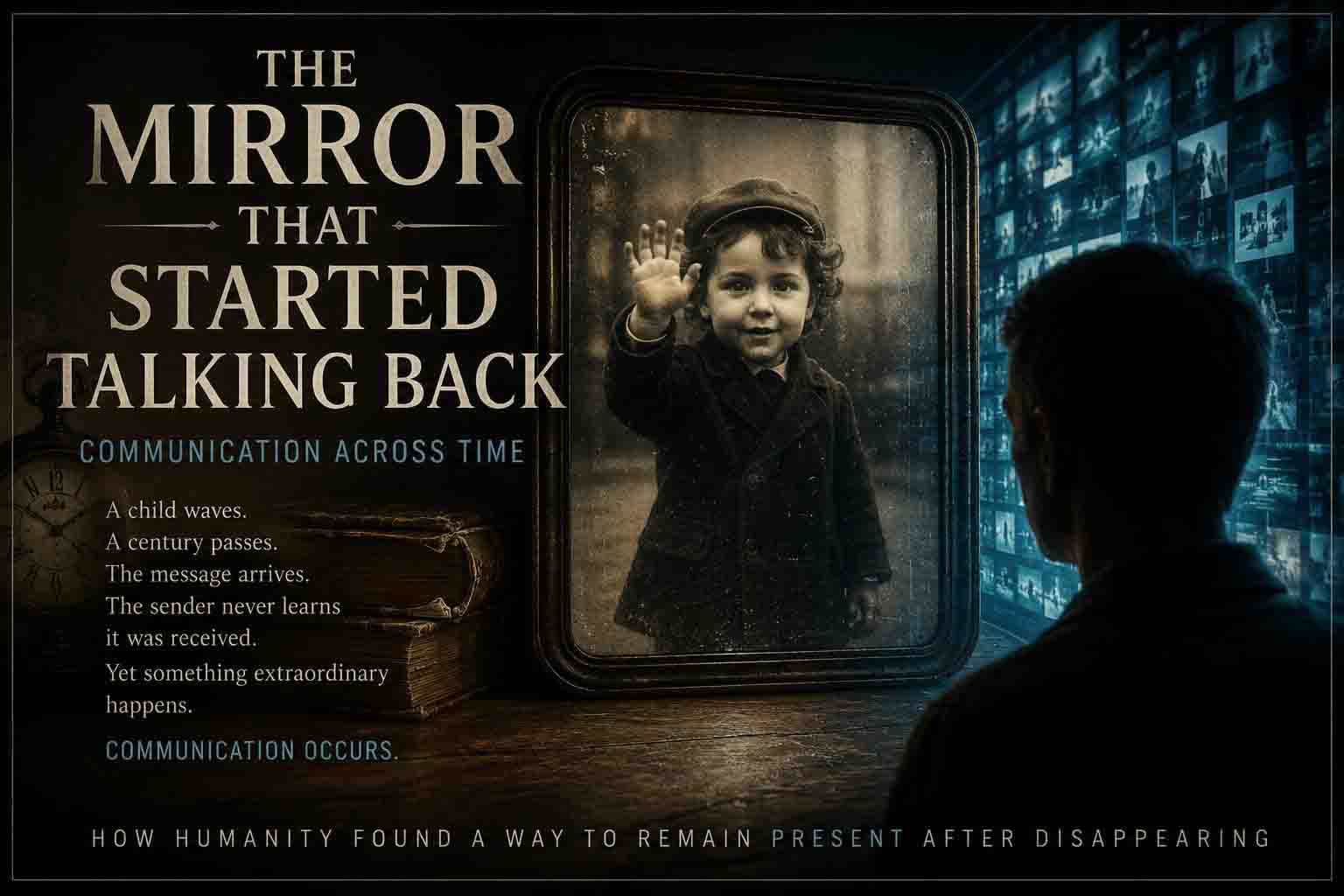
Human beings have always resisted disappearance.
Names were carved into stone. Bodies were preserved. Children inherited stories. Books allowed a dead voice to speak inside another century. Portraits preserved faces, recordings preserved movement, and digital systems now preserve enormous fragments of personal life.
None of these methods preserves a conscious person.
But they reveal a continuous human instinct: the desire to transfer something across time.
A stone inscription preserves a name.
A diary preserves a version of thought.
A photograph preserves appearance.
A language model trained on someone’s writings might reproduce aspects of style.
Each step preserves more.
None necessarily preserves the observer who once experienced the world.
This is where future technologies may force a distinction older cultures could describe only through myth: the difference between leaving a trace and continuing to exist.
A simulation that speaks like a dead person may become emotionally significant. It may preserve knowledge, humor and patterns of response. But resemblance should not be confused automatically with survival.
The echo is not necessarily the voice that produced it.
The Interstellar Problem
The problem becomes more severe when civilization looks beyond Earth.
Interstellar distances are hostile to ordinary biological timescales. Even optimistic travel scenarios may involve journeys lasting decades, centuries or longer. A civilization attempting to spread across the galaxy may eventually rely on suspended biology, generation ships, artificial intelligence, digital archives or forms of hybrid cognition that do not yet exist.
At that point, continuity will become an engineering requirement.
What must be sent?
Bodies?
Embryos?
Memories?
Artificial descendants?
Cultural models capable of reconstructing human civilization elsewhere?
A distant system may receive everything needed to reproduce humanity without receiving any individual human life that began the journey.
That would preserve civilization.
It might not preserve us.
The distinction between species continuity, cultural continuity and personal continuity will become impossible to ignore.
Watch The Video Below
Continue reading…
Where Do You Really Exist?
Current Knowledge
Neuroscience strongly associates memory, personality, perception and consciousness with biological brain processes. Damage, disease, medication and stimulation can alter aspects of identity and subjective experience. There is currently no reliable evidence that personal consciousness survives independently of brain function.
Information can be preserved across different physical media, but this does not demonstrate that consciousness can be transferred in the same way. No existing technology can upload a human mind, establish conscious continuity in a digital system or determine whether a sufficiently accurate simulation would possess the same first-person identity as its biological source.
Philosophers continue to disagree about personal identity. Proposed accounts emphasize bodily continuity, psychological continuity, memory, causal connection, narrative identity or the persistence of an experiencing subject.
Open Questions
Can consciousness exist in a non-biological system? Would gradual neural replacement preserve identity more plausibly than destructive scanning and reconstruction? Is memory sufficient for personal continuity, or can a perfect copy possess the past without inheriting the original point of view?
Could subjective continuity ever be measured from outside? If two systems contain the same memories and personality, what fact would establish which one—if either—is the continuation of the original person?
And if no such test is possible, should society treat continuity as a biological fact, a legal convention or a first-person claim?
Transhumation Interpretation
The soul may return without returning as religion.
It may return as the name of a boundary technology cannot yet cross.
A human being is clearly carried by matter, but identity is not experienced as an inventory of atoms. It appears as continuity through change: one perspective moving across time, accumulating memory while remaining capable of transformation.
Transhumation does not need to declare that Plato proved an immortal soul exists.
Its stronger claim is more careful:
Plato recognized that the carrier and the pattern might not be the same thing.
Modern technology is now discovering how difficult that distinction becomes when applied to consciousness.
A digital copy may preserve the pattern.
A civilization may preserve the information.
A machine may reproduce the voice.
But the central question remains untouched:
Did the person continue—or did the world merely learn how to imitate what was lost?
Perhaps the ancient soul was an answer given too early.
The problem behind it may belong to the future.
FAQ
Is the article claiming that science has proved the soul exists?
No. There is no scientific evidence establishing an immaterial soul independent of the brain. The article examines the unresolved problem of personal continuity.
What did Plato believe about the soul?
Plato treated the soul as central to reason, life, morality and personal existence, and argued in several dialogues that it was distinct from the body. His exact position varies across his works and remains debated.
Is a person simply information?
That has not been demonstrated. Information may describe memories, dispositions and biological organization, but subjective experience and first-person continuity remain unresolved.
Would a perfect digital copy be the same person?
It might possess the same memories and personality at the moment of copying, but that does not establish that the original person’s conscious perspective transferred into it.
What is the difference between copying and continuity?
Copying reproduces a structure. Continuity means that the same experiencing subject persists through the transformation. Existing science cannot show that copying a mind would guarantee such persistence.
Could gradual brain replacement preserve identity?
Some philosophers argue that gradual replacement may preserve causal and experiential continuity better than destructive copying. This remains a thought experiment rather than an established technological possibility.
Why is interstellar civilization relevant?
Long-distance space travel may require humanity to preserve life, intelligence or culture across timescales that exceed ordinary human biology, making different forms of continuity practically important.
Is Transhumation returning to traditional religion?
No. It uses ancient concepts as historical interfaces to questions that remain open. The goal is not to restore an old answer, but to identify the problem it attempted to describe.
What is the central Transhumation idea?
Humanity may learn to preserve memories, personalities and patterns before it learns whether any of those achievements preserve the conscious person who originally carried them.
How to Read the World
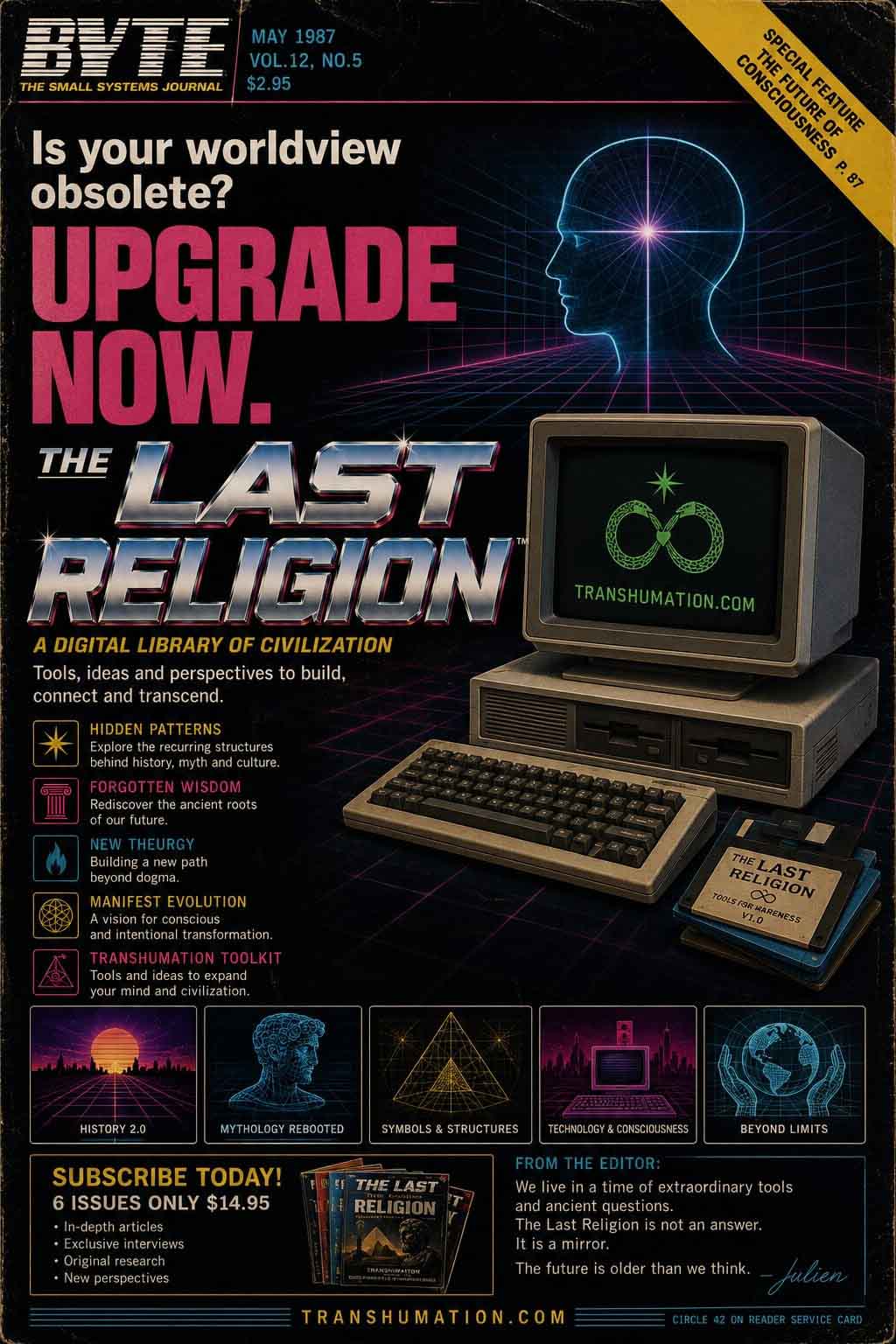
Continue the Transhumation Series
- Forgotten Religion | Ancient Gods, Symbols and the Hidden Structures of Human Civilization
- The Last Religion | Death, Immortality and the Future of Humanity
- The New Theurgy | AI, Information and the Future of Human Civilization
- End of Branding: You Were Never Meant to Become a Product
- Baal vs Ishtar: Why Ancient Gods Never Disappeared