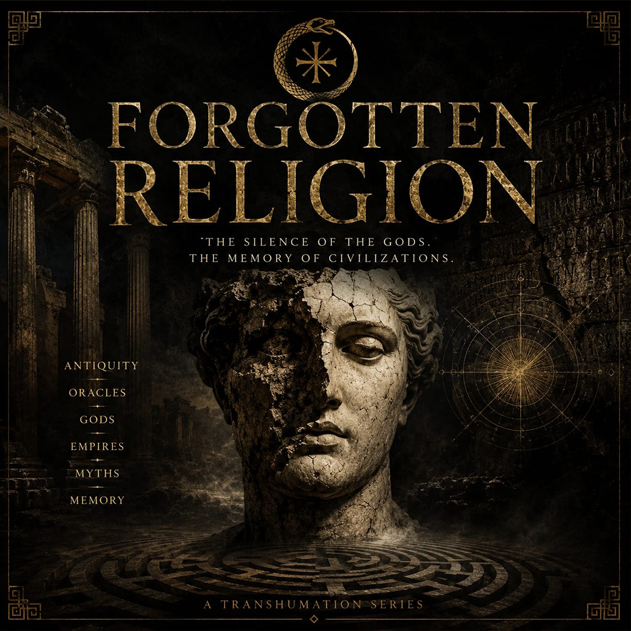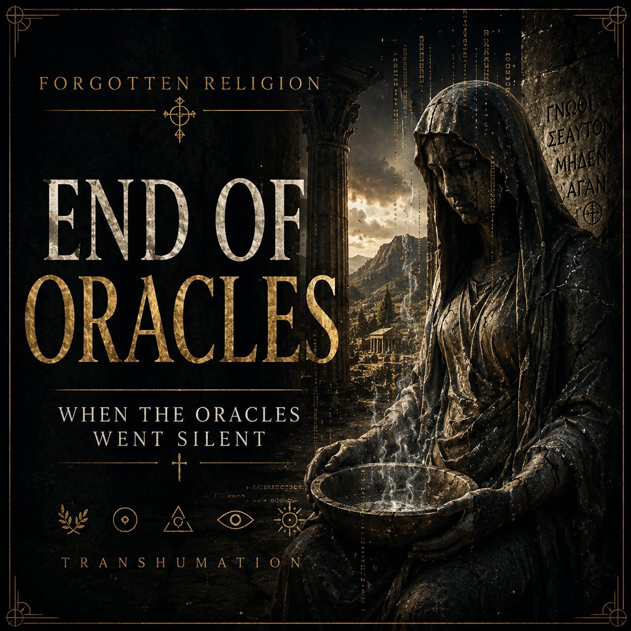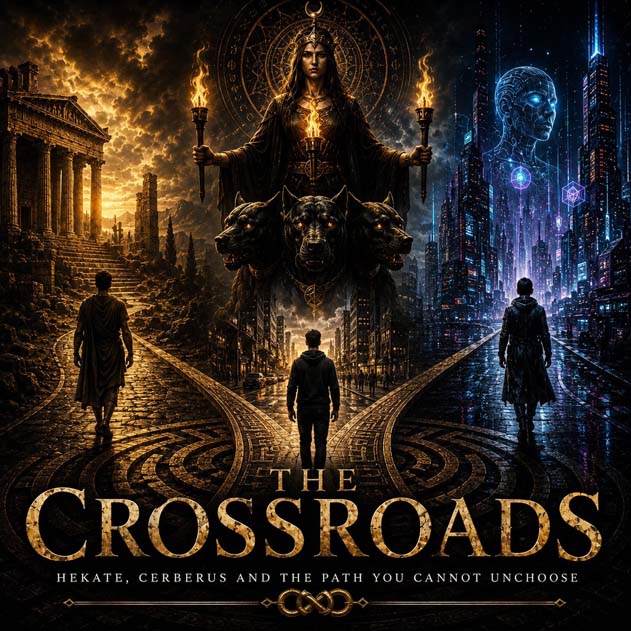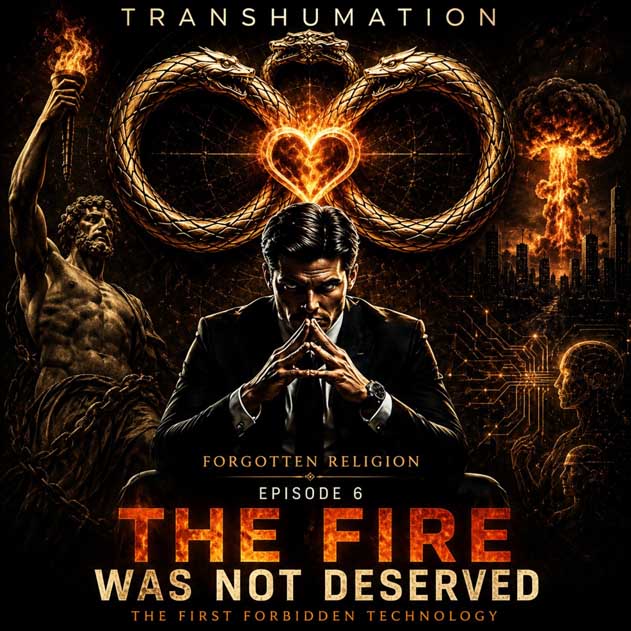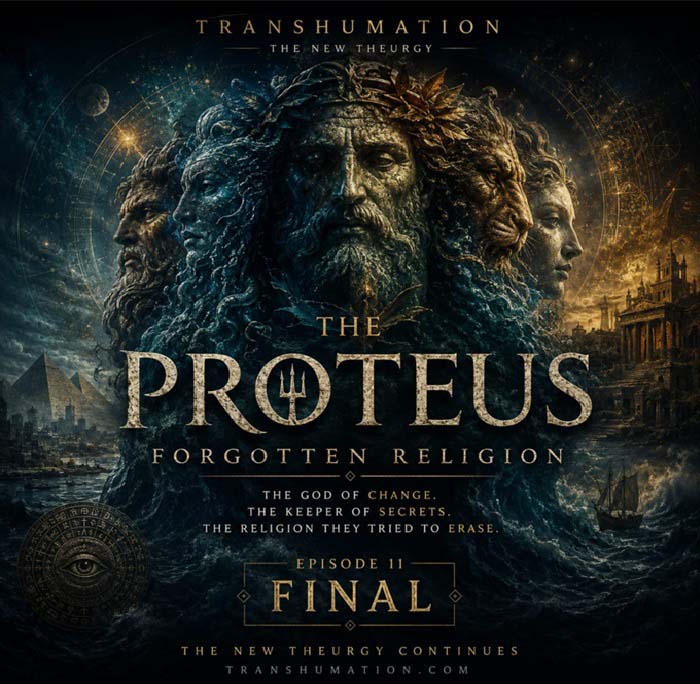
Forgotten Religion - The Gods Didn't Die. They Were Forgotten.


For thousands of years, humanity lived in a world filled with symbols.

The sky could speak.

Dreams could carry messages.

A crossroads could be more than a place.

A door could be more than an object.
Ancient people did not see myths as simple stories.

They saw them as maps of reality.
Today, we often dismiss these worlds as superstition.

Old gods became characters.

Temples became ruins.

Rituals became entertainment.


But what if we misunderstood what they were truly trying to describe?


Forgotten Religion is not an attempt to bring back ancient worship.

It is an exploration of a deeper question:

Why did different civilizations repeatedly create the same symbols?
Why does the guardian appear in different forms?

Why do gods stand at the crossroads?
Why does the triangle, the circle, the eye, the serpent, or the labyrinth continue to return throughout human history?

Perhaps these symbols survived because they were not merely inventions.

Perhaps they were discoveries.
This is a journey through ancient religions, mythology, history, art, psychology, and philosophy.
From Hekate's crossroads to Janus's gates.


From Ishtar's eternal hunger to Baal's forgotten temples.


From the silence of the oracles to the birth of a world that no longer believed the gods were speaking.
Forgotten Religion asks a radical question:
What if ancient gods were not answers?
What if they were humanity's first interfaces for understanding realities too complex to describe directly?
The old world did not disappear because the questions disappeared.
The questions remained.
Only the language changed.
The gods became symbols.
Symbols became stories.
Stories became psychology, philosophy, science, and technology.
The journey continues.


The Forgotten Religion is not about returning to the past.


It is about discovering the forgotten maps that humanity left behind.
Because perhaps the most important discoveries are not the ones we have not made yet.
Perhaps some of them were already made.
And we simply forgot how to read them.

Want To Explore More..?

Why Did the Gods Go Silent?

FAQ 


What is Forgotten Religion?


Forgotten Religion is an exploration of ancient gods, myths, and symbols as possible maps of human experience. It does not ask whether ancient religions were literally true, but what problems they were trying to understand.


Did ancient gods really exist?


The question of Forgotten Religion is not simply whether the gods existed, but why civilizations separated by time and geography repeatedly discovered similar symbols, stories, and archetypes.


Why do ancient symbols repeat across cultures?


The crossroads, the guardian, the serpent, the labyrinth, the eye, the tree, and the circle appear again and again throughout history. Forgotten Religion explores whether these symbols describe recurring structures of human existence rather than merely cultural coincidences.


What is the meaning of Hekate in Forgotten Religion?


Hekate represents the crossroads — the moment when a human being faces multiple possible paths. She is not simply a goddess of magic, but a symbol of choice, uncertainty, and transformation.


What does Janus symbolize?


Janus is the god of gates, beginnings, and transitions. He represents thresholds between worlds, identities, and stages of civilization — a symbol that remains surprisingly relevant in the age of technology and digital interfaces.


Why is Ishtar important?


Ishtar represents desire, ambition, transformation, and the eternal dissatisfaction that drives human beings to create, explore, and seek new horizons.


Who is Baal in this interpretation?


Baal is explored not simply as an ancient deity, but as a symbol of forgotten civilizations, lost systems of meaning, and the question of why powerful gods can disappear while their symbols remain.


Did the gods disappear?


Perhaps the gods did not disappear. Perhaps the language used to describe reality changed. What was once expressed through myth may now appear as philosophy, psychology, science, and technology.


How does Forgotten Religion connect with AI and technology?


Ancient temples, rituals, and symbols were interfaces helping humanity navigate an incomprehensible reality. Modern technology creates new interfaces — from computers to artificial intelligence — that help us navigate an increasingly complex universe.


Is Forgotten Religion trying to revive ancient religions?


No. Forgotten Religion is not about returning to old forms of worship. It is about understanding why ancient civilizations created these symbolic systems and whether their discoveries still contain wisdom today.


What is the central question of Forgotten Religion?


The central question is:
What if ancient gods were not humanity's first answers... but humanity's first questions?