
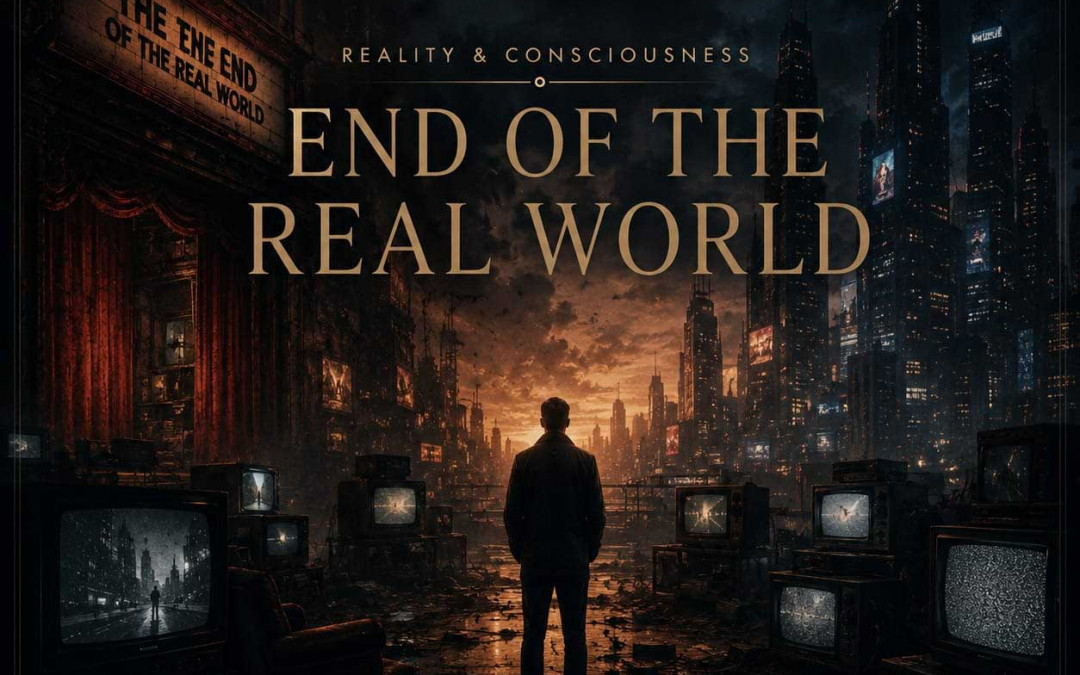
End of the Real World
For most of human history reality seemed simple. A physical world existed around us.
We lived inside it, moved through it, and experienced it with our senses.
The world was something external — something solid and objective.
But today something strange is happening.
The boundary between the physical world and the world created by human technology is slowly disappearing.
A Passenger in a Train
Imagine a person sitting in a train.
Outside the window the landscape moves slowly.
Cities pass by. Trees blur into lines of color.
But at the same moment that person is holding a phone.
Through that small screen they are participating in something happening thousands of kilometers away.
An auction in New York.
A conversation with someone on another continent.
A digital world that exists somewhere inside global networks.
So where is that person really?
In the train?
Or somewhere inside the network?
Their body remains in the train, but their attention, decisions, and actions are happening somewhere else.
For the first time in history, human presence is no longer limited to a single physical location.
The Mirror of Technology
For a long time humanity believed that the digital world was only a tool.
Something secondary.
But slowly it began to absorb more and more parts of our lives.
Communication moved there first.
Then work.
Then commerce.
Then culture.
Today entire communities exist primarily inside digital environments.
Technology has become something like the mirror from Alice in Wonderland — a surface through which we slowly step into another reality.
The screen is no longer only a window.
It is becoming a doorway.
Where Does Reality Actually Exist?
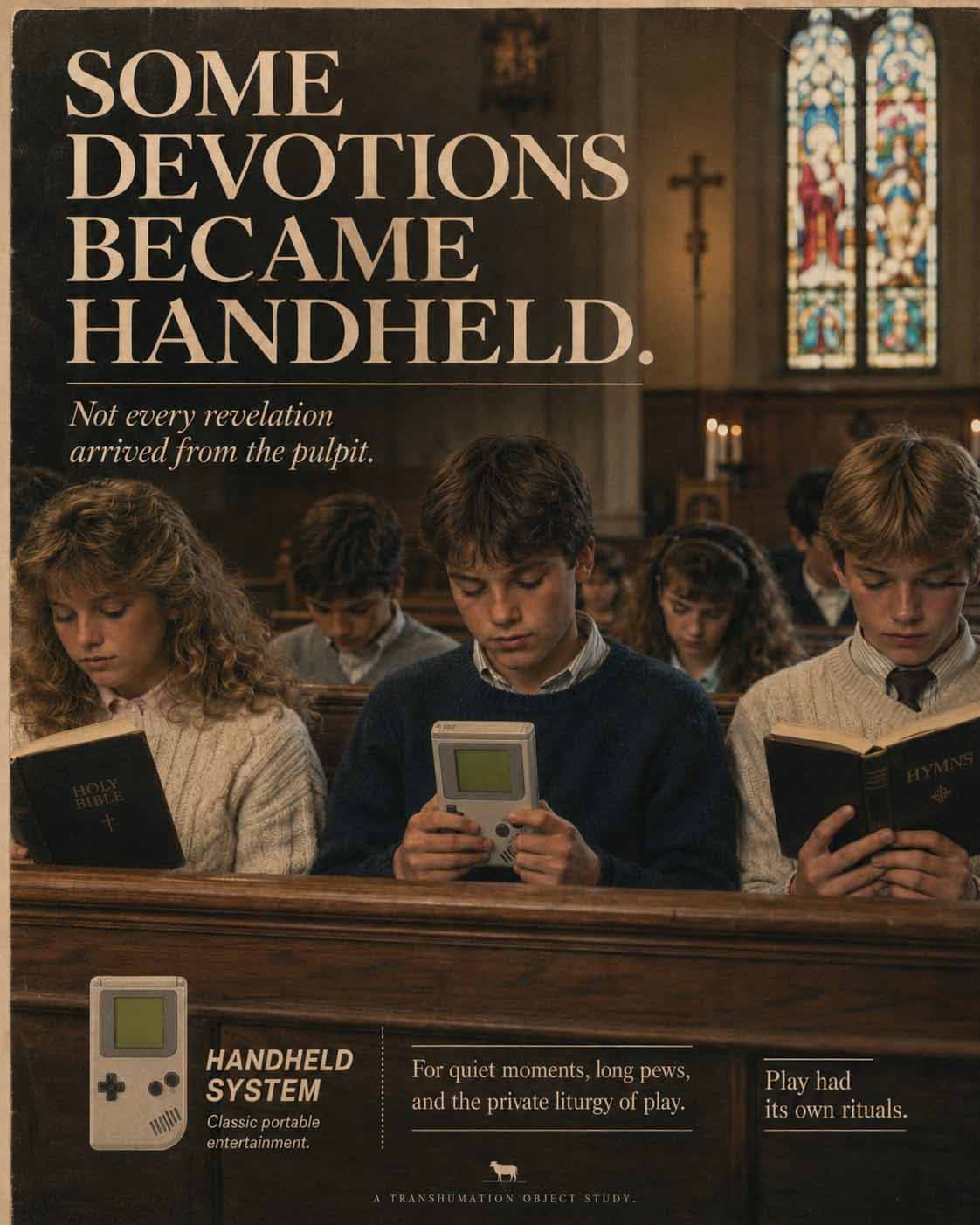
Our senses suggest that reality is the physical world around us.
But neuroscience tells us something different.
Everything we experience is already processed by the brain.
Every image, every sound, every sensation is a translation of signals into a mental model of the world.
In a sense, we never experience the world directly.
We experience a representation of it.
And when digital environments become increasingly complex and immersive, the difference between these layers of experience begins to blur.
The End of the Real World
The end of the real world does not mean the destruction of reality.
It means the end of the belief that there is only one layer of it.
Human consciousness is already moving between multiple environments:
the physical world, digital networks, virtual spaces.
For thousands of years humanity believed that reality was a single stage where existence unfolds.
But now we are beginning to discover something else.
Reality might not be a single world.
It may be a system of worlds.
And humanity has just begun learning how to move between them.
A New Question
The question is no longer simply:
What is real?
The new question is:
Where are we when we experience reality?
In our bodies?
In our minds?
Or somewhere within the networks and systems that we are creating ourselves?
When this question appears, something fundamental changes.
That moment is the beginning of the End of the Real World.
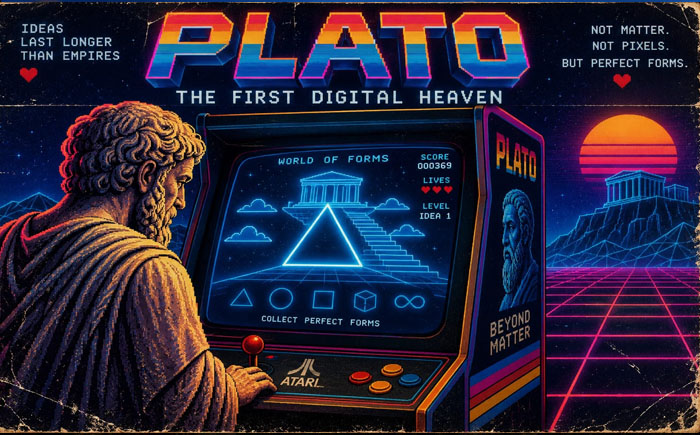

Continue the Transhumation Series
Explore the full journey:
- End of Reality — Where Do You Really Exist?
- End of Physics — Are the Laws of Reality Real?
- End of the Real World — Reality Is No Longer Required
- End of Consciousness — Beyond the Human Mind
- End of Death — When Human Limits Disappear
- End of Religion — When Technology Replaces Faith
This is not a theory. This is a transition.