
For most of human history, identity came from reality.
From family.
From tribe.
From work.
From memory.
From what a person actually was.
But modern civilization changed something fundamental.
Today, identity is no longer discovered.
It is designed.
Produced.
Packaged.
Repeated.
Sold.
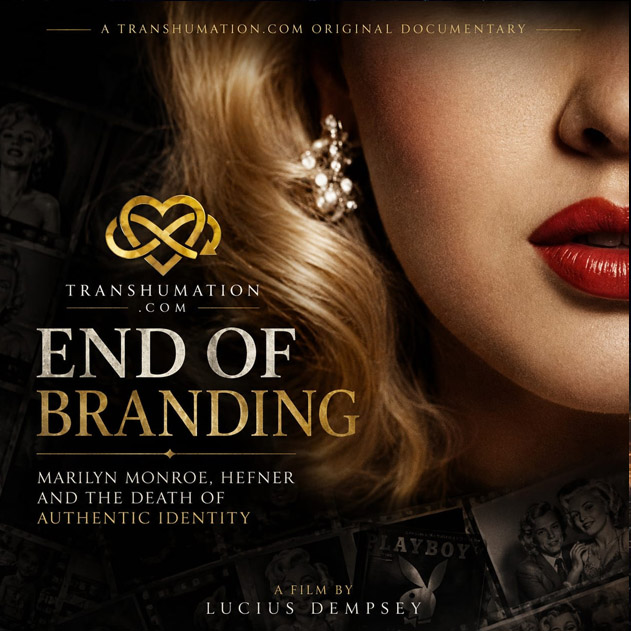
Marilyn Monroe became more than a human being.
She became an image stronger than the real person behind it.
Hugh Hefner transformed desire into architecture: a complete symbolic lifestyle people could enter emotionally long before they entered it physically.
Modern branding no longer sells products.
It sells identity itself.
People do not buy clothes because they need fabric.
They buy signals.
Symbols.
Membership in imagined worlds.
This process slowly replaced authentic identity with constructed personas.
Social media accelerated it even further.
Today, many people experience themselves primarily through presentation: profile pictures, aesthetics, political identities, curated emotions and digital performance.
The result is a civilization where visibility becomes more important than reality.
People no longer ask: “Who am I?”
They ask: “How should I appear?”
This creates a dangerous transformation.
Because once identity becomes branding, human beings themselves become products competing for attention.
Even rebellion becomes marketable.
Even authenticity becomes aesthetic.
Even spirituality becomes content.
In this episode, we explore the collapse of authentic identity in the age of symbols, media and digital personas.
Not because branding itself is evil, but because modern systems increasingly reward simulation over truth.

The modern world does not simply create consumers.
It creates characters.
And eventually, people begin to forget where the performance ends.
The deepest paradox is this:
Human beings desperately want to be seen, yet modern systems teach them to hide behind symbols.
This is why modern identity often feels fragmented, unstable, and emotionally artificial.
Because an identity designed for visibility cannot fully satisfy a consciousness searching for meaning.
The real danger is not that branding manipulates people.
The real danger is that people eventually start experiencing themselves as brands.
And once that happens, the self slowly disappears behind the image.
Read more
Explore the full journey:
- End of Reality — Where Do You Really Exist?
- End of Physics — Are the Laws of Reality Real?
- End of the Real World — Reality Is No Longer Required
- End of Consciousness — Beyond the Human Mind
- End of Death — When Human Limits Disappear
- End of Religion — When Technology Replaces Faith
This is not a theory. This is a transition.