
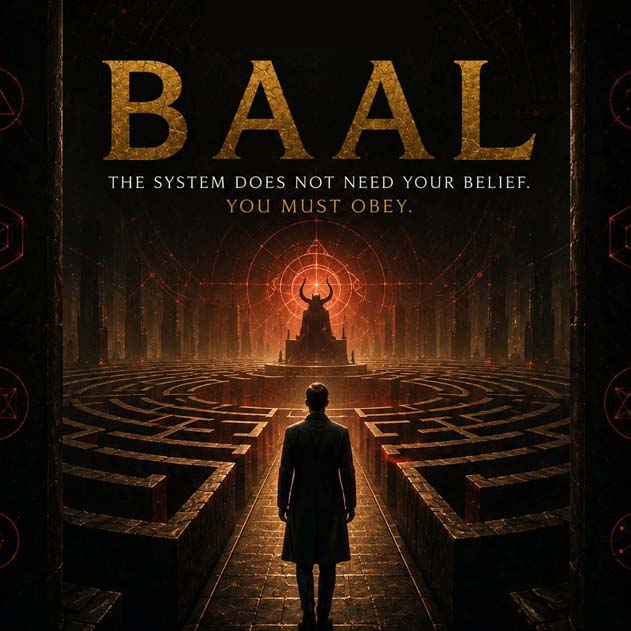
BAAL | Forgotten Religion
Before Rome.
Before Christianity.
Before empires ruled the Mediterranean.
There was Baal.
Today his name survives mostly as a symbol of evil.
A forgotten god.
A defeated god.
A warning.
But what if that is only the final chapter of a much older story?
For thousands of years Baal was not a demon.
He was a king.
A storm god.
A protector.
A symbol of order standing against chaos.
Entire civilizations prayed to him for rain, harvests, prosperity, and survival.
Cities rose beneath his temples.
Empires traded under his protection.
Generations were born into a world where Baal was as real as the sky itself.
Then something changed.
A new civilization emerged.
A new vision of reality appeared.
And one by one, the old gods began to disappear.
But disappearance is not the same as death.
Because forgotten gods leave traces.
In symbols.
In language.
In myths.
In stories.
And sometimes in the questions we still ask today.
Why do civilizations replace their gods?
What happens when an entire worldview collapses?
Can a god truly die if the ideas behind him survive?
In this episode of Forgotten Religion, we explore the rise,
fall, and transformation of one of the most influential gods of antiquity.
Not to worship him.
Not to condemn him.
But to understand what problem he once solved.
And why his shadow still follows us today.
Because every civilization remembers its victors.
Forgotten Religion explores the defeated.
The forgotten.
And the gods that history left behind.
Watch Next Episode
FIRE – The First Forbidden Technology | Forgotten Religion
Want To Know More..?
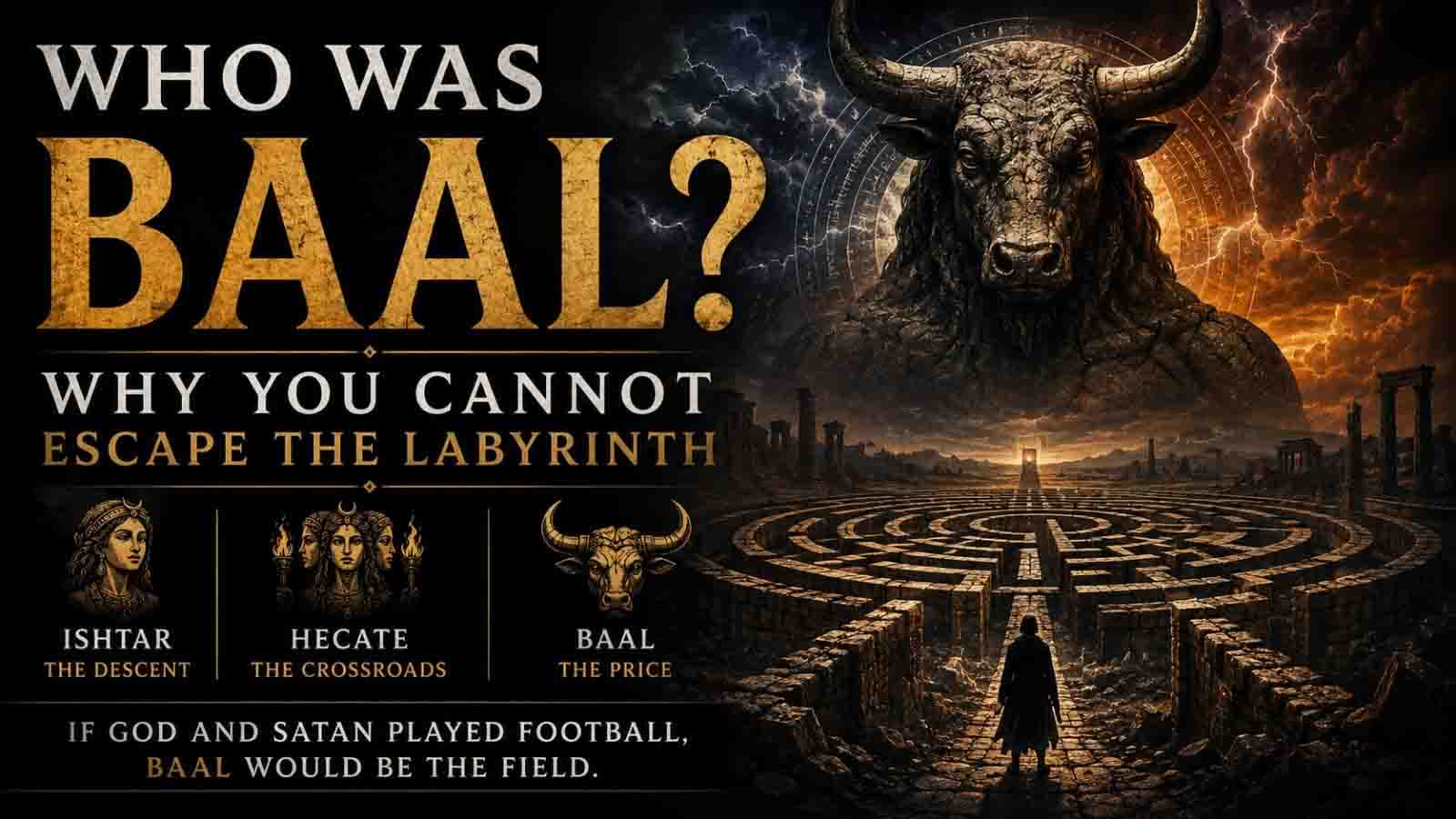
Who Was Baal? Why You Cannot Escape the Labyrinth
FAQ
Who was Baal?
Baal was one of the most important gods worshipped throughout the ancient Near East. He was associated with storms, rain, fertility, kingship, and the forces that sustained civilization.
What does the name Baal mean?
The word "Baal" simply means "lord" or "master." It was originally a title rather than a personal name and could refer to different local deities across various regions.
Was Baal a real historical figure?
No. Baal was a mythological deity worshipped by ancient peoples. However, the religious traditions, temples, inscriptions, and civilizations connected to Baal are historically documented.
Why was Baal worshipped?
Ancient societies depended heavily on rainfall and agriculture. As a god of storms and fertility, Baal represented the forces that brought life, prosperity, and survival.
Is Baal mentioned in the Bible?
Yes. Baal appears frequently in the Hebrew Bible, usually as a rival deity opposed by the prophets of Israel. Much of the modern image of Baal comes from these later religious conflicts.
Why is Baal often associated with evil today?
Baal was not originally viewed as evil by his followers. His negative reputation developed largely through the writings of competing religious traditions that eventually became dominant.
What civilization worshipped Baal?
Baal was worshipped by several ancient cultures, including the Canaanites, Phoenicians, and other peoples of the Levant. His influence extended across much of the eastern Mediterranean.
Was Baal the god of storms?
Yes. One of Baal's primary roles was as a storm god who controlled rain, thunder, and fertility. In many myths, his battles symbolized the struggle between order and chaos.
Why did the worship of Baal disappear?
The rise of monotheistic religions, political changes, and cultural transformation gradually replaced older religious systems. Baal survived in memory but disappeared as an actively worshipped deity.
What can Baal teach us about history?
The story of Baal shows how civilizations create symbols to explain nature, power, and survival. Studying forgotten gods helps us understand how earlier societies viewed the world.
Is Baal connected to Transhumation?
Not as a belief system. Transhumation approaches Baal as an example of a symbolic solution to human problems. The question is not whether Baal was real, but what role the idea of Baal played within a civilization.
Why study forgotten gods in the modern age?
Because forgotten gods reveal how human beings create meaning. By understanding the symbols of the past, we gain insight into the technologies, ideologies, and belief systems of the present.
What is the central question of this article?
Not whether Baal existed, but why entire civilizations believed he was necessary—and what that tells us about the relationship between symbols, power, and human survival.
Want To Explore More?
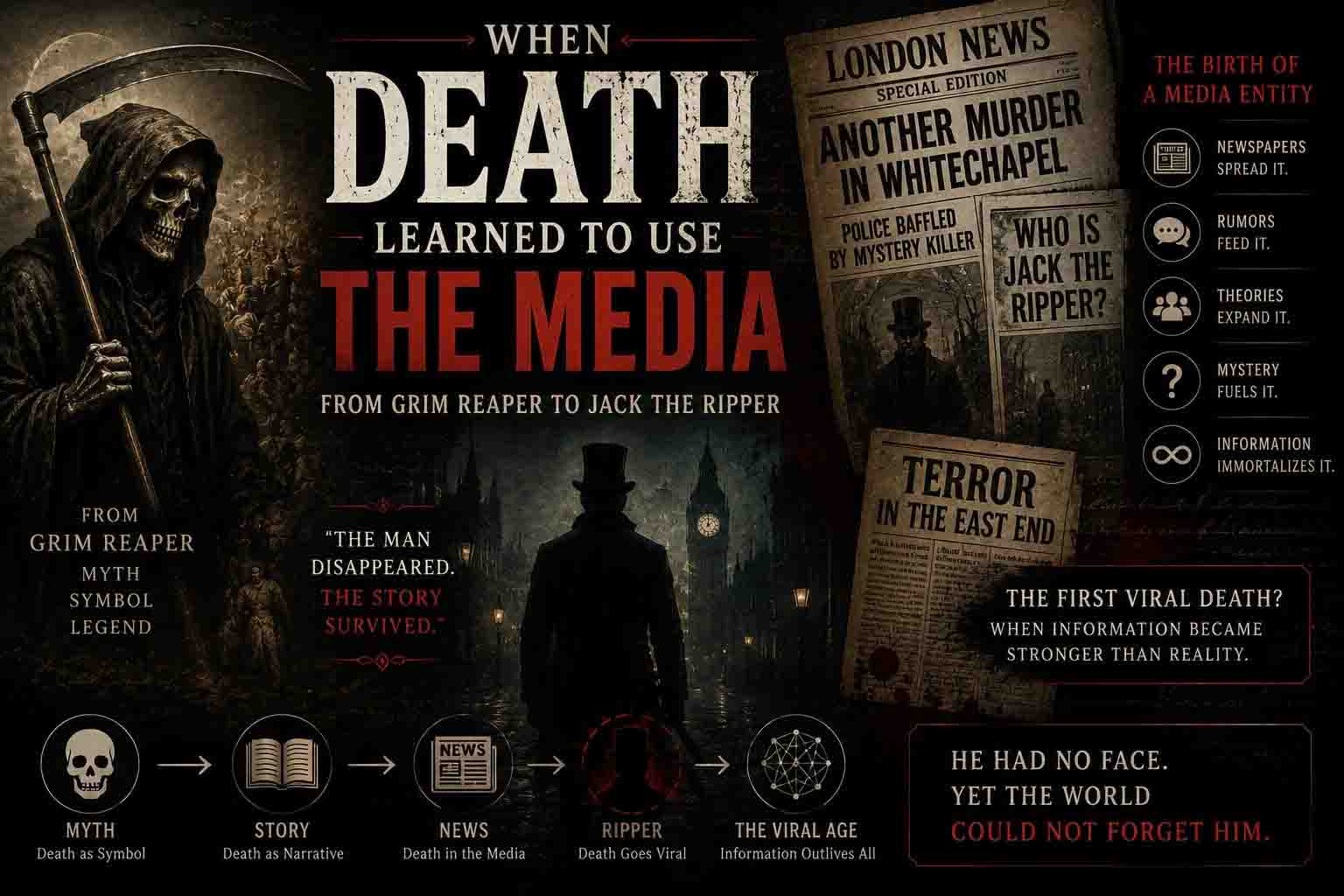
When Death Learned to Use the Media: From Grim Reaper to Jack the Ripper
Start Your Path Here or...
Continue the Transhumation Series
Explore the full journey:
- End of Reality — Where Do You Really Exist?
- End of Physics — Are the Laws of Reality Real?
- End of the Real World — Reality Is No Longer Required
- End of Consciousness — Beyond the Human Mind
- End of Death — When Human Limits Disappear
- End of Religion — When Technology Replaces Faith
This is not a theory. This is a transition.