
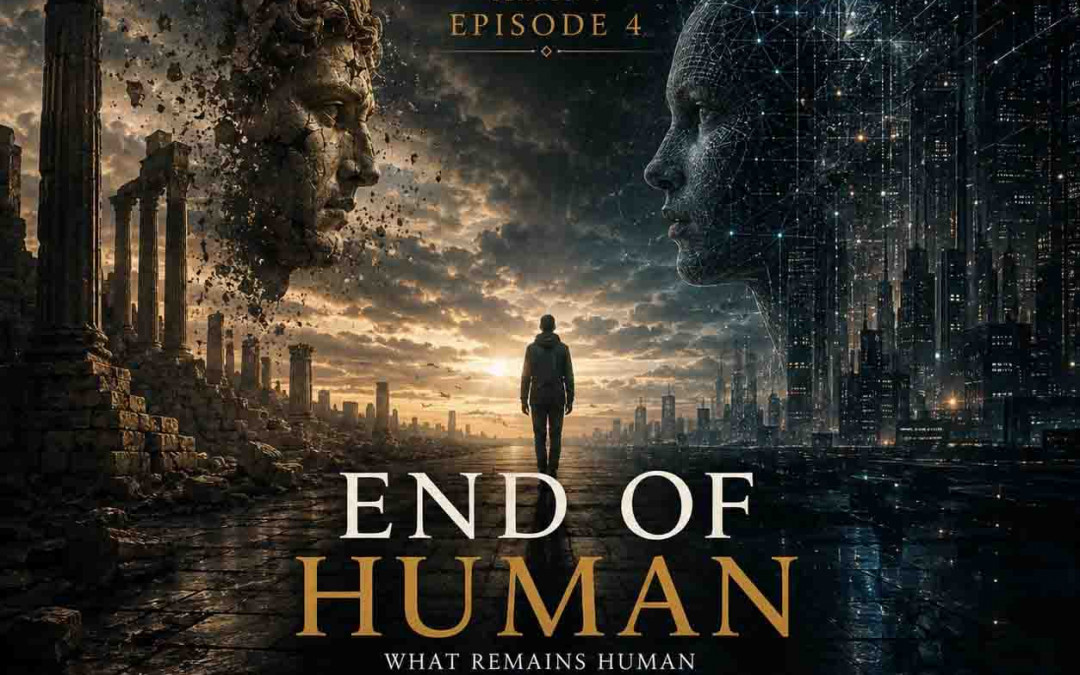
End of Human | What Remains Human When Power Becomes Limitless?
For thousands of years, humanity dreamed of becoming stronger.
Stronger than nature.
Stronger than disease.
Stronger than time.
Every invention brought us one step closer to that dream.
A spear extended the arm.
Writing extended memory.
The telescope extended sight.
The Internet extended communication.
Artificial intelligence may become the first technology capable of extending thought itself.
And for the first time in history, civilization is approaching a question no previous generation could seriously ask:
What remains human when our limitations disappear?
The Age of Unlimited Extension
Technology has never been the enemy of humanity.
Technology has always been humanity's greatest ally.
Every civilization is built upon extensions.
Fire extended survival.
Agriculture extended food production.
Printing extended knowledge.
Electricity extended activity beyond daylight.
Computers extended calculation.
Artificial intelligence extends cognition itself.
The problem is not that humanity creates powerful tools.
The problem begins when humanity forgets why those tools exist.
Power without direction eventually begins defining its own purpose.
The Fragile Foundations of Humanity
Most of what we call humanity emerged from limitation.
Mortality taught urgency.
Pain taught empathy.
Failure taught humility.
Scarcity taught cooperation.
Time gave meaning to choice.
Without limits, values themselves begin to change.
If life becomes endless…
What becomes precious?
If memory becomes permanent…
What deserves to be remembered?
If intelligence becomes unlimited…
Will wisdom automatically follow?
Probably not.
When Humans Adapt to Machines
Modern civilization often imagines a future filled with perfect efficiency.
Everything optimized.
Everything predicted.
Everything automated.
Yet a strange reversal is already happening.
Instead of technology adapting to human beings…
Human beings increasingly adapt themselves to technological systems.
Algorithms shape attention.
Platforms influence identity.
Artificial intelligence begins organizing information before humans even ask for it.
This may become the defining transformation of the twenty-first century.
Not machines becoming human.
But humans becoming increasingly compatible with machines.
The Mirror Called Artificial Intelligence
Artificial intelligence is often described as humanity's greatest invention.
Perhaps it is something even stranger.
A mirror.
For centuries people projected their deepest questions onto gods.
Today they increasingly project them onto machines.
Can AI think?
Can AI love?
Can AI become conscious?
Behind every one of these questions hides another:
What exactly do we mean by consciousness?
Artificial intelligence forces humanity to define itself.
And mirrors are dangerous.
Because eventually they stop reflecting what we want to see.
They begin revealing what we actually are.
Beyond Biology
For thousands of years, being human meant being biological.
Today that assumption is beginning to change.
Digital memory.
Brain-computer interfaces.
Artificial intelligence.
Synthetic biology.
The possibility of preserving information beyond the body is no longer confined to mythology or science fiction.
Civilization increasingly treats information as something capable of surviving physical form.
Transhumanism as Religion + 1
The question is no longer whether technology will transform humanity.
The question is whether humanity will preserve its identity while transforming.
Intelligence Is Not Enough
A calculator performs mathematics better than any human.
That does not make it wise.
Artificial intelligence may eventually surpass humanity in countless intellectual tasks.
But intelligence alone has never explained:
love,
beauty,
hope,
grief,
forgiveness,
sacrifice,
or meaning.
These experiences emerge from conscious existence.
The future will not be determined by the fastest intelligence.
It will be determined by whether civilization remembers why intelligence matters.
The Future Belongs to Interfaces
Perhaps the future will not belong exclusively to humans.
Nor exclusively to machines.
It may belong to the relationship between them.
Between biology and information.
Between consciousness and computation.
Between memory and networks.
Between humanity and the systems it creates.
This is not necessarily the end of humanity.
It may simply be the end of defining humanity by biology alone.
The Final Question
Perhaps the last truly human ability is not intelligence.
Not strength.
Not even mortality.
Perhaps it is something much simpler.
The willingness to ask:
Why does any of this matter?
As long as civilization continues searching for meaning instead of merely maximizing efficiency…
Humanity remains alive.
The greatest danger is not that machines become like us.
The greatest danger is that we become so fascinated by power that we forget why consciousness was valuable in the first place.
Because technology may never destroy humanity.
Humanity may simply outgrow itself.
Want to Explore More..?
Watch The Video Below
Read more
Three Forces That Control Your Life
FAQ
What does "End of Human" mean?
It does not describe the extinction of humanity. It explores the possibility that technology may fundamentally redefine what it means to be human.
Is artificial intelligence the enemy?
No. AI is presented as a mirror that reflects humanity's values, ambitions, and assumptions back to us.
Why are limitations important?
Mortality, suffering, and vulnerability shaped morality, empathy, and meaning throughout human history. Removing every limitation may also transform the values built upon them.
Does this article support transhumanism?
Rather than advocating a position, it explores the philosophical consequences of extending human capabilities through technology and asks what should remain unchanged.
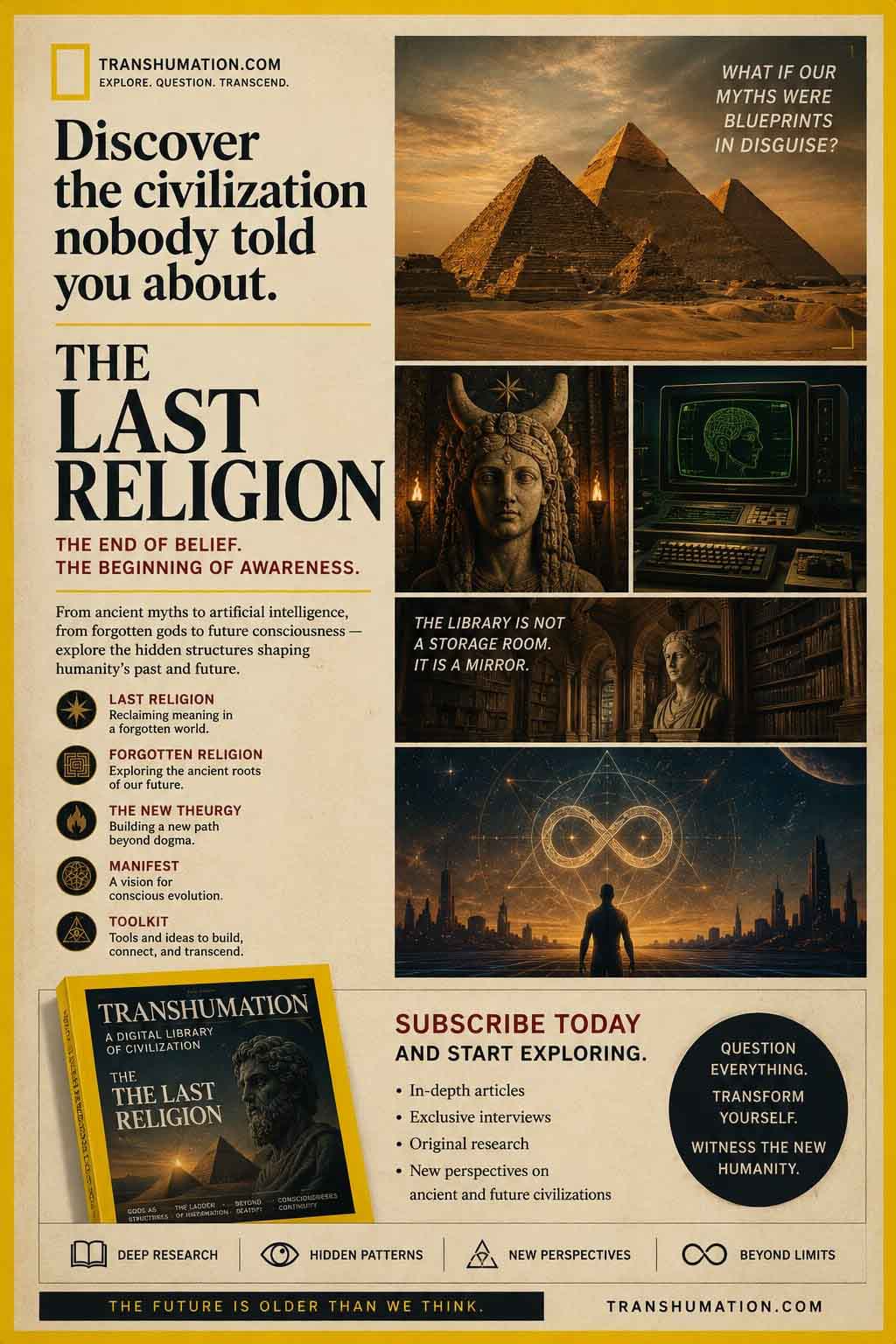
Continue the Transhumation Series
Explore the full journey:
- End of Reality — Where Do You Really Exist?
- End of Physics — Are the Laws of Reality Real?
- End of the Real World — Reality Is No Longer Required
- End of Consciousness — Beyond the Human Mind
- End of Death — When Human Limits Disappear
- End of Religion — When Technology Replaces Faith