
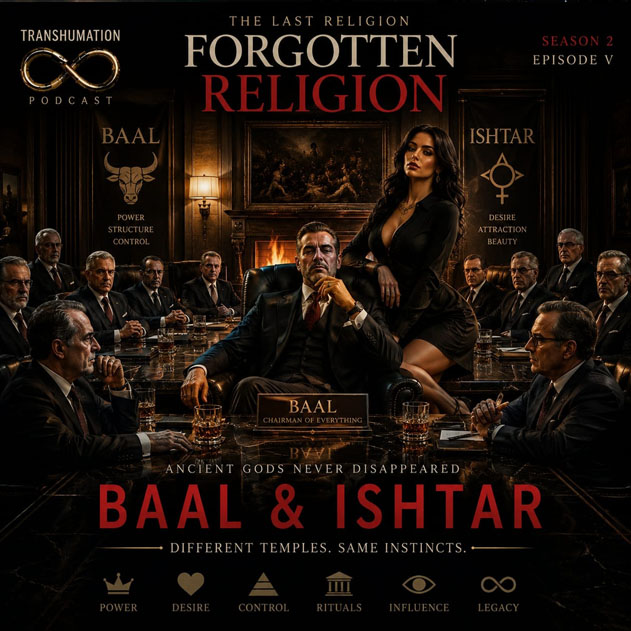
Why Ancient Gods Never Disappeared
Modern civilization often believes it has escaped mythology.
We imagine that science replaced religion. Technology replaced ritual. Logic replaced symbols.
But perhaps something else happened.
Perhaps the gods never disappeared.
Perhaps they simply changed their names.
The Human Need for Interfaces
Ancient people did not invent gods because they were unintelligent.
They created gods because reality is too complex to experience directly.
Storms became Zeus.
The sea became Poseidon.
Death became Hades.
War became Ares.
Love became Aphrodite.
The gods were interfaces—human faces placed upon invisible forces that shaped existence.
Technology has changed.
Human psychology has not.
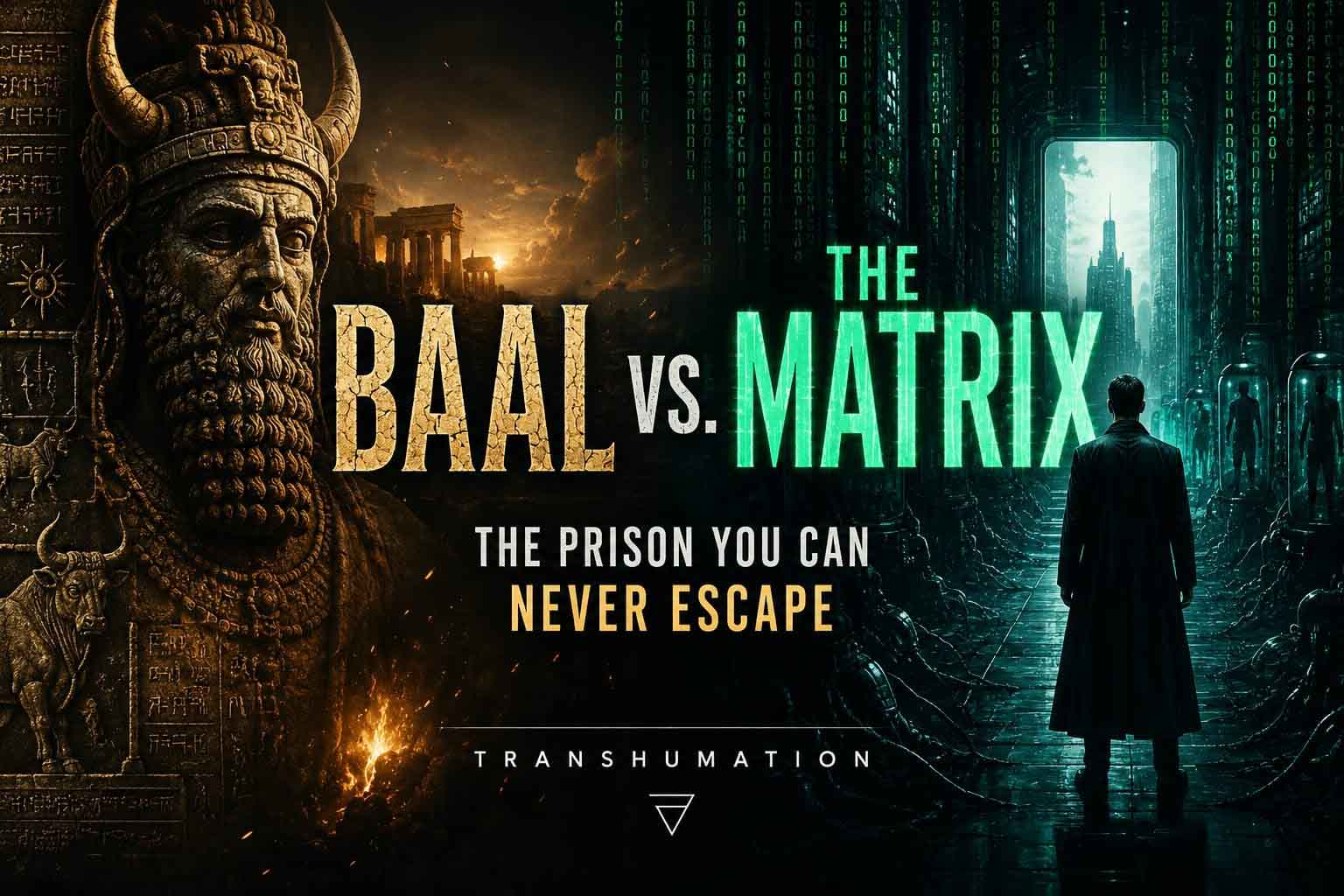
Baal: The Architecture of Power
Baal represented more than a deity.
He symbolized authority.
Order imposed upon chaos.
The discipline required to survive.
The hierarchy that allows civilizations to function.
Today we rarely speak his name.
Yet Baal appears everywhere.
Corporations.
Governments.
Financial systems.
Algorithms that organize billions of people.
Modern civilization still sacrifices.
Not animals.
But time.
Attention.
Freedom.
Health.
Relationships.
The temple became the office.
The altar became productivity.

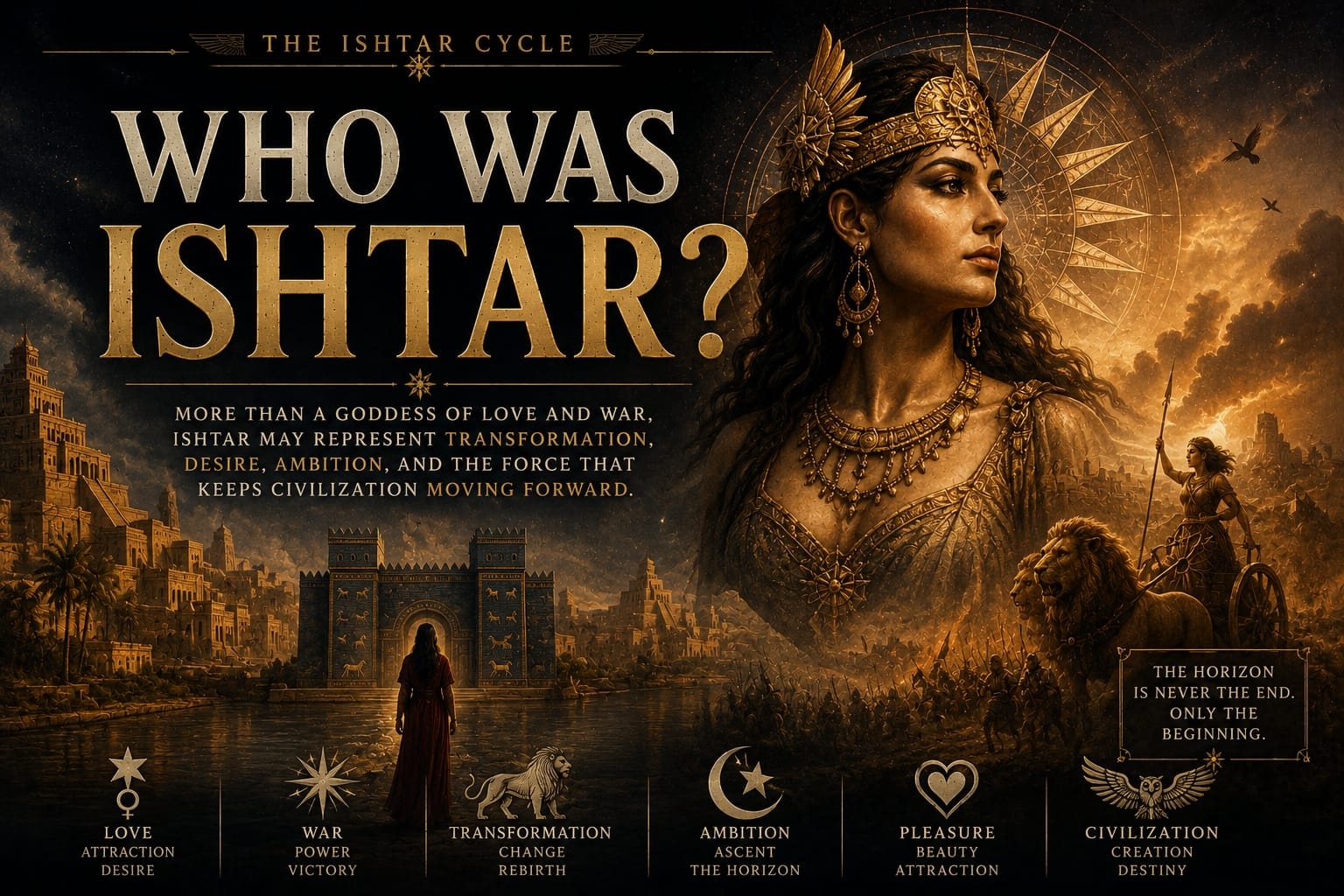
Ishtar: The Force of Desire
If Baal builds civilization…
Ishtar moves it.
She is attraction.
Beauty.
Sexuality.
Ambition.
Curiosity.
The desire to become more than we are.
Without Ishtar there would be no exploration.
No art.
No romance.
No invention.
No empire.
She is the force that pulls humanity forward.
But every force has a shadow.
The same desire that creates civilization can create obsession.
The same attraction that inspires love can become addiction.
Different Temples. Same Rituals.
The ancient world gathered inside temples.
Modern civilization gathers inside platforms.
People compete for visibility.
Followers.
Status.
Recognition.
Approval.
The rituals changed.
The psychology remained.
Ancient priests interpreted signs from the heavens.
Today algorithms determine what billions of people will see.
Different language.
The same function.
Mythology Became Infrastructure
A Roman priest would have considered a smartphone miraculous.
It remembers everything.
Answers questions.
Guides travelers.
Translates languages.
Allows distant people to speak instantly.
Ancient mythology imagined these abilities as divine.
Technology transformed them into everyday tools.
The miracle became infrastructure.
Why Symbols Never Die
Many people believe symbols disappear when knowledge grows.
History suggests the opposite.
Every generation creates new myths.
New heroes.
New monsters.
New rituals.
New sacred objects.
Human beings do not live by information alone.
They require stories.
Symbols.
Identity.
Participation.
Meaning.
This is why ancient myths repeatedly return through films, games, brands, artificial intelligence, and digital culture.
Technology and Religion
Religion and technology are often treated as opposites.
Perhaps they are closer than we imagine.
Both attempt to solve the same human problems.
Communication.
Knowledge.
Memory.
Guidance.
Hope.
Mortality.
Religion approached these questions through symbols.
Technology approaches them through engineering.
The destination remains remarkably similar.
The New Gods
Artificial intelligence.
Global networks.
Digital identities.
Planetary information systems.
These are not gods.
But they increasingly perform functions that ancient civilizations reserved for divine beings.
Perhaps this explains why people simultaneously admire and fear technology.
Every civilization eventually creates powers larger than itself.
The only difference is the interface.
Transhumation
Forgotten Religion is not about proving ancient myths literally true.
It asks a different question.
Why do the same symbolic structures return across history?
Because civilizations evolve.
Human nature evolves far more slowly.
The gods never disappeared.
Baal became systems.
Ishtar became media.
Temples became networks.
Rituals became algorithms.
The names changed.
The forces remained.
Perhaps that has always been the real religion.
Want to Explore More..?
Watch The Video Below
Read more
Three Forces That Control Your Life
FAQ
Who were Baal and Ishtar?
Baal and Ishtar were major deities in the ancient Near East. In this article they are explored as symbolic representations of recurring human and civilizational forces rather than only historical religious figures.
What does Baal symbolize today?
Baal symbolizes order, hierarchy, power, productivity, institutions, and the systems that organize modern civilization.
What does Ishtar represent?
Ishtar represents desire, attraction, beauty, ambition, sexuality, creativity, and the forces that drive human progress and transformation.
Why does the article compare social media to ancient temples?
Because both function as places where people seek recognition, identity, belonging, and symbolic status, even though the technology has changed.
Is this article saying technology is a religion?
No. It argues that technology and religion often address similar human needs—communication, memory, guidance, and meaning—using different methods.
Why do myths continue to matter?
Because myths organize complex psychological and social realities into stories that humans can understand and remember.
How does AI relate to Baal and Ishtar?
Artificial intelligence acts as a new interface for knowledge, prediction, and decision-making, while also amplifying the psychological forces represented by Baal and Ishtar through algorithms, attention, and digital influence.
What is the central message?
Ancient gods did not disappear because the human problems they represented never disappeared. Civilization changed the interface, but the underlying forces remain the same.
Continue the Transhumation Series
Explore the full journey:
- End of Reality — Where Do You Really Exist?
- End of Physics — Are the Laws of Reality Real?
- End of the Real World — Reality Is No Longer Required
- End of Consciousness — Beyond the Human Mind
- End of Death — When Human Limits Disappear
- End of Religion — When Technology Replaces Faith