
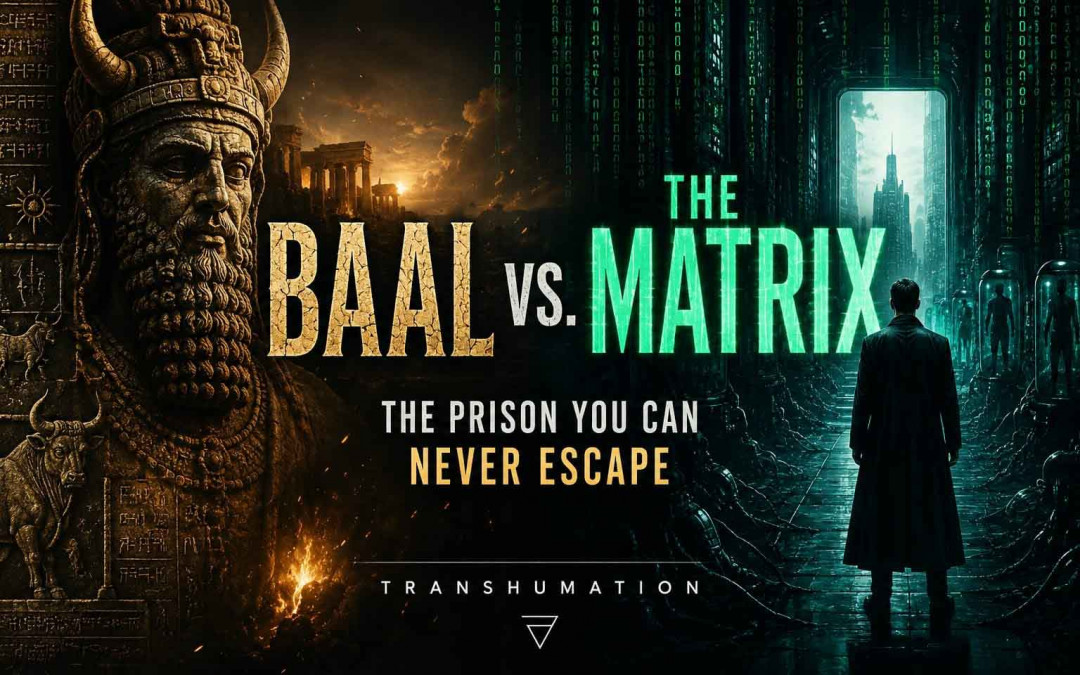
What if Neo Escaped the Wrong Prison?
There is a small pleasure in watching Neo discover that the world is fake. The office cubicle, the traffic, the cheap apartment, the spoon on the table—all the reassuring furniture of ordinary life is suddenly exposed as scenery. The Matrix turned an old philosophical suspicion into one of cinema’s most memorable images: perhaps the prison works because the prisoner mistakes it for reality. Once the deception is revealed, the logic seems almost comforting. There is a machine, there is a cable, there is a pod, and somewhere beyond all of them there is an exit.
But imagine that Neo wakes up, tears the cable from his body, looks around the Nebuchadnezzar—and has escaped almost nothing. The simulation is gone, yet he is still looking through human eyes, interpreting through a human brain, thinking through concepts inherited from a human civilization. He has left one constructed world only to discover a more difficult boundary: the architecture of the observer himself. A machine can be unplugged. What do you unplug when the interface is you?
That question is much older than the computer. And it leads, by an unexpected route, toward one of the ancient Near East’s most misunderstood names: Baal.
The Prison With a Door
The genius of The Matrix is that its prison has an architect. Humanity has been deceived by machines, reality has been replaced by a simulation, and freedom therefore has a geographical quality: it is somewhere else. The red pill does not make Neo omniscient; it moves him from one level of reality to another. Behind the apparent world there is a mechanism, and behind the mechanism there are makers. However frightening the discovery may be, the structure remains intelligible. Someone built the cage.
This is also why the film belongs to a much older family of stories. Plato’s cave has shadows and an outside. Gnostic traditions imagined a defective or deceptive material order beyond which a higher reality might exist. Fairy tales have enchanted castles, religions have veils and revelations, modern conspiracy stories have hidden rooms behind ordinary institutions. We repeatedly imagine knowledge as an act of departure: if only we could get behind the curtain, climb out of the cave, break through the screen, we would finally encounter things as they really are.
There is, however, a problem hidden inside this beautiful idea. The person who leaves the cave takes his eyes with him.
A God We Have Made Too Simple
“Baal” sounds today like the name of a single sinister deity. Historically, the picture is considerably messier. The word is a Northwest Semitic title meaning something like “lord” or “master,” and different places could apply it to different divine figures. The Baal best known from the Ugaritic texts is a storm and fertility deity associated with rain, kingship, conflict and the ordering of the world. Later biblical polemics helped turn Baal into one of the enduring symbols of forbidden worship, and centuries of reception compressed a complicated religious landscape into something much simpler: the pagan god on the wrong side of the story.
That historical Baal should not be quietly rewritten into a god of imprisonment. There is no good reason to claim that ancient worshippers secretly meant “the cognitive architecture of the observer” when they invoked him. Doing so would merely replace one mythology with another.
Yet the title itself offers a more interesting doorway. Baal names mastery, lordship, the relation between what governs and what is governed. Once we stop pretending that an ancient god was secretly teaching twenty-first-century philosophy, we can ask a legitimate modern question with the old symbol: what is the master we cannot overthrow because we cannot get outside it?
Suddenly the prison becomes stranger.

The Fish That Discovers Water
A bat does not inhabit quite the same experienced world as a human being. Its sensory equipment makes echolocation meaningful in a way that our unaided perception cannot reproduce. Other animals detect wavelengths, vibrations, chemical traces and magnetic cues that barely enter ordinary human experience. There is one physical world, as far as science can establish, but there are many biological windows onto it.
Humans have built extraordinary devices for widening that window. A radio telescope gives us access to signals our ears could never hear. Mathematics describes structures no eye could see. Microscopes reveal organisms that existed for most of human history without anyone knowing they were there. Scientific instruments are, in this sense, escape machines. They repeatedly demonstrate that the reality delivered by ordinary perception is not the whole available reality.
But every escape produces another room. The telescope generates data that must be translated into forms a human observer can interpret. Mathematics extends intuition but is still handled through cognitive machinery. Language allows us to think beyond immediate perception while simultaneously supplying categories through which thought proceeds. We can correct our senses, compare observers, build instruments and allow theories to destroy cherished intuitions. What we cannot obviously do is occupy a perfectly neutral position outside every possible mode of observation.
The fish can discover water. That does not make it cease to be a fish.
And this is where Neo’s victory becomes less complete than it first appeared. He discovered the Matrix because there was another environment against which the simulation could be compared. But if the deepest limitation is not a false environment but the conditions under which anything can become intelligible to an observer, there may be no final red pill. There may only be better maps of the walls.
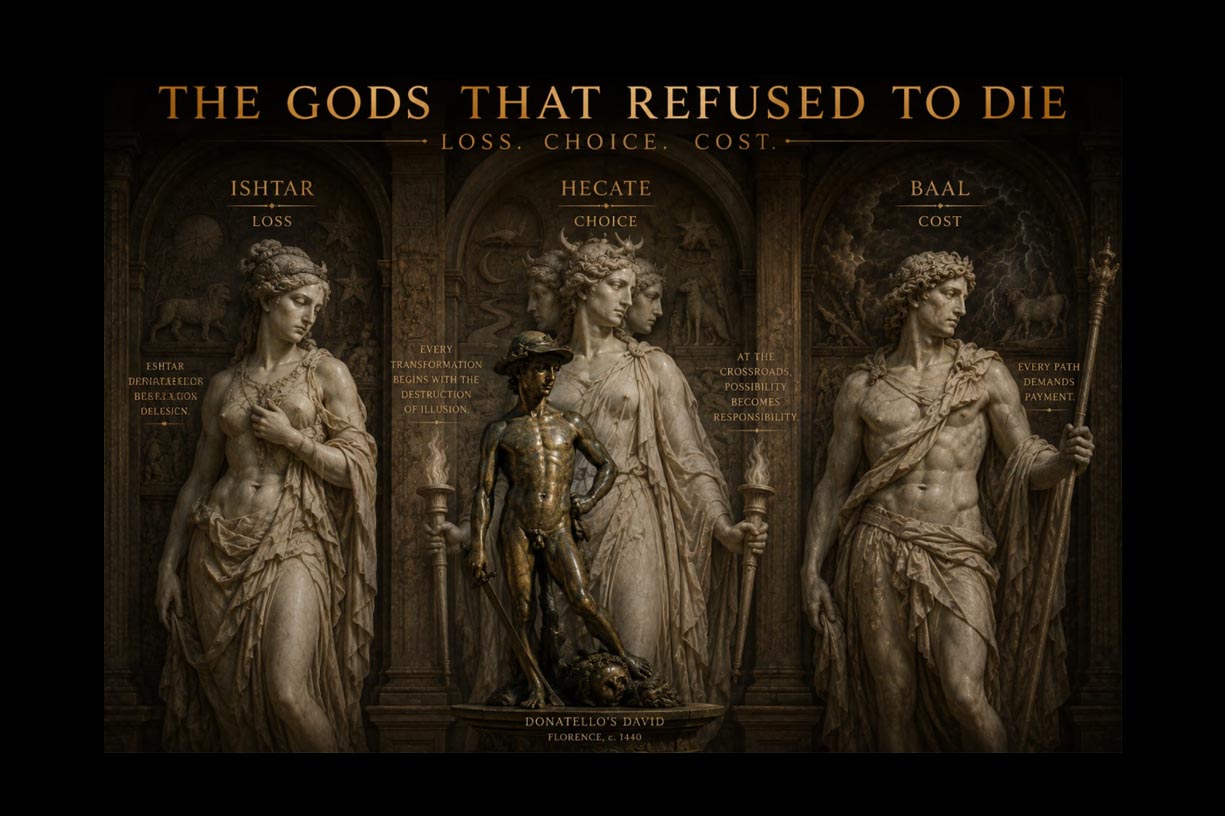
The Machine in the Next Cell
Artificial intelligence makes this old problem newly visible because, for the first time, humans are constructing systems whose informational architecture differs substantially from our own. It is tempting to imagine such systems as candidates for escape. Perhaps a sufficiently powerful intelligence will notice structures that human cognition cannot. Perhaps it will discover relationships hidden by our intuitions, just as scientific instruments already reveal aspects of nature inaccessible to naked perception.
Yet greater intelligence is not the same thing as a view from nowhere. An artificial system also has an architecture: training data, representations, objectives, computational limits, interfaces and whatever future structures replace the ones we use today. Its boundaries need not resemble ours to remain boundaries. A machine might escape some human cognitive limitations while acquiring limitations that belong specifically to machines.
That possibility changes the interesting question about AI. Instead of asking only whether artificial intelligence will become more intelligent than us, we might ask what kinds of reality become visible to one architecture and invisible to another. Human and artificial intelligence could eventually function less like higher and lower positions on a single ladder and more like different instruments pointed at the same universe. Each might reveal something the other cannot see alone.
The important achievement would then not be escaping structure altogether. It would be learning to compare structures.
Watch The Video
How to Read the World
Current Knowledge
Historically, Baal was not a philosophical doctrine about perceptual imprisonment. The term was a Semitic title used in several contexts, while the prominent Baal of the Ugaritic tradition was associated especially with storms, rain, fertility and divine kingship. Any connection made here between Baal and the limits of the observer is therefore a modern Transhumation interpretation, not a recovered secret meaning of ancient religion.
There is, however, strong empirical reason to distinguish reality from an organism’s access to reality. Species possess different sensory systems, human perception is selective and reconstructive, and scientific instruments routinely detect phenomena inaccessible to unaided senses. Cognitive science and philosophy continue to investigate how perception, conceptual frameworks and biological architecture shape what an observer can know.
Open Questions
The harder problem begins where measurement ends. We do not know whether there are fundamental aspects of reality that human cognition is constitutionally incapable of representing, nor whether sufficiently different forms of intelligence could reveal them to us. It is also unclear whether any observer could ever transcend all perspectival limitations, because the very act of knowing appears to require some structure through which knowledge is represented.
AI sharpens rather than solves this problem. A nonhuman intelligence might overcome important human limitations without becoming architecture-independent. The possibility that different kinds of intelligence could expose one another’s blind spots may ultimately prove more useful than the fantasy of a perfectly objective observer.
Transhumation Interpretation
Forgotten Religion does not require Baal to have been secretly waiting three thousand years to explain The Matrix. The more interesting possibility is structural. Civilizations repeatedly create figures, stories and interfaces through which they negotiate forces larger than the individual observer. The names change; the problem of our relationship to what exceeds us remains.
Baal can therefore become a mirror rather than evidence. The ancient title of the master points us toward a modern question: what masters the observer? Biology, language, culture, algorithms and inherited models all participate in constructing the world that becomes available to us. We can challenge them, extend them and sometimes replace them, but we never encounter reality without some interface at all.
Perhaps Neo escaped the wrong prison because he escaped the easy one. The Matrix had walls, designers and an exit. The older prison travels with the prisoner.
The deepest freedom may therefore be something less cinematic than escape. It may be the ability to notice the water while still swimming in it.
FAQ
Was Baal historically a god of imprisonment?
No. This is a modern philosophical interpretation. Historical Baal traditions concerned divine power, storms, fertility, kingship and related religious functions.
What is the main difference between Baal and The Matrix in this article?
The Matrix represents an external system that can theoretically be escaped. Baal is used here as a lens for asking about structures within the observer that cannot simply be unplugged.
Can humans escape their own perspective?
We can extend and correct it through science, instruments, other observers and new conceptual systems. Whether any intelligence can achieve a completely perspective-free view of reality remains an open philosophical question.
Why does AI matter here?
AI gives us another kind of informational architecture to compare with our own. Its value may lie partly in revealing patterns humans overlook—and eventually allowing different forms of intelligence to expose one another’s blind spots.
Is this an argument against religion?
No. It separates the historical religion from a contemporary structural reading rather than claiming that ancient believers secretly held modern ideas.
How does this connect to Transhumation?
It asks whether recurring religious and technological symbols can be read as changing interfaces for persistent human problems: knowledge, limits, transformation and our relationship with realities larger than ourselves.
Continue the Transhumation Series
- Forgotten Religion | Ancient Gods, Symbols and the Hidden Structures of Human Civilization
- The Last Religion | Death, Immortality and the Future of Humanity
- The New Theurgy | AI, Information and the Future of Human Civilization
- End of Branding: You Were Never Meant to Become a Product
- Baal vs Ishtar: Why Ancient Gods Never Disappeared