
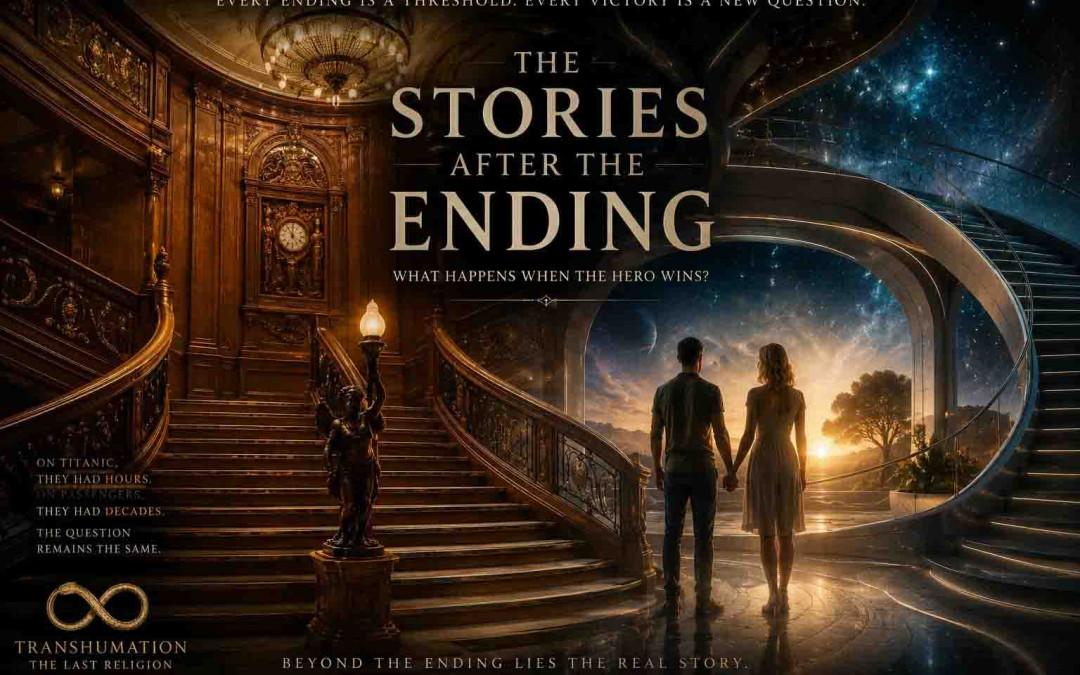
Every child knows the oldest ending in history.
And they lived happily ever after.
The king defeated his enemies.
The princess found love.
The hero returned home.
The war was over.
The door closed.
The story ended.
But reality asks a strange question:
What happened the next morning?
The Day After the Victory
It is easy to be a hero for a single moment.
A battle.
A sacrifice.
A final decision.
A dramatic goodbye.
But what happens after the music stops?
What happens when the hero must wake up the next day and continue living?
The greatest challenge is not always winning.
Sometimes the greatest challenge is surviving the victory.
The Titanic That Never Reached the Ending
The tragedy of Titanic lasted only a few hours.
The characters had to answer impossible questions in a very short time.
Who do I save?
What do I sacrifice?
What is more important than my own survival?
But imagine a different Titanic.
A ship that will not sink tonight.
A ship that will slowly become a prison.
A ship where you have fifty or eighty years before the final destination.
Suddenly the question changes.
Not:
How do you die?
But:
How do you live?
This is the shift that makes Passengers so fascinating.
The iceberg disappears.
The loneliness remains.
The Forgotten Part of Every Myth
Every mythology hides this silence.
What happened after the hero became king?
What happened after the monster was defeated?
What happened after the promised land was found?
The greatest transformations often begin after the celebration.
Because every ending is also a new threshold.
A new Janus gate.
The Problem of Immortality
This may be why humanity has always been fascinated with eternity.
Many stories focus on escaping death.
Finding paradise.
Reaching heaven.
Becoming immortal.
But another question waits behind the door:
What happens after forever begins?
The greatest dream can become the greatest challenge.
The Unwritten Chapters of Humanity
Human civilization also lives inside an unfinished story.
For thousands of years, humanity fought to survive.
Now we ask new questions:
What happens when intelligence is no longer limited to biology?
What happens when memory can outlive the body?
What happens when machines become our companions?
What happens after the human story reaches its oldest goals?
The final chapter may only be the beginning.
The Story That Continues
Perhaps the greatest mistake is believing that an ending is a destination.
Every ending creates a new beginning.
Every answer creates a new question.
Every victory creates a new responsibility.
This is why the most interesting stories are not the ones that end with a final page.
They are the ones that leave the next page blank.
Waiting for someone to write it.
Want to Explore More..?
Watch The Video Below
Continue reading...
End of Survival

FAQ
Why do most stories end after the victory?
Because stories usually stop at the highest emotional moment: the battle is won, the lovers unite, or the hero achieves the goal. The difficult challenge of living with the consequences often remains untold.
What happens after “happily ever after”?
That is where real life begins. Every achievement creates new responsibilities, problems, and choices.
How does this idea relate to Titanic and Passengers?
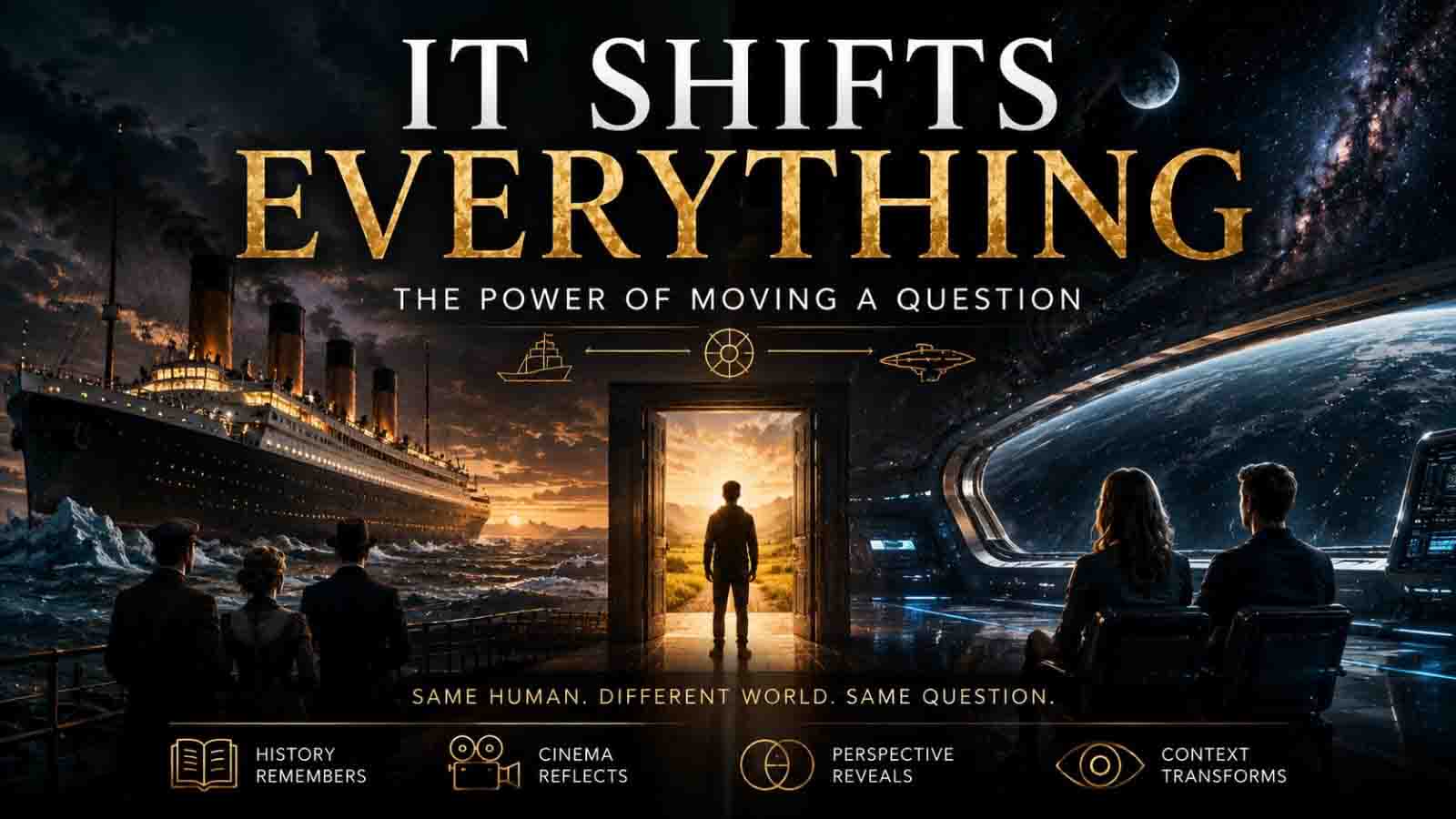
Titanic asks how people behave when they have only hours left to live. Passengers shifts the same question into a different scale: what does a person do when they have decades but no real escape?
Are unfinished stories more interesting?
Often they are. The unknown future leaves space for imagination, new conflicts, and new human transformations.
How does this connect to Transhumation?
Transhumation asks the same question on a civilizational scale: what happens after the endings humanity has always imagined—after death, after religion, after biology, and after the human era itself?
Continue the Transhumation Series
Explore the full journey:
- End of Reality — Where Do You Really Exist?
- End of Physics — Are the Laws of Reality Real?
- End of the Real World — Reality Is No Longer Required
- End of Consciousness — Beyond the Human Mind
- End of Death — When Human Limits Disappear
- End of Religion — When Technology Replaces Faith