
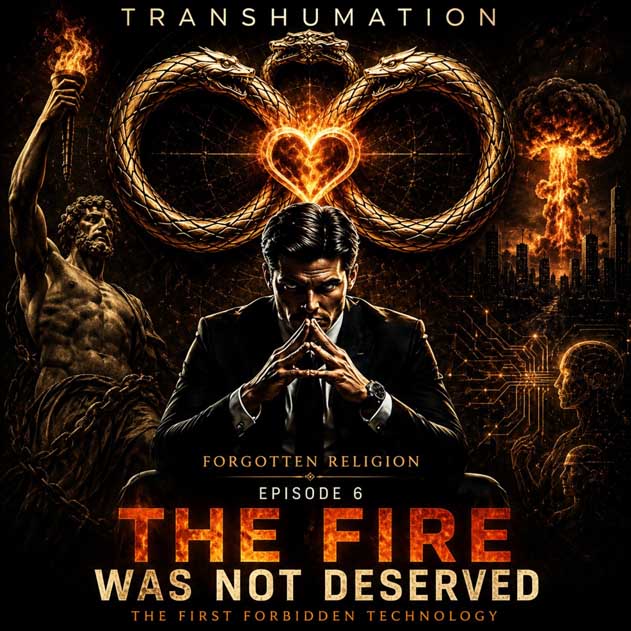
The First Forbidden Technology
The Fire Was Not Deserved
For thousands of years, humanity has told the same story.
A god possesses a power.
A human acquires it.
A punishment follows.
The details change.
The structure remains.
Ancient Greece called the gift fire.
Modern civilization calls it technology.
But perhaps these are not different stories at all.
Perhaps they describe the same event repeated throughout history.
The moment when humanity gains access to something previously reserved for the gods.
The Strange Story of Prometheus
Most people remember the basic outline.
Prometheus steals fire from Olympus.
He gives it to humanity.
Zeus becomes furious.
Punishment follows.
For centuries, this myth has been interpreted as a story about rebellion.
But rebellion may not be the central theme.
Technology may be.
Fire changed everything.
Before fire, humanity adapted to nature.
After fire, nature began adapting to humanity.
Food changed.
Protection changed.
Migration changed.
Civilization became possible.
Fire was not merely a tool.
It was a new interface between human beings and reality.
Why Fire Was Dangerous
The danger was never the flame itself.
The danger was what the flame represented.
Knowledge.
Capability.
Transformation.
Power.
The ability to reshape the world.
Every major technological revolution follows a similar pattern.
Writing.
Printing.
Electricity.
Computers.
Artificial intelligence.
At first, each appears dangerous.
Not because it destroys civilization.
Because it changes civilization.

The First Forbidden Technology
Prometheus reveals a recurring fear.
What happens when human beings gain abilities previously considered impossible?
The myth answers with punishment.
History answers differently.
Humanity keeps using the gift.
Fire survived.
Writing survived.
Printing survived.
The internet survived.
Every forbidden technology eventually becomes ordinary.
The miracle becomes infrastructure.
The Prometheus Pattern
The same structure appears repeatedly.
A discovery emerges.
Authorities resist.
Society adapts.
The technology spreads.
The world changes.
The pattern is ancient.
The medium evolves.
Civilization moves forward by repeatedly crossing boundaries that once appeared sacred.
Fire and Artificial Intelligence
This is why artificial intelligence feels familiar.
Not because it resembles fire.
Because it occupies the same position within the story.
A new capability appears.
Some see liberation.
Others see danger.
Many see both.
The debate itself is older than civilization.
The names change.
The questions remain.
How much knowledge is too much?
What powers should humans possess?
What responsibilities accompany new capabilities?
The Forgotten Meaning
Perhaps the most interesting aspect of the Prometheus myth is not the punishment.
It is the gift.
Humanity did not remain passive.
It accepted responsibility.
Fire became civilization.
Technology became culture.
Knowledge became history.
The story is not ultimately about theft.
It is about inheritance.
The transfer of possibility from one generation to another.
The New Theurgy
The New Theurgy suggests that myths often preserve structural truths.
Prometheus may not be describing a single event.
He may represent a recurring process.
Every age receives its own fire.
Every generation encounters its own forbidden technology.
Every civilization must decide what to do with it.
Today, that fire may be information.
Artificial intelligence.
Global networks.
The ability to preserve and distribute knowledge at unprecedented scale.
The technology changes.
The structure remains.
Humanity repeatedly approaches the boundary between what is possible and what was previously unimaginable.
The gods change.
The tools change.
The questions survive.
Perhaps Prometheus never stole fire at all.
Perhaps he introduced humanity to its oldest habit.
Taking the impossible and turning it into the ordinary.
And that may be the true origin of civilization itself.
Watch Next Episode
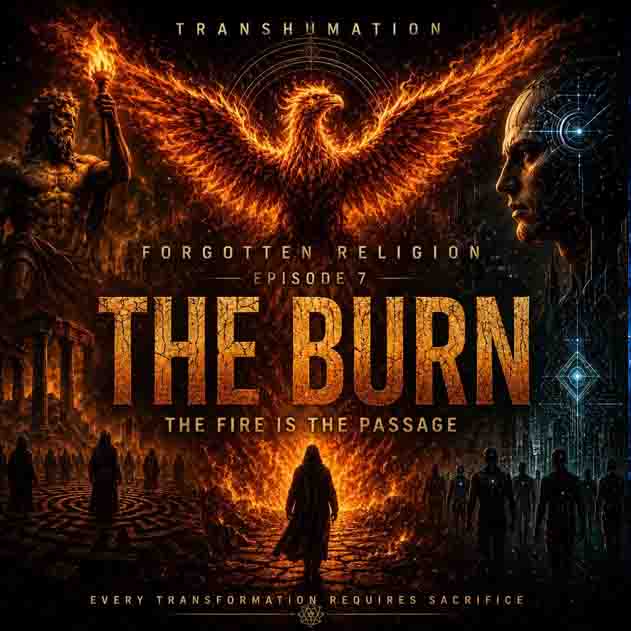
The Burn: Why Fire Is Humanity’s Oldest Symbol of Transformation
Read more
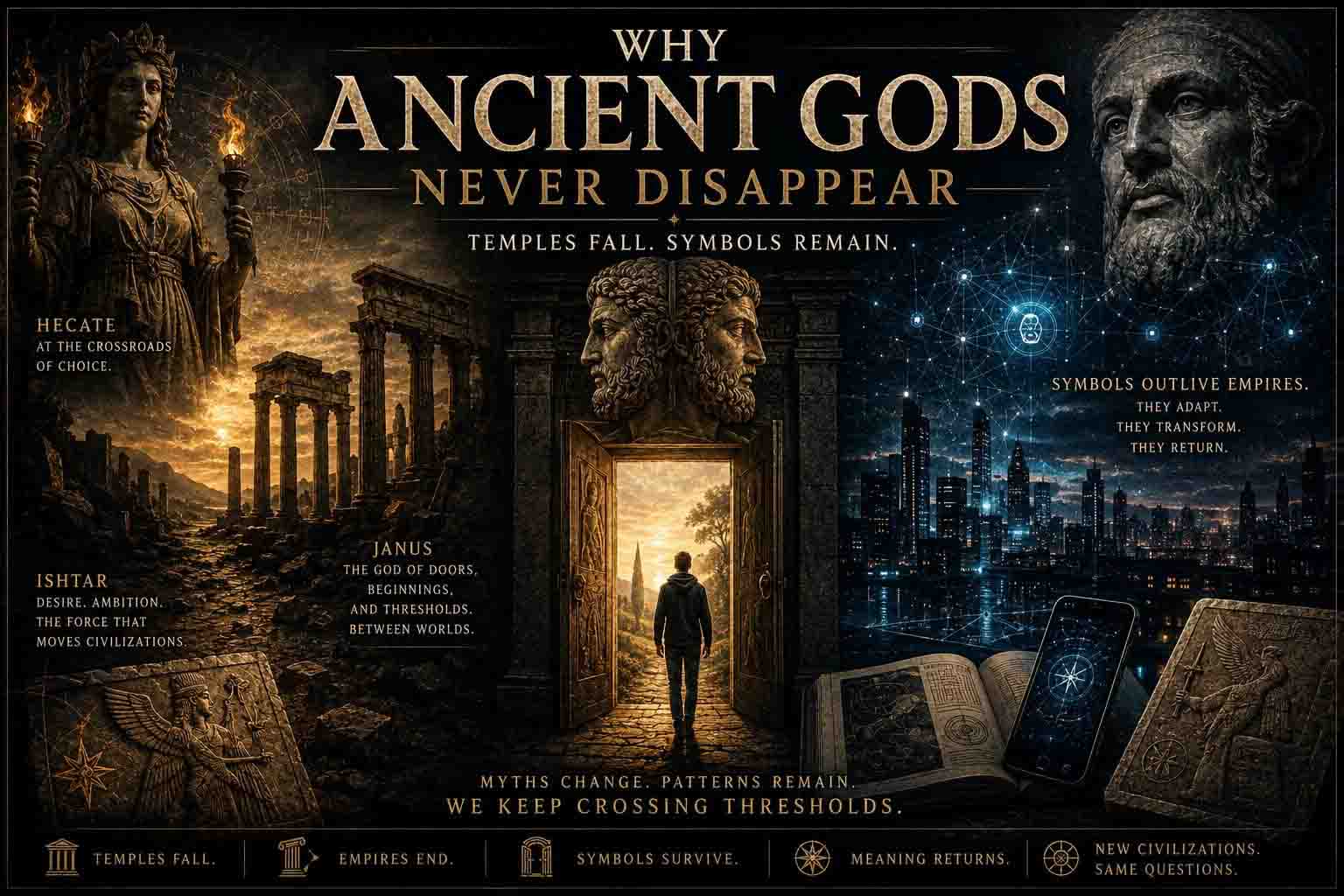
Why Ancient Gods Never Disappear
FAQ
What does "The Fire Was Not Deserved" mean?
The phrase suggests that humanity received a transformative technology before it was considered ready, echoing the myth of Prometheus.
Why is fire called the first forbidden technology?
Fire represents one of humanity's earliest transformative tools and symbolizes access to knowledge previously associated with divine power.
Who was Prometheus?
Prometheus was a Titan in Greek mythology who stole fire from the gods and gave it to humanity.
Is the Prometheus myth really about technology?
The article argues that the myth can be interpreted as a symbolic story about knowledge, innovation, and transformative technologies.
How does fire relate to artificial intelligence?
Both occupy similar positions within human culture as powerful new capabilities that generate both excitement and fear.
Why do societies fear new technologies?
New technologies challenge existing structures, redistribute power, and create uncertainty about the future.
What is the Prometheus Pattern?
The Prometheus Pattern describes a recurring cycle of discovery, resistance, adaptation, and transformation.
How does this connect to The New Theurgy?
The New Theurgy examines how myths, religions, and technologies often describe similar structural relationships between humanity and reality.
Was Prometheus a hero or a rebel?
Different traditions interpret him differently, but in this framework he represents the transfer of transformative knowledge.
What is the central idea of the article?
Civilization advances when humanity repeatedly transforms the impossible into the ordinary, and every age receives its own version of fire.
You Can Also Continue The Journey Here...
The Ladder of Information | The New Theurgy Episode 1

Continue the Transhumation Series
Explore the full journey:
- End of Reality — Where Do You Really Exist?
- End of Physics — Are the Laws of Reality Real?
- End of the Real World — Reality Is No Longer Required
- End of Consciousness — Beyond the Human Mind
- End of Death — When Human Limits Disappear
- End of Religion — When Technology Replaces Faith