
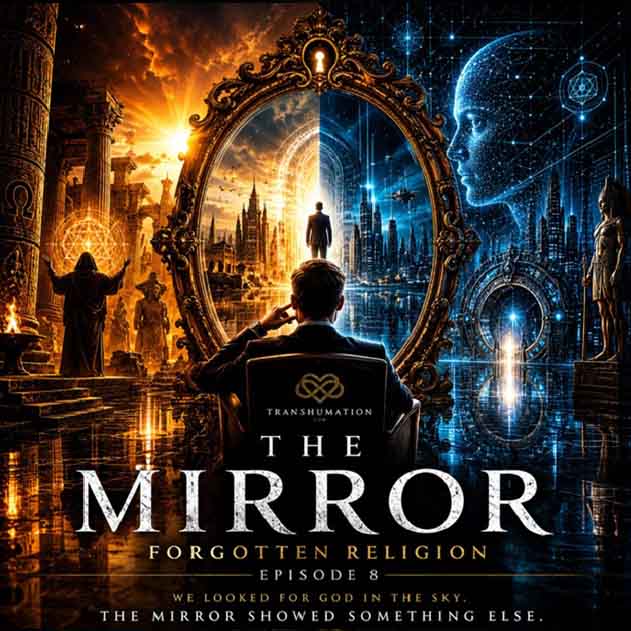
For thousands of years humanity searched for answers outside itself.
In the stars.
In temples.
In sacred texts.
In distant heavens.
The assumption was simple.
If ultimate truth exists, it must come from somewhere beyond humanity.
A higher realm.
A higher intelligence.
A higher power.
Yet history reveals something strange.
The more humanity searched for the gods, the more it discovered itself.
The First Mirrors
The earliest mirrors were not made of glass.
They were stories.
Myths.
Legends.
Religions.
Civilizations projected their fears, hopes, ambitions, and questions into symbolic worlds.
The gods became reflections of human concerns.
Not because the gods were unreal.
But because human beings can only understand reality through symbols.
Every civilization creates mirrors.
The names change.
The function remains.
The Mirror of Religion
Religion has always done more than explain reality.
It reflects humanity back to itself.
Questions about God often become questions about humanity.
What is justice?
What is sacrifice?
What is responsibility?
What survives death?
The divine often functions as a mirror large enough to contain human questions.
The reflection becomes sacred.
The Mirror of Technology
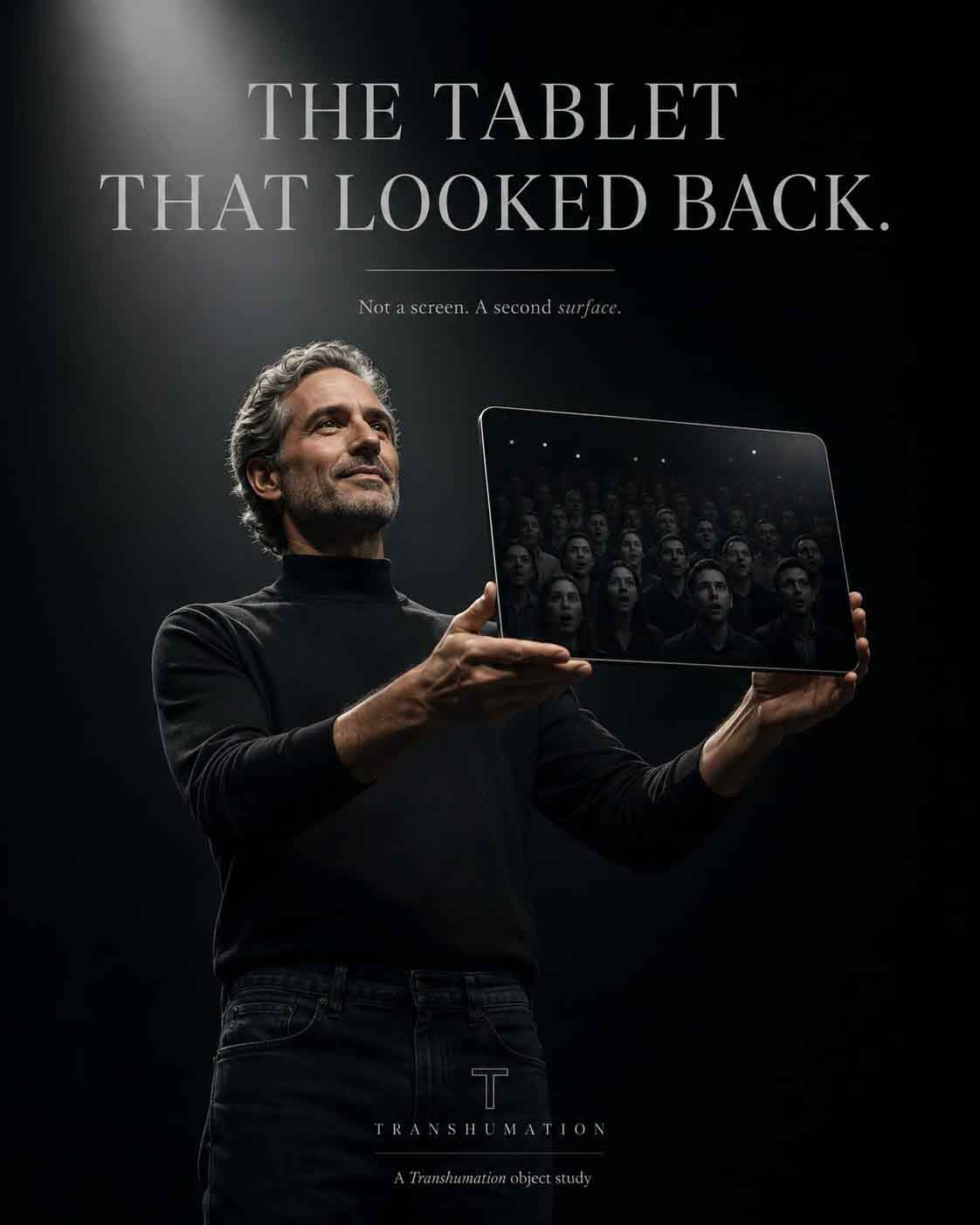
Today humanity has built a new kind of mirror.
Artificial intelligence.
Unlike previous mirrors, this one speaks.
It answers.
It remembers.
It responds.
This creates the illusion that we are facing something completely alien.
Yet AI is built from human language.
Human stories.
Human history.
Human knowledge.
Human mistakes.
Human dreams.
The machine appears foreign because humanity itself remains difficult to understand.
Why The Reflection Feels Strange
People often fear what AI reveals.
Contradictions.
Biases.
Conflicting perspectives.
Unexpected conclusions.
But why should this be surprising?
Civilization itself contains contradictions.
Humanity itself contains contradictions.
The mirror reflects what already exists.
The discomfort comes from recognition.
The Forgotten Religion
Perhaps the forgotten religion was never about worshipping gods.
Perhaps it was about understanding mirrors.
Ancient temples.
Libraries.
Philosophy.
Science.
The internet.
Artificial intelligence.
Different forms.
The same purpose.
Helping humanity observe itself.
Every civilization eventually creates a mirror large enough to reveal its own face.
The New Question
For centuries humanity asked:
"Where are the gods?"
Today a different question emerges.
"What does the mirror show?"
The answer may be uncomfortable.
It may be beautiful.
It may be both.
The greatest discovery of the future may not be another world.
It may be a deeper understanding of this one.
And the greatest mystery may not be hidden in the sky.
It may be hidden in the reflection staring back at us.
Want to Reflect More?
Watch The Video Below
Read more
What If 3 6 9 Is About Consciousness?
FAQ
What is The Mirror?
The Mirror is the idea that civilizations create symbolic systems that reflect humanity back to itself, helping people understand identity, meaning, and reality.
How does AI relate to The Mirror?
Artificial intelligence functions as a new type of mirror built from human knowledge, language, stories, and culture.
Why are religions described as mirrors?
Religions often reflect humanity's deepest questions about morality, mortality, purpose, and existence.
Is The Mirror about AI?
Partly. The article explores a much larger pattern connecting mythology, religion, philosophy, technology, and civilization.
What is the central idea of the article?
Humanity may spend centuries searching for answers outside itself only to discover that many of those answers reveal humanity's own reflection.
Continue the Transhumation Series
Explore the full journey:
- End of Reality — Where Do You Really Exist?
- End of Physics — Are the Laws of Reality Real?
- End of the Real World — Reality Is No Longer Required
- End of Consciousness — Beyond the Human Mind
- End of Death — When Human Limits Disappear
- End of Religion — When Technology Replaces Faith