
Where Does a Dream Take Place?
We have become very good at describing ourselves as appliances. We need to recharge, switch off, restart, conserve energy. By Friday afternoon, an entire office can sound like a cupboard of unreliable electronics. I understand the appeal. A machine that needs charging is easier to forgive than a person who no longer wishes to answer another email.
Then somebody puts an iron beside a bed, and the vocabulary begins to misbehave. Unplug the iron and leave it upright. It will cool. Put a tired person under the duvet and something rather less economical may happen: a railway station, a childhood kitchen, a conversation with somebody who has been dead for years. The room contains neither the station nor the person speaking, but the dreamer may experience both.
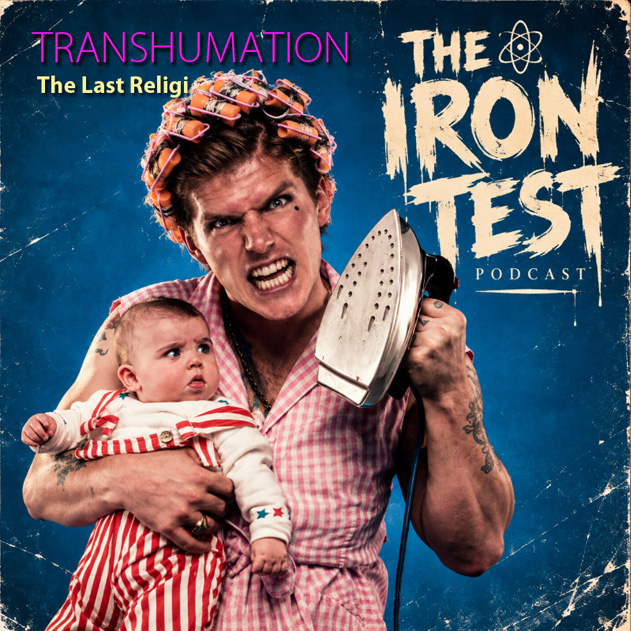
This is the modest domestic provocation behind The Iron Test. I like its choice of instrument. An iron has none of the glamour that usually accompanies discussions of consciousness, and very little opportunity to conceal a philosophical ambition. It is supposed to make a shirt presentable. If our explanation cannot survive its company, perhaps the explanation needs pressing.
The Appliance Alibi
The tempting argument is also the wrong one. The iron is switched off; the sleeping brain is not. Sleep involves changing patterns of biological activity, and dreaming can occur in both REM and non-REM sleep. We do not need to invent consciousness escaping an inactive machine when the machine in question remains active. An attractive mystery deserves the courtesy of removing its easiest mistake.
Lucius makes that correction in the film, and it matters more than any impossible corridor. “This is off. You are not.” The comparison loses its false equivalence and becomes useful. Calling sleep a shutdown overlooks the very activity we are trying to understand. Calling it rest is reasonable, provided we remember that rest can include processes far more complicated than cooling a metal plate.
The Wrong Address
Once that correction is made, the question changes. How can a person experience being somewhere while their body remains elsewhere? In a dream, the bedroom need not supply the current scene. A kitchen may feel familiar without existing around the bed. A door can open onto a street, and the street can become a station without the dreamer demanding to speak to whoever approved the planning application.
The remarkable feature is often the ordinary confidence with which we accept the arrangement. We have a task, somebody is waiting, the train is leaving. There may be no moment at which we decide to enter another world. Experience simply presents a place from which events can be encountered. Only later, awake, do we discover how generously we had interpreted the available evidence.
“Where does a dream take place?” therefore contains two questions. We can investigate the biological processes associated with dreaming. We can also ask about the place experienced within the dream. The dreamed station is not a second physical station hidden somewhere inside the skull. Yet describing its neural conditions does not make the experience of standing on its platform disappear.

The Body on Loan
The distinction becomes especially intimate when the dream supplies a body. You may run, reach for a door or feel yourself arriving somewhere, while your physical body remains in bed. The film places those two scenes beside one another without asking either to abolish the other. A body can support the experience of movement without performing the particular movement experienced.
This gives us a useful sentence: the body and the experience of having a body are not exactly the same thing. It offers no licence to discard biology. It asks us to distinguish the living organism from the bodily perspective that appears within experience. Technology promising to give us another body must eventually answer to that distinction, however impressive its headset looks on a launch stage.
Before the Headset
Virtual reality arrived with equipment, investment and an understandable wish to be considered unprecedented. Dreaming complicates that introduction. Long before electronic displays, people could experience environments that were not physically present around them. Calling dreams “virtual worlds” is an analogy, rather than a claim that sleeping brains operate like commercial software. The historical priority is nevertheless difficult to ignore.
What technology offers is a different relationship with generated experience: external construction, repeatable access, interaction and, sometimes, environments shared with other users. A private dream does not provide those things reliably. The interesting comparison concerns what each arrangement allows a person to experience, and how that experience is constrained. Biology has a long past here; technology still has particular promises to prove.
Convince Me
At this point, somebody will offer a soul, an upload or a universe made of code. I would prefer to keep the iron on the table a little longer. Dreams do not establish that a mind can survive independently of a brain. Nor does the capacity to generate a convincing scene establish that a digital reconstruction would preserve the person experiencing it. Those arguments require evidence the bedroom has not supplied.
But caution should preserve curiosity rather than close the inquiry. Knowing that dreaming depends on an active biological system is a beginning. We can still investigate how activity supports an experienced setting, why some scenes feel convincing and how waking judgment differs from judgment within a dream. “Convince me” should remain an invitation to do the work. It becomes a poor scientific habit when it secretly means that nothing could.
What Comes Back
Morning restores the familiar arrangement. The bed is a bed, the window faces the same street, and the iron has acquired no memories of Paris. The dreamer may have acquired something, although it can dissolve before breakfast: fear without its original threat, tenderness toward an absent person, or the stubborn feeling of having spent time somewhere. A generated event can leave an actual emotional consequence.
That is enough to make the question worth keeping. We need not turn the night into a certificate of immortality to take its experiences seriously. The Iron Test leaves us with an organism in a room and an experience that may contain another room entirely. I find that more hopeful than a premature answer. Tomorrow somebody will promise to build a world behind a screen. Tonight, without buying anything, we may already encounter one.
Want to Know More?
How to Read the World

by
Current Knowledge
Sleep is an active biological state. Dreaming occurs in REM and non-REM sleep, and studies associate reports of dreaming with particular patterns of brain activity. A dreamed environment need not correspond to the physical surroundings of the sleeper. These observations establish neither consciousness independent of the brain nor the feasibility of preserving personal identity through mind uploading.
Open Questions
How do biological processes support the experience of a place, a body and a point of view? What makes an implausible dream scene feel acceptable from within it? Which similarities between dreams and technological virtual environments help explain experience, and which conceal important differences?
Transhumation Interpretation
The future has a long past. Technologies that promise new worlds enter a history in which living systems already generate experienced environments. The Iron Test uses an ordinary object to expose the limits of an ordinary metaphor, leaving a better question available: what must an explanation account for when a body stays in bed and experience goes somewhere else?
FAQ
What is The Iron Test?
The Iron Test compares an unplugged iron with a sleeping person to examine the limits of describing sleep as “switching off.” The iron cools, while the sleeping brain remains active and can support dreams. The comparison asks what an explanation of sleep must account for when the body stays in bed but experience contains another place.
Does the brain switch off during sleep?
No. Sleep involves changing patterns of brain activity rather than a complete shutdown. Dreams can occur during both REM and non-REM sleep, although their character and frequency vary. Resting and being inactive are not the same thing.
Where does a dream take place?
The biological processes supporting a dream occur in the sleeping brain, but the place experienced within it may be a kitchen, a railway station or an unfamiliar city. That experienced setting is not another physical location inside the skull. The question distinguishes the processes that support an experience from the environment that appears within it.
Why can we experience movement while lying in bed?
A dream can include the experience of running, reaching or touching without the physical body performing those particular actions. This illustrates a distinction between the body and the experience of having a body. It does not establish that bodily experience can exist independently of the brain.
Are dreams a form of virtual reality?
Dreams and technological virtual reality both allow us to experience settings that need not be physically present around us. The comparison has limits: dreams are internally generated, while VR uses external equipment and can provide deliberately designed, interactive environments. Calling dreams “virtual worlds” is a useful analogy rather than a claim that brains work like computer software.
Do dreams prove the existence of a soul or make mind uploading possible?
No. Dreaming shows that an active biological system can support experiences that differ from its immediate surroundings. It does not demonstrate consciousness surviving without a brain, or establish that a digital copy would preserve someone’s identity. Those possibilities require separate arguments and evidence.
Continue the Transhumation Series
- Forgotten Religion | Ancient Gods, Symbols and the Hidden Structures of Human Civilization
- The Last Religion | Death, Immortality and the Future of Humanity
- The New Theurgy | AI, Information and the Future of Human Civilization
- End of Branding: You Were Never Meant to Become a Product
- Baal vs Ishtar: Why Ancient Gods Never Disappeared