
How Names Accumulate Meaning
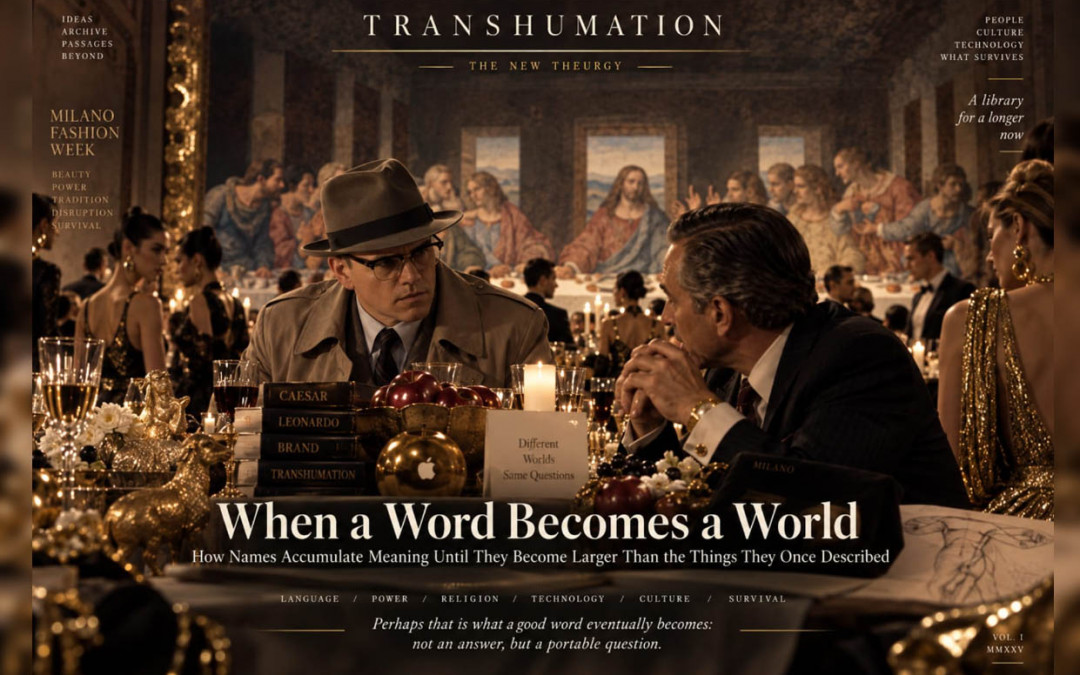
There is a dinner in The Devil Wears Prada 2 that could almost have been designed as an experiment in cultural memory. Milan Fashion Week is underway, and the room is filled with the machinery of contemporary desire: fashion editors, designers, celebrity, capital, reputation, clothing that may exist for a season and photographs that may circulate for an afternoon. At the end of the room is something operating on an entirely different timescale. Leonardo da Vinci’s The Last Supper watches over the table.
The production did not film beside the original painting in the refectory of Santa Maria delle Grazie. Leonardo’s work is far too fragile for that kind of use. Instead, the filmmakers reconstructed the setting at roughly three-quarters scale and commissioned a hand-painted recreation of the mural, after studying the original closely. The substitution makes the scene more interesting rather than less. A five-hundred-year-old religious image was so important to a twenty-first-century story about fashion that an entire room had to be rebuilt around its pattern.
Nothing in that room has only one meaning anymore. Christ belongs to Christianity, but also to painting, museums, calendars, advertising and popular culture. Leonardo belongs to Renaissance Milan, but also to engineering, genius, luxury branding and our modern cult of the polymath. Fashion Week is supposedly about the newest thing in the room, yet the oldest image possesses more accumulated cultural capital than almost anything surrounding it. The guests are not merely dining beneath a painting. They are borrowing five centuries of memory.
That is what successful symbols eventually do. They cease to be decorations placed inside culture and become pieces of architecture through which culture sees itself.
How Does a Name Become Larger Than the Person Who Carried It?
Consider Caesar. Before it became a political category, Caesar was a Roman cognomen belonging to a branch of the Julian family. Even its original etymology remains uncertain. Ancient explanations connected it variously with hair, cutting and eye colour, but modern linguistic work treats those stories cautiously and regards the origin of the name as unresolved. What is not unresolved is what happened afterward: the name became a dynastic and imperial designation and ultimately gave rise to words such as German Kaiser and Russian Tsar.
That may be one of the most remarkable forms of survival available to a human being. Caesar conquered territory, but Caesar eventually conquered a category. Long after the geography of his world had changed, people who had never seen Rome could use descendants of his name to describe supreme political authority. The linguistic afterlife travelled farther than the man ever could.
A physical empire has borders. A semantic empire does not operate quite that way. Once a word becomes sufficiently dense with meaning, other societies can adopt it, translate through it, argue with it and use it to classify things that did not exist when the word began its journey. The original object becomes only the first deposit in a much larger account.
This is also why the old story that Caesar somehow meant “bushy-haired” is less interesting than what actually happened to the word. The etymology may remain uncertain; the cultural transformation does not. A private family name became public conceptual infrastructure.
At that point, the word no longer needed the man.
Why Apple Had to Teach the World What Apple Meant
Modern branding attempts to manufacture a similar process, although usually much faster and with far greater conscious control. Apple is one of the most famous examples because the name begins almost comically far from the thing it now signifies. An apple is fruit. It belongs to orchards, kitchens, school lunches, fairy tales, temptation, Newton, health and childhood. Nothing in the noun naturally suggests a personal computer, an operating system or a phone.
The company therefore had to spend decades making an additional meaning feel inevitable. Macintosh, iPod, iPhone, App Store, Watch: each successful product deposited another layer around the same word. Eventually Apple could appear in the business pages and no reader wondered whether fruit prices had moved overnight. The old meaning remained, but another semantic structure had been built on top of it.
This is often treated as evidence that the name itself was brilliant. That is only partly true. A sufficiently strong company can make an ordinary word extraordinary, but the difficult part is not choosing the word. The difficult part is persuading millions of independent minds to attach roughly compatible associations to it. Advertising may introduce the association, but products, experience and repetition decide whether the association survives.
Had Apple’s products repeatedly disappointed users, the company could still have spent billions on marketing and taught the world what Apple meant. It simply would have taught the wrong lesson.
This is why a brand is not really a logo, a trademark or even a name. Those are addresses. The brand is memory deposited around the address.
And that memory resides partly outside the company that created it.
Why Are Some Words Already Half-Built?
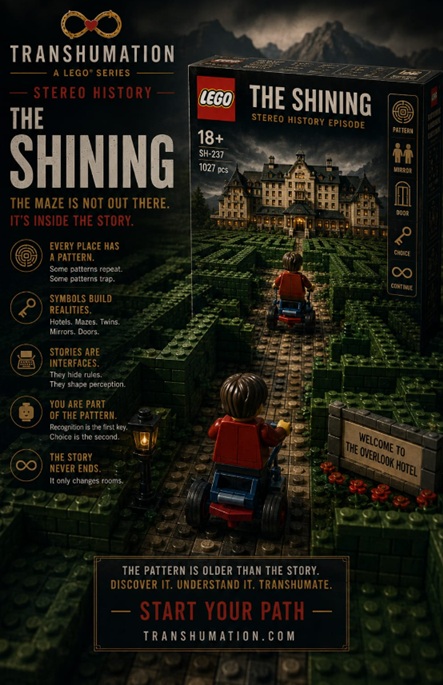
Some names begin with an unusual advantage. They do not arrive empty.
Transhumation is one of them.
In its established meaning, transhumance refers to the seasonal movement of livestock between grazing areas. The term contains much more structure than a neutral invented brand name. There is a place of departure and another place capable of sustaining life. There is a route between them. There is timing, weather and risk. There is a flock that has to survive the passage and a shepherd responsible for getting it through. The process exists because remaining where one is can eventually become more dangerous than moving somewhere new.
Nothing about that definition requires computers, artificial intelligence or futurism.
Yet to a contemporary English-speaking ear, Transhumation sits unusually close to transhumanism. The visual and phonetic resemblance evokes another family of questions almost automatically: artificial intelligence, biological augmentation, mind uploading, synthetic bodies, altered forms of human existence and the possibility that humanity may eventually cross a boundary beyond which its present form is no longer guaranteed.
That resemblance should not be turned into mythology. Pastoral migration did not predict AI. Ancient shepherds were not performing information theory. The historical meaning and the modern technological association do not share a hidden genealogy merely because they happen to fit together beautifully.
What they share is something more useful: a structure of passage.
The older word asks what must be done to move something living from one environment to another without losing it on the road. The contemporary question asks what would have to survive if the thing crossing the boundary were memory, identity, culture or perhaps one day the human being itself.
That is why some words feel as though they arrive with rooms already waiting to be furnished.
Why Does the Shepherd Keep Returning?
The shepherd is among the oldest political and religious metaphors because the occupation contains an ambiguity that civilization never fully resolves. A shepherd protects the flock, but protection requires direction. He chooses when to move, where to go and which dangers justify intervention. He has knowledge that the flock does not possess, yet that difference in knowledge is precisely what gives him power over it.
Christianity gave the image extraordinary durability in Western culture. Christ as the Good Shepherd and the Lamb of God placed guidance, sacrifice, vulnerability and protection inside one of Christianity’s central symbolic systems. But shepherd imagery is older than Christianity and has long been associated with rulers, communities and the responsibilities of leadership. The metaphor survives because the problem survives: how does an authority protect something without eventually confusing protection with possession?
Robert De Niro’s The Good Shepherd relocates the same structure into twentieth-century intelligence. Edward Wilson is not protecting sheep or souls. He is protecting secrets, institutions and a particular conception of national continuity. One of the film’s most memorable exchanges makes the substitution explicit. A mafioso asks what Wilson’s people possess when others have family, church, homeland, tradition or music. Wilson’s answer is effectively the state itself.
The title works because the old metaphor has travelled into a new environment without becoming identical to what it once described. Intelligence officers are not priests and intelligence agencies are not churches. Yet the underlying question remains legible: who is responsible for guiding the collective through dangers it may not even be allowed to see?
The darker question follows immediately. What happens when the shepherd begins protecting the institution that was created to protect the flock?
That question belongs as comfortably to politics and intelligence as it does to religion. Today it can be asked of recommendation systems, social platforms and artificial intelligence as well. The shepherd may become a librarian, an editor, an algorithm or a model deciding which information reaches us first. The costume changes more easily than the role.
Why Does Leonardo Still Work at Milan Fashion Week?
The dinner beneath The Last Supper becomes fascinating once viewed from this perspective because it demonstrates how cultural meaning migrates without ever arriving empty-handed. Leonardo made the mural in late-fifteenth-century Milan for the refectory of Santa Maria delle Grazie. Its original context was Christian, monastic and devotional. Today the work also belongs to art history, tourism, education, reproduction, conservation science, cinema and the global mythology of Leonardo himself.
When a contemporary fashion film rebuilds that room, it does not erase any of those earlier layers. It relies on them. The scene works because the audience already knows, however vaguely, that this is not merely an attractive wall. Betrayal, hierarchy, ritual, sacrifice, Leonardo, Milan and the Renaissance have been deposited around the image for centuries. Fashion does not need to manufacture that significance; it can borrow against an enormous existing cultural balance.
There is something almost comically precise about the fact that the filmmakers had to make another physical carrier for the image. Leonardo’s original wall could not safely become a movie set, so craftsmen built a new environment capable of carrying enough of the old structure for recognition to survive. The original remained in the monastery. The pattern travelled to cinema.
That is not evidence that information exists without matter. Quite the opposite. Every version requires a carrier: wall, photograph, book, screen, projection, phone. What changes is that no single carrier has become indispensable to the cultural recognition of the structure.
The wall is fragile.
The pattern has become difficult to kill.
And that is one of the most important distinctions in understanding cultural survival.
What Is the Real Value of a Word?
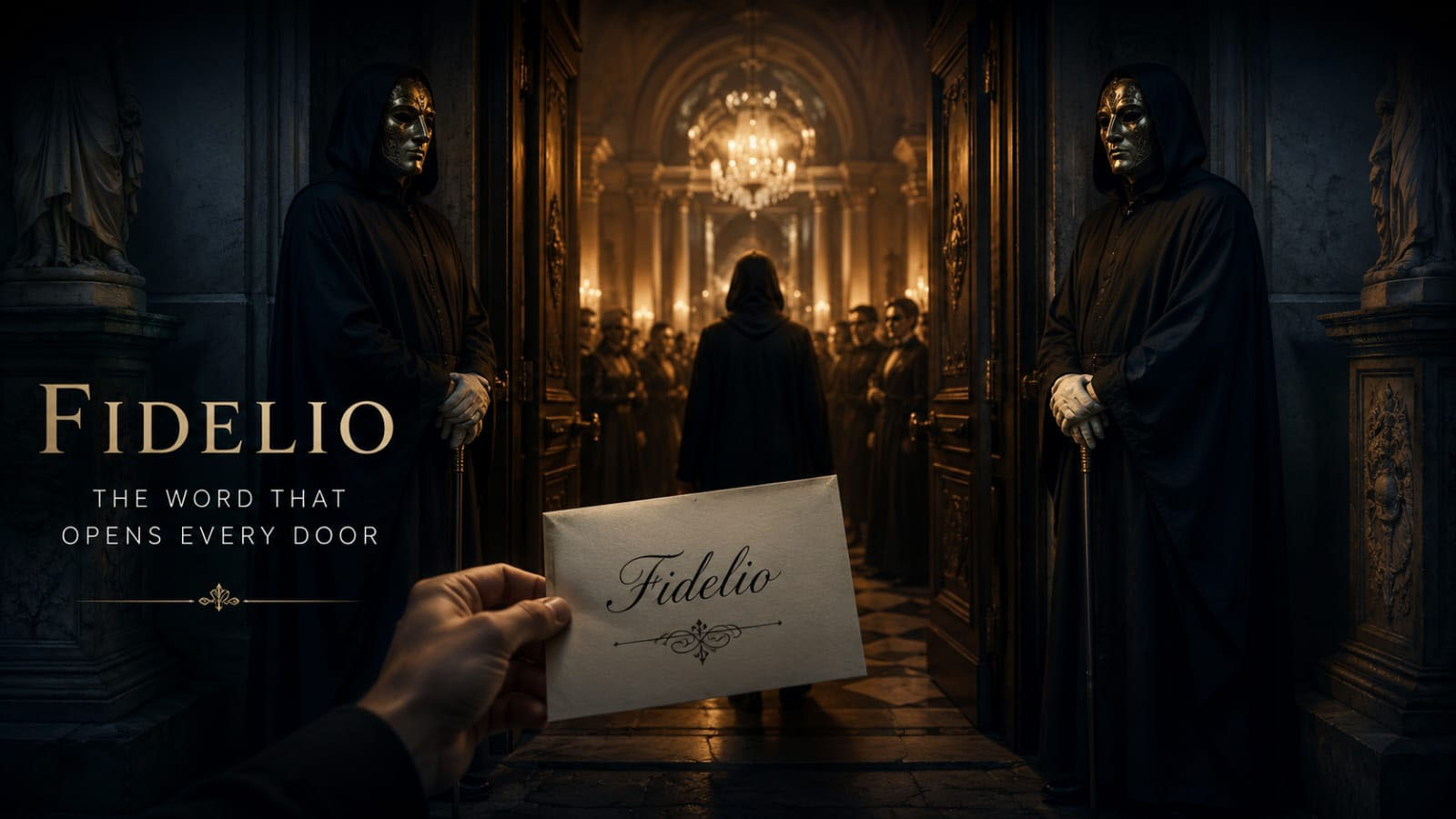
Conventional branding often focuses on the visible property: the trademark, logo, domain, packaging and design system. All of these can matter commercially. None of them, by themselves, explains why one collection of letters can eventually be worth millions while another remains available for the price of a domain registration.
The deeper asset is the field of associations accumulated around the word.
FRUGO without the memories of its advertising, taste, youth culture and return to the market is simply five letters. Apple without its products eventually returns to the orchard. Caesar without two thousand years of political afterlife is one Roman family name among many. Meaning is produced by repeated encounters between a sign and consequential experience.
This makes semantic value a peculiar kind of property. A company may legally own its trademark, but it cannot directly own the meaning inside a customer’s head. A writer may coin a concept, yet cannot guarantee how later readers will use it. Control is strongest at the beginning and often weakest at the moment of greatest success.
A truly successful word begins to escape.
That escape is not necessarily failure. It may be the highest possible evidence that a private symbol has become useful to other minds. A term becomes culturally important when people start reaching for it without first asking permission from the person who introduced it.
There is therefore a paradox at the center of every attempt to build meaning. The creator must work obsessively to establish coherence and then, if the project succeeds, gradually lose the monopoly on interpretation.
Caesar survived precisely because Caesar stopped belonging to Caesar.
Can Describing the World Actually Change the World?
There is a tempting phrase here: by describing the world, we create the world. It is beautiful, but it needs one correction.
Words do not create the physical phenomena they describe. Darwin did not cause evolution. Historians did not manufacture the Renaissance by naming it. The concept of modernity did not build railways, factories or cities. Reality retains its veto power.
But concepts can create ways of seeing.
That is a different kind of invention and often an enormously consequential one. Before a useful category exists, a group of phenomena may appear unrelated. Once the category is available, relationships become visible. The facts were already present; the map was missing.
A book carrying an author’s thought beyond the author’s lifetime, a religion surviving its founders, a melody moving from vinyl to cassette to MP3, an institution outliving generations of citizens and a hypothetical human mind reconstructed on another substrate are not the same event. Any theory that pretends otherwise becomes useless very quickly.
Yet each permits a related question: what must survive the passage before continuity becomes more than resemblance?
That question can travel.
And once a word reliably carries a question that previously required a paragraph to express, the word has begun doing intellectual work.
Can a Library Become the Definition of a Word?
This is one of the stranger possibilities created by the digital library.
Normally the dictionary comes first. It gives us a definition and then points outward toward examples. But an intellectual project can operate in the opposite direction. It can accumulate examples until the reader gradually infers the definition.
Upload contributes one case.
Hekate contributes another.
The ship of Theseus, Caesar, AI, MP3, Leonardo, Baal, Kubrick, the shepherd, the archive, the copied mind and the changing institution may initially look like unrelated shelves. They become intellectually connected only if the same small family of questions continues to return: what is moving, what is the carrier, what is preserved, what is lost, who guides the transition and at what point does continuation become replacement?
If that pattern becomes coherent enough, the library itself starts functioning as the explanation.
This is where a word can become more valuable than a slogan because a slogan tells people what to think about a brand. A library lets them discover what the word means by repeatedly encountering its boundaries.
Those boundaries are essential. If every historical change, technological development and mythological symbol can be declared an example of Transhumation, then the concept has no explanatory value. A theory that cannot exclude anything cannot teach us much about anything.
Some transitions destroy precisely what mattered.
Some copies are successors.
Some preservation is merely resemblance.
Some institutions should not survive.
Some apparent patterns are coincidences.
The word becomes stronger when it can survive those refusals.
Watch the Video
How to Read the World
Current Knowledge
Historical linguistics gives us abundant evidence that words can radically expand, narrow and change their meanings over time. Proper names can become titles, categories or ordinary nouns; borrowed words can travel into new languages and acquire functions that would have been unfamiliar to their earliest users. Caesar is an unusually clear example because its transformation can be followed across centuries: an old Roman cognomen became associated with dynastic and imperial power and ultimately contributed to later forms such as Kaiser and Tsar. The exact prehistoric origin of the cognomen remains uncertain, which is itself useful here: we know far more securely what history eventually made of the word than what the word originally meant.
Research on branding, memory and cultural transmission points toward a related but distinct process. Repetition matters, but repetition alone is not sufficient. Associations become durable when a name is repeatedly connected with experiences, objects, institutions or narratives that people consider consequential. This explains why brands cannot simply dictate their own meaning. The owner controls products, communications and legal marks; audiences participate in building the semantic field around them. A name can therefore become economically valuable while much of the thing that makes it valuable exists outside the owner’s physical possession.
Cultural symbols operate on longer timelines. Leonardo’s Last Supper still exists as a specific and exceptionally vulnerable physical work in Milan, but its cultural presence is distributed across reproductions, books, films, photographs, education and collective memory. The reconstruction made for The Devil Wears Prada 2 is a particularly clean demonstration of the distinction between an original object and a culturally portable pattern. The reproduction is not Leonardo’s painting, yet it can invoke Leonardo’s painting because enough of the recognizable structure and accumulated context survives the change of carrier.
What current knowledge does not establish is that every durable pattern has some independent existence beyond its carriers, or that continuity of information proves continuity of consciousness. A sonata can survive a damaged recording because it can be instantiated again elsewhere. A person presents a much harder problem. Cultural portability and first-person persistence should not be treated as interchangeable merely because the same metaphor can illuminate aspects of both.
Open Questions
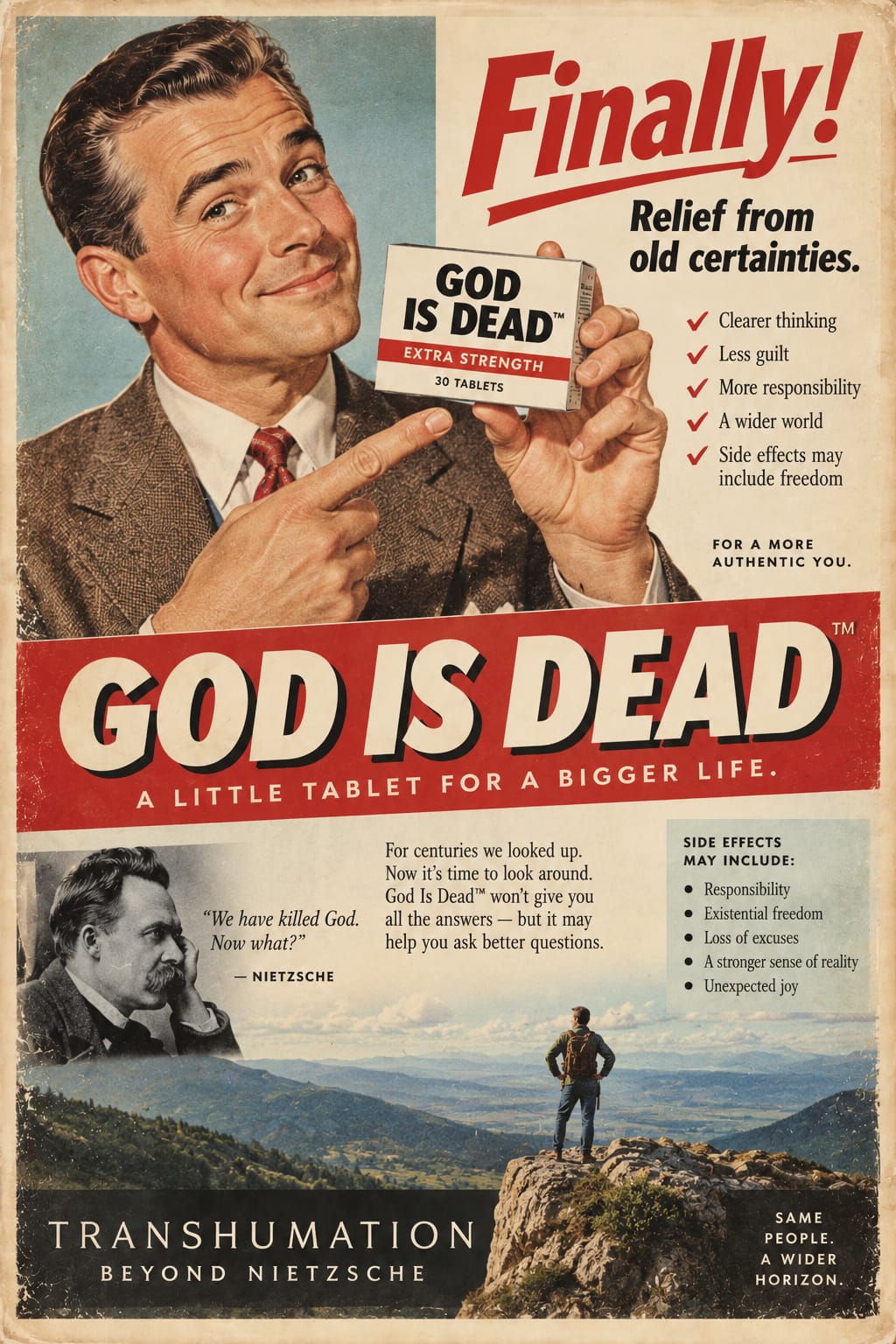
The most interesting unresolved question is whether a deliberately cultivated second meaning can achieve the durability of a meaning produced gradually by history. Commercial branding proves that massive new associations can be established within a few decades, but an intellectual category faces a higher threshold. Recognition can be purchased. Usage cannot be purchased so easily. For a term to escape its creator and enter ordinary intellectual language, other people must discover that it solves a problem for them. The word must become easier to use than the paragraph it replaces.
That creates an unusual test for a project such as Transhumation. If the word were someday used independently to describe the preservation of a meaningful structure through a change of carrier, would that represent the project’s greatest success or the moment the project lost ownership of its idea? Cultural history suggests these outcomes may be inseparable. When a word becomes genuinely useful, its creator cannot remain its only authorised interpreter.
A second open problem concerns the limits of semantic accumulation. Can a word become so rich that it becomes vague? Religious symbols, political terms and successful brands frequently accumulate contradictory associations. Density creates cultural power but can also destroy precision. The long-term challenge is therefore not merely to place more meaning inside a word. It is to preserve enough structure that people can still recognise why the meanings belong together.
And finally there is the problem of time. Digital media dramatically reduce the cost of copying and preserving intellectual material, but they do not abolish maintenance. Domains expire, formats change, archives disappear, interfaces become obsolete and institutions lose interest. Cultural information may become extraordinarily portable, yet portability should never be confused with carrierlessness. The longer the intended survival, the more seriously the custodian must think about migration.
Transhumation Interpretation
Transhumation begins with an unusually productive accident of language. Its older meaning already contains departure, environment, movement, stewardship and survival. Its modern resonance places those ideas beside artificial intelligence, technological change and questions about whether the human form itself is another carrier capable of transformation.
The library can therefore use the old pastoral structure without pretending that the past predicted the future. Religion can be examined as the transmission of meaning across generations; art as the reconstruction of perception in another mind; technology as the migration of function between machines; civilization as the preservation and revision of institutions; AI as a new interface through which enormous quantities of cultural structure may be accessed and reorganized. None is literally a flock crossing a mountain. The metaphor earns its place only when it helps us see what changes and what must remain.
Perhaps that is the highest ambition available to a word. Not to contain an answer, but to become a portable question.
When enough independent doors begin opening into the same room, the name above the entrance stops being merely a brand.
It begins to describe the room.
FAQ
What does transhumation originally mean?
Transhumance is the seasonal movement of livestock between different grazing areas, traditionally undertaken to follow changes in available pasture. The idea therefore already contains movement, changing environments, stewardship and continuity.
Can a normal word really acquire a completely new meaning?
Yes. Language changes through repeated use, and words frequently gain additional meanings while retaining older ones. Proper names can even become titles or general categories; Caesar is one of the clearest historical examples.
Why is Caesar relevant to the value of a word?
Because a family name eventually became larger than the individual who made it famous. It developed into a designation associated with imperial authority and contributed to later titles including Kaiser and Tsar.
Why does The Last Supper belong in an article about branding and language?
Because it demonstrates accumulated cultural meaning. A modern fashion film can place a dinner beneath a reconstruction of Leonardo’s mural and immediately inherit associations built over five centuries. The image does semantic work before the characters say anything.
When does a brand become more than a brand?
A useful threshold is reached when people begin using the name independently of the company or creator because the term helps them organize experience. Recognition is not enough. The word must become usable.
Could Transhumation ever become a genuine second meaning of the word?
In principle, yes, but it could not be achieved simply by declaring a new definition. The stronger evidence would be independent usage: other writers or readers adopting the term because it concisely names a pattern they find useful. At that point, loss of control over the word would paradoxically become evidence of success.
Continue the Transhumation Series
- Forgotten Religion | Ancient Gods, Symbols and the Hidden Structures of Human Civilization
- The Last Religion | Death, Immortality and the Future of Humanity
- The New Theurgy | AI, Information and the Future of Human Civilization
- End of Branding: You Were Never Meant to Become a Product
- Baal vs Ishtar: Why Ancient Gods Never Disappeared