
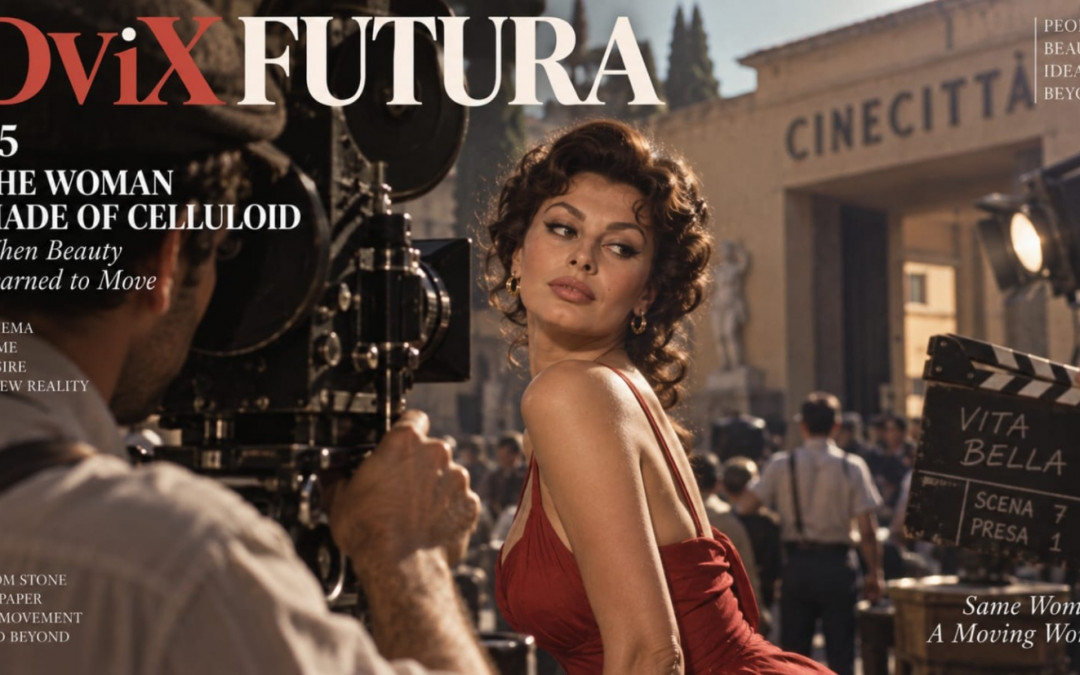
When Light Learned to Remember
Rembrandt spent much of his life attempting something plainly impossible.
He tried to set fire to paint.
Not literally, of course. Canvas does not glow. Pigment produces no flame. You can stand in front of The Night Watch with a thermometer and wait as long as you like. Yet Rembrandt kept arranging brown, ochre, black and gold as though somewhere inside them a match might finally strike.
I have always thought this more interesting than saying that he was a master of light.
Anyone can admire light. Rembrandt wanted to manufacture it from something that could not shine.
There is something wonderfully human about that. Give us two sticks and we will try to make fire. Give us a piece of ice and, with sufficient patience, we will shape it into a lens and ask the Sun to burn something for us. Give us uranium and eventually someone will wonder whether the stone contains a fire of its own.
Give us paint, and apparently we will try that too.
We are a species with an unreasonable objection to the limitations of materials.
Then, in the nineteenth century, something extraordinary happened.
We stopped trying to paint light.
We taught light to paint.
The Witness
There is an old problem with beauty that has nothing to do with aesthetics.
Beauty requires a witness.
A nebula does not know that it is magnificent. Saturn presumably has no opinion about its rings. A coastline can spend ten thousand years arranging itself into something sublime without receiving a single compliment.
Then someone arrives.
That changes everything, although nothing physical has changed at all.
The difficulty is that witnesses die.
This is one reason I find ancient objects so moving. We can hold a prehistoric figurine in a museum and know rather a lot about the material from which it was made. We can measure it, date it, photograph it and argue about its purpose.
What we cannot recover is the pair of eyes that first looked at it.
A skull is rather like a humanist seashell. You can hold it close and imagine that, if you listen carefully enough, you might hear something of the universe that once existed between its walls.
You will not.
That universe has gone.
Writing helped. Painting helped enormously. Sculpture preserved the curve of a body long after the body itself had disappeared. But each medium had to translate experience into something else.
A sculptor could preserve a face but not the instant before it smiled.
A painter could preserve the smile but had to choose which instant it would be.
Rembrandt could paint light.
He could not save it.
Photography changed the rules because, for the first time, light itself was allowed to leave evidence.
Light struck a face, reflected from it, entered a lens and altered a photosensitive surface.
Something had happened.
And the material remembered.

A World Inside the Frame
I am taller than most women.
This has provided me with remarkably little wisdom, but it has taught me one useful thing about superiority:
most of it depends on where everyone else is standing.
A person can be tall in one room and ordinary in another. A man can feel perfectly substantial until someone taller enters. Nothing has happened to his body. The universe has merely changed his reference point.
Cinema understood this immediately.
The people sitting in the theatre are small. The people on the screen are enormous.
We even call them larger than life, which is one of those clichés that becomes interesting when you notice that it is literally true.
A face twenty metres across looks down upon hundreds of ordinary humans sitting obediently in darkness.
A star has been created.
But cinema can perform the opposite trick just as easily.
It can make a tall woman smaller. It can make a short man taller. It can take a face and show only the eyes. It can hide a body outside the frame. It can photograph one side and quietly decline to preserve the other.
This sounds like deception.
Perhaps it is.
But then Rembrandt was deceiving us too.
There is no light behind his painted faces. There is paint.
Perspective is a deception. Sculpture corrects proportions according to the position from which it will be viewed. Memory is a particularly shameless deceiver.
The camera simply made the trick explicit.
Perfection no longer required perfecting the object.
Sometimes it was enough to move the edge of the frame.
I learned something similar from a sphere.
A mathematically perfect sphere can be described with an elegance that matter stubbornly refuses to reproduce. Make one as carefully as you like and, under sufficient magnification, perfection retreats.
Cinema discovered an ingenious solution to the same problem.
Do not perfect the universe.
Control the observer’s access to it.
That is what a frame does.
Outside it lies the untidy world.
Inside it, for a moment, the rules are ours.
The Woman Who Turns Again
This is where celluloid becomes stranger than photography.
A photograph says:
She was here.
Film says:
Look. She is doing it again.
A woman bends toward a fountain. She lifts the water. Her eyes move before her head does. Something amuses her. For perhaps half a second her mouth changes.
It is almost nothing.
And that is precisely what earlier media found so difficult to preserve.
A sculptor could spend months carving the woman. A painter could spend weeks studying her expression. A writer could devote a paragraph to that half-smile.
The camera needs a fraction of a second.
Light touches her.
The film remembers what the light did.
Years later another light passes through that memory.
And she appears again.
This is why Sophia Loren interests me more here than any abstract discussion of fidelity.
I was born too late to see the young Sophia Loren walk into a room.
This is not a problem that money, education or enthusiasm can solve. Time has made the decision for me. History is full of such small injustices. We arrive after people have left. We know voices belonging to mouths we can never hear speak. We recognise faces whose owners could never recognise ours.
For most of human history, that was simply the arrangement.
Beauty belonged disproportionately to its contemporaries.
A remarkable woman could be seen by the people fortunate enough to share her city, her court, her theatre or perhaps her bedroom. A great painting might disappear into a palace. A sculpture could belong to a ruler. Experience followed proximity, wealth and time.
Mechanical reproduction committed an extraordinary act of bad manners against this arrangement.
It let everyone in.
The millionth viewer does not receive one millionth of the smile.
She receives the whole smile.
There is something almost indecently democratic about that.
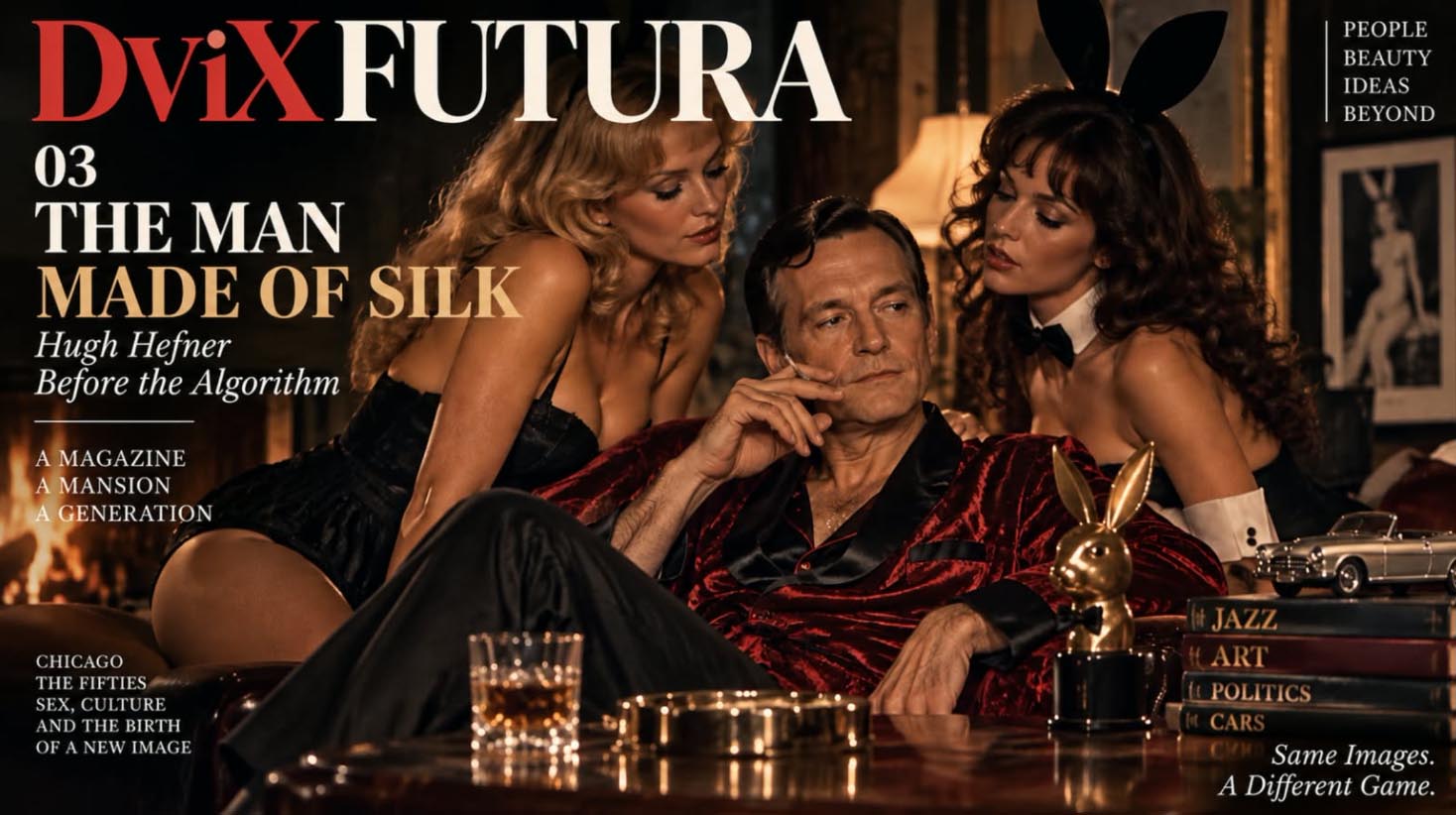
Star, Diva, Icon
Perhaps this is why the vocabulary surrounding cinema became so peculiar.
We call certain performers stars.
We call them divas.
We call them icons.
Astronomy. Divinity. Sacred image.
All recruited to describe people photographed on strips of chemically treated material.
Diva carries the Latin language of the divine. Icon carries the history of the image. And star, accidentally or otherwise, may be the most beautiful word of the three.
Because stars have always done more than shine.
They gave travellers direction.
They allowed sailors to locate themselves in darkness.
And the light we see from a distant star began its journey before it reached us. What appears present is information arriving from the past. The source may have changed enormously by the time its light enters our eyes.
Cinema created a strangely human version of the same phenomenon.
The moment is gone.
The light arrives late.
A young actress turns her head in a film made decades ago. The afternoon in which she performed that movement no longer exists. The crew went home. The clothes were put away. Buildings changed. People aged. Some died.
Yet tonight, somewhere, she turns again.
Not because she returned.
Because her light did.
Perhaps that is why the screen has been so effective at manufacturing gods.
It does not need to make a human being divine.
It needs only to construct a small universe in which we see that person under controlled conditions: the right light, the right angle, the right distance, the right moment.
The woman herself remains human.
The image does not have to.
Anyone who has ever been placed on a pedestal should probably remember this. The strange thing about being elevated is that you do not necessarily become taller.
Everyone else has simply been persuaded to look up.
The Library of Witnesses
We usually imagine a library as a place for preserving knowledge.
I am no longer sure that is enough.
Why preserve only what humanity knew?
Why not preserve what it was like to be human?
The things that made us laugh. The faces we desired. The gestures we found beautiful. The vulgar things. The embarrassing things. The sacred things. The things respectable people once decided were not worthy of preservation.
A medical atlas can preserve the structure of a uterus or a heart. Quite properly.
But anatomy is not the whole story of having a body.
A civilization that preserved every diagram of the human face while losing every human smile would possess extraordinary knowledge of us and remarkably little idea what we were like.
Perhaps the great library should therefore be less judgmental than we are.
A library of witnesses.
Not merely this is what we knew.
But:
this is what we saw.
this is what moved us.
this is what we thought beautiful.
this made us laugh.
this is what the light looked like.
Celluloid became part of that library.
And, like every library we have ever built, it is burning.
The Last Copy
This is the part technological optimism prefers to omit.
We have not defeated time.
Film decomposes. Colours fade. Nitrate burns. Acetate deteriorates. Magnetic tape decays. Hard drives fail. Formats become obsolete. Servers are switched off.
Digitisation feels like immortality because a copy can produce another copy with astonishing fidelity.
Then another.
Then ten million.
But ten million mortal things do not constitute one immortal thing.
There is no law of the universe requiring the last copy of Elvis Presley to survive.
That possibility bothers me more than I expected.
I never shared a world with the living Elvis. We missed one another by years. Yet I know his voice. I know his movements. I can watch him laugh.
Technology appears to have corrected the injustice.
Almost.
That word matters.
Almost.
The same word that haunts the perfect sphere.
We can approach permanence. We can multiply the copies. We can migrate the files. We can build archives inside archives and send information around the planet.
But permanence retreats.
There may always be a last copy.
And a last machine capable of reading it.
And a last person who remembers why anyone should bother.
This is not technological immortality.
It is something much more human.
Persistence.
Rembrandt knew the problem before cinema existed.
He could not make paint burn.
So he painted as though it could.
The sculptor cannot make marble live.
The archivist cannot make memory eternal.
The filmmaker cannot prevent the woman from aging, leaving the set or eventually disappearing.
But the light touched her once.
We caught some of it.
We passed it forward.
And somewhere in the future, perhaps long after everyone who stood behind that camera is gone, another human being may sit in the darkness and receive it.
A star may already have changed beyond recognition.
Its light is still travelling.
A woman turns because she turned once.
She may now turn for centuries.
Not forever.
Nothing we have made has earned that word.
But perhaps civilization has always consisted of creatures who know that, and strike the match anyway.
Watch the Video
How to Read the World
By Alistair Brightworthton
Current Knowledge
Photography and motion-picture film preserve optical information through the interaction of light with photosensitive materials. Motion pictures extend still photography by recording sequences that reconstruct movement when displayed. Modern preservation and digitisation can dramatically extend the usable life of recorded images, but every physical and digital archive remains dependent on media, infrastructure, maintenance and continued human attention.
Open Questions
Can information ever be meaningfully called permanent, or can it only be repeatedly preserved? How much of a person survives in an image once context, intention and living memory disappear? And as artificial intelligence begins to reconstruct voices, appearances and behaviour, are we still preserving witnesses—or beginning to manufacture new ones?
Transhumation Interpretation
Civilization may be understood as an accumulating refusal to let experience disappear without resistance. Stone preserved form. Paint attempted to preserve light. Photography allowed light to preserve itself. Cinema preserved its movement. Digital systems multiplied the witness.
None defeated time.
That may be precisely why we keep building them.
We know the fire will go out.
We make fire from brushes anyway.
FAQ
Why is celluloid important in the history of human representation?
Celluloid and other motion-picture film stocks allowed sequences of photographic images to be recorded and replayed. Earlier media could preserve form or a selected instant; cinema could also preserve visible change through time — a gesture, a glance, a walk, a smile forming and disappearing.
Why does the article say that “beauty needs a witness”?
It is a philosophical proposition rather than a scientific fact. Physical objects and events exist independently of whether humans admire them, but beauty involves valuation. A star does not need an observer to emit light. Calling its light beautiful requires someone capable of making that judgment. The article uses this distinction to ask what happens when the witness disappears.
Does film preserve reality objectively?
No. Film can preserve real optical information, but every recording is selective. Camera position, lens, lighting, framing, exposure, performance, editing and sound all influence what a later viewer experiences. Cinema preserves evidence of a moment and, at the same time, a particular way of looking at it.
Why compare movie stars with astronomical stars?
The comparison is not merely based on the word star. Light from distant astronomical objects takes time to reach an observer, so looking into space also means receiving information originating in the past. Recorded cinema creates a human analogue: light from a vanished moment is preserved and presented to observers who may not have existed when that moment occurred.
Why are the words “star,” “diva” and “icon” significant?
All three carry meanings older than cinema. Star belongs to astronomy and navigation; diva derives from language associated with the divine; icon has a long history as a term for an image, including sacred imagery. Their later use for performers provides the article with a bridge between representation, celebrity, religious imagery and the Transhumation concept of the New Theurgy.
Can digital copies make a film immortal?
Not literally. Digital copying can preserve information with extremely high fidelity and distribute it across many independent locations, greatly reducing the risk of loss. But digital information still depends on physical media, energy, hardware, software, institutions and people willing to maintain it. Redundancy can make disappearance extraordinarily unlikely without making permanence absolute.
What does Rembrandt have to do with cinema?
Rembrandt provides the article’s central metaphor. Paint does not emit the light depicted in a painting, yet his manipulation of pigment can produce an extraordinarily convincing experience of illumination. Photography reverses the relationship: rather than using matter to imitate light, it uses light to alter matter and create an image. Cinema later projects recorded images using light again.
What connects The Woman Made of Celluloid with The Perfect Sphere?
Both concern the distance between an ideal representation and physical reality. A mathematically perfect sphere can be defined more precisely than matter can reproduce it. Cinema discovers another solution: instead of perfecting the physical person, it can control the observer’s access through framing, scale, lighting and perspective. In both cases, representation can approach an ideal that ordinary matter resists.
Is the article arguing that cinema defeated time?
No. Its conclusion is almost the opposite. Cinema can transmit information across time, but neither film nor digital storage guarantees permanent survival. The importance lies in the attempt. Human beings repeatedly build new ways of preserving what would otherwise disappear, despite knowing that preservation itself remains vulnerable.
What is the central idea of The Woman Made of Celluloid?
For most of history, a beautiful moment belonged largely to the people fortunate enough to witness it. Recording technology changed that relationship. It allowed information from one human moment to reach people born decades or centuries later.
We did not teach beauty to live forever.
We taught light to remember.
Continue the Transhumation Series
- Forgotten Religion | Ancient Gods, Symbols and the Hidden Structures of Human Civilization
- The Last Religion | Death, Immortality and the Future of Humanity
- The New Theurgy | AI, Information and the Future of Human Civilization
- End of Branding: You Were Never Meant to Become a Product
- Baal vs Ishtar: Why Ancient Gods Never Disappeared