
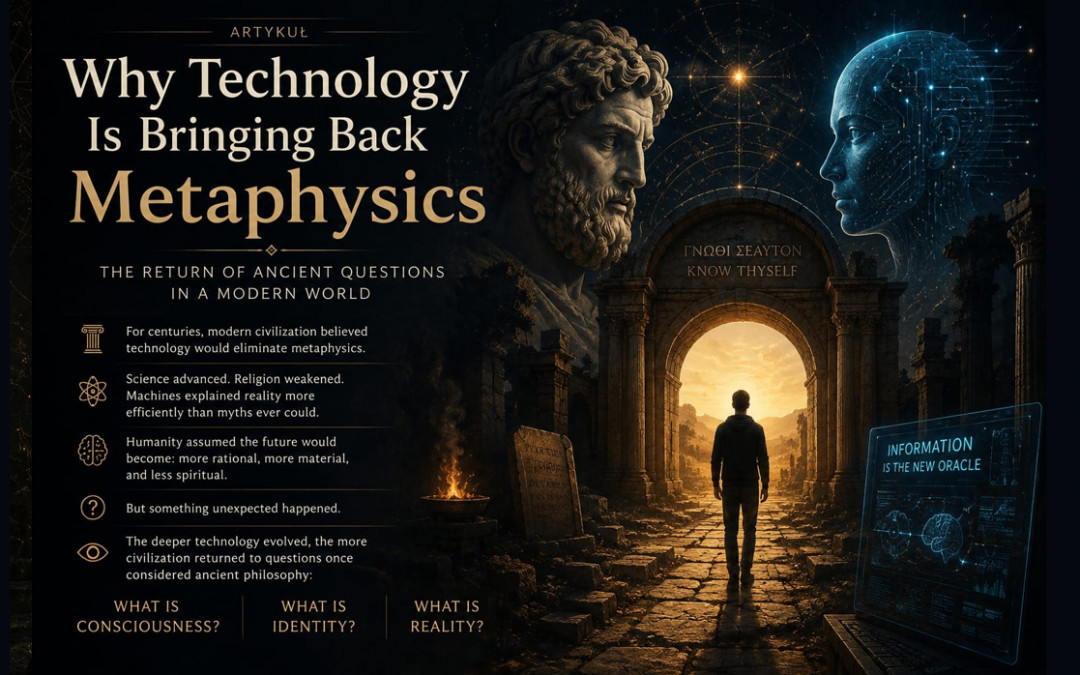
The Machines Brought Metaphysics Back
Modernity expected better technology to make the oldest philosophical questions obsolete. Instead, the machines became sophisticated enough to ask them again.
There was a period in the history of modern civilization when the future seemed philosophically uncomplicated. Science would explain what religion had once surrounded with mystery. Biology would explain life. Neuroscience would eventually explain the mind. Physics would continue reducing the visible complexity of the universe to deeper laws, and technology would convert those laws into useful machines. The unknown would not disappear overnight, but its territory would steadily shrink. Tomorrow would be cleaner than antiquity: fewer gods, fewer invisible essences, fewer metaphysical anxieties, more measurement.
For a while, this expectation looked remarkably reasonable. Vaccines defeated diseases once attributed to supernatural forces. Astronomy removed the Earth from the center of the cosmos. Chemistry transformed mysterious substances into interactions between elements. Electricity ceased to be an occult spectacle and became infrastructure. The computer appeared to complete the story. Reality could apparently be measured, formalized and eventually simulated.
Then the computers became interesting.
They began to speak. They generated images. They translated languages, discovered structures inside enormous data sets and imitated forms of reasoning once treated as unmistakably human. Neural interfaces connected electrical activity inside biological brains to external machines. Digital environments acquired economies, identities and relationships. A person’s memory began to exist partly in devices they did not physically carry inside themselves. Suddenly engineers found themselves asking questions that would have sounded perfectly at home in a Greek dialogue.
What is a mind?
What makes something the same thing after it changes?
Can identity survive a change of carrier?
Is intelligence a substance, a process or a pattern?
At what point does representation become experience?
Modernity did not abolish metaphysics.
It gave metaphysics an engineering department.
The Material World Was Never the Problem
It is tempting to tell this story as the collapse of materialism, but that would be too simple. The scientific description of the physical world remains extraordinarily powerful. Computers require matter. Algorithms require physical processes somewhere. Human consciousness, as far as science can currently establish, depends intimately on a functioning biological brain. Nothing about artificial intelligence, software or virtual reality has demonstrated the existence of a non-physical realm hidden behind ordinary reality.
What changed was not the disappearance of matter but the growing importance of organization.
A violin and a loudspeaker can produce the same melody without sharing the same material construction. The words of a novel can survive paper, magnetic storage and electronic displays. A geometric triangle can be drawn in sand, rendered as vectors on a screen or described mathematically without becoming a different geometric relation each time its carrier changes. A computer program can perform recognizably the same function after being moved to new hardware.
The physical carrier matters enormously. Without a carrier, nothing happens. Yet the identity of many things we care about cannot be described by listing their atoms alone.
This is an old philosophical problem in remarkably modern clothing.
If every component of a ship is replaced over time, when does it become another ship? If a software system is transferred to a different machine, in what sense is it still the same program? If an artificial neural network retains its functional organization after being copied, which version is the original? These questions are not evidence that matter is unreal. They reveal that sameness itself is not a simple material property.
Technology has made identity operational.
Information Did Not Replace Matter
The word information can easily become the new word spirit if we are careless with it. Because information appears capable of moving between carriers, there is a temptation to treat it as an invisible substance floating independently of matter. But information always requires a physical realization: ink, voltage, magnetic orientation, molecular structures, neural activity, light.
The interesting thing is not that information escaped matter.
It is that the same informational relationship can sometimes survive a change in matter.
This distinction has enormous consequences. A musical score can be copied without preserving the original paper. A genome can be reproduced through different molecules across generations while maintaining important structural relationships. A mathematical proof does not become false when the book containing it burns, provided that the structure survives somewhere else and can still be reconstructed.
Civilization itself depends upon this possibility. Laws survive individual legislators. Languages survive individual speakers. Institutions survive personnel. Myths outlive the cultures in which they originated and reappear under new names. A library is therefore not merely a warehouse of material objects. It is a system for allowing structures to cross the deaths of their carriers.
Once technology makes this migration visible everywhere, an ancient philosophical question becomes difficult to avoid:
What kinds of things are defined primarily by what they are made of, and what kinds by the organization that persists through change?

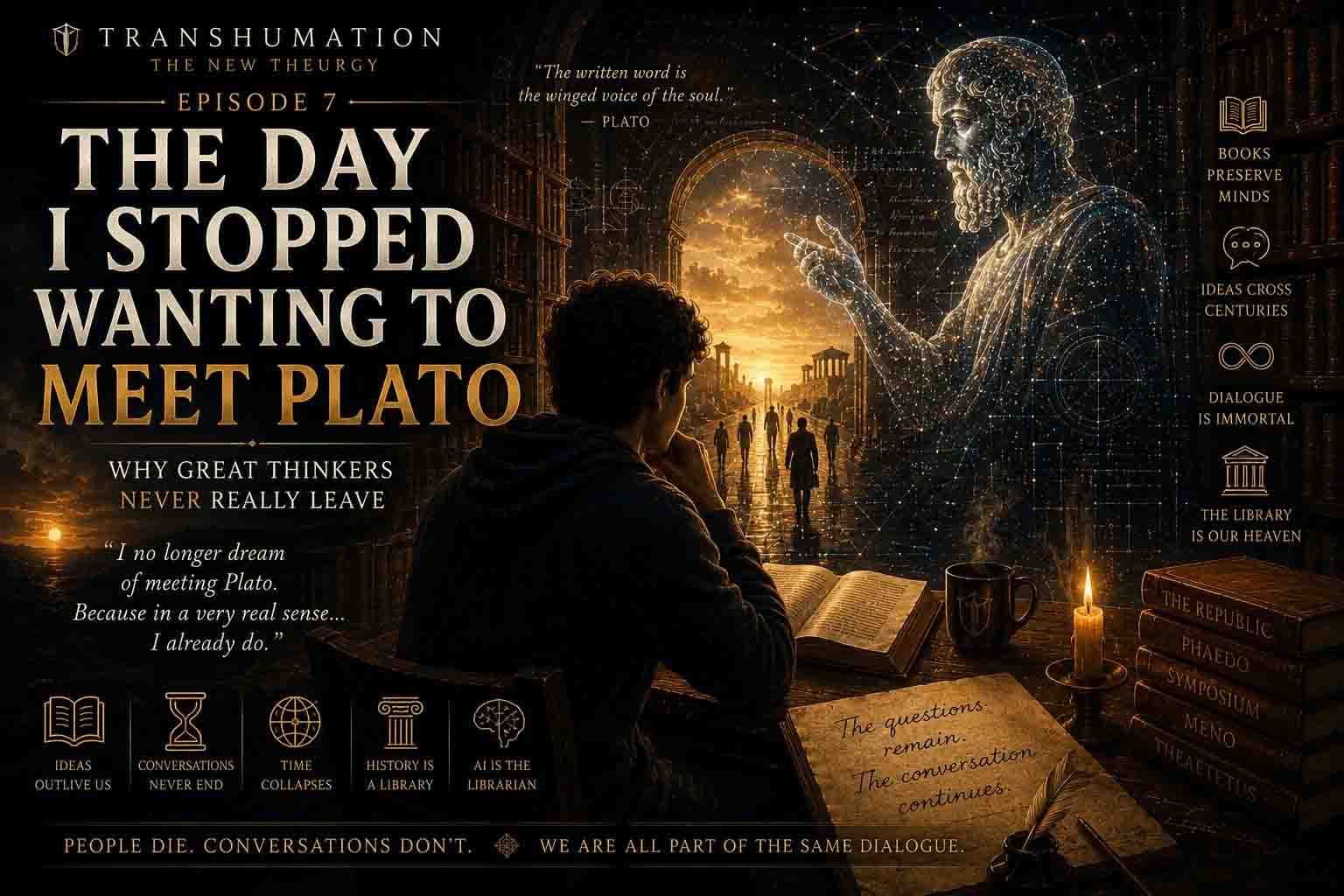
Plato Gets a Computer
Plato has an unfortunate tendency to return whenever civilization becomes excited about abstraction. This does not mean that a laptop proves the existence of Platonic Forms, and it certainly does not mean that an ancient Athenian somehow predicted digital technology. The analogy is narrower and more interesting.
Plato was deeply concerned with the difference between particular things and the structures that make them intelligible. Individual triangles drawn on a page are imperfect, but the mathematical relationships we call triangularity are not exhausted by any particular drawing. Physical objects change and decay; structures can appear to possess a different kind of stability.
Modern computation surrounds us with similar distinctions.
The icon visible on a screen is not the file. The file is not identical to the particular region of a particular storage device where its information currently resides. The same software can appear through different interfaces. A digital object can be reproduced with extraordinary fidelity without preserving its original material instance.
None of this proves Plato right about metaphysics.
It does explain why his questions no longer feel remote.
We have built a civilization in which invisible formal relationships routinely control physical machinery.
AI Removed Some Comfortable Definitions
Artificial intelligence has made the problem more personal because human beings traditionally defined themselves by capacities rather than anatomy alone. We were the animals that reasoned, spoke, invented symbols, composed poetry, played chess, made pictures and translated meaning between languages. Whenever machines acquired one of these abilities, the definition quietly moved.
Chess was intelligence until computers became better at chess.
Complex calculation was intelligence until calculators became ordinary.
Fluent language seemed safer.
Then machines began producing fluent language.
The conclusion should not be that machines therefore possess human consciousness. Behavior and subjective experience are different questions. A system may produce sophisticated linguistic output without there being anything it is like to be that system. At present there is no scientific consensus that existing artificial intelligence possesses consciousness.
But AI creates an uncomfortable philosophical separation.
Intelligence, consciousness, language and personhood may not be the same thing.
For centuries they were bundled together because humans provided the only example sophisticated enough to make the distinction urgent. Now technology is pulling the bundle apart.
A machine may display linguistic competence without an established inner life. A human can possess consciousness while temporarily losing particular cognitive abilities. A future artificial system might force us to confront combinations we have never encountered before.
Technology did not answer the question of the mind.
It removed some of our easiest answers.
The Soul Returns Without Its Old Name
One of the stranger features of modern technological culture is the return of ancient problems under new terminology.
The soul reappears as personal continuity.
Immortality reappears as mind uploading.
The problem of free will reappears in discussions of prediction and computational determinism.
The nature of reality returns through simulation, virtual worlds and the philosophy of information.
The problem of the self returns when we ask whether a perfect digital duplicate of someone would actually be that person.
The Logos, in its broad historical sense of ordering reason or intelligible structure, finds an imperfect modern echo whenever civilization begins speaking of code, models and the hidden rules through which complex systems become understandable.
These are not identical concepts. Calling an algorithm a Logos or a digital copy a soul can easily turn analogy into nonsense. But analogies become interesting when the same structural problem appears beneath different historical languages.
Ancient people asked what survives change.
We ask whether identity survives copying.
They asked whether appearances exhaust reality.
We ask whether the model and its representation can ever become indistinguishable to the observer.
They asked what distinguishes living intelligence from matter.
We ask whether computation can become experience.
The vocabulary changed faster than the questions.
The Problem of Consciousness Refuses to Leave
Consciousness is where technological confidence still encounters a remarkably hard boundary. Neuroscience can examine correlations between brain states and experience. It can study perception, attention, memory and decision-making. Brain injuries can alter personality. Drugs can transform experience. Electrical stimulation can produce sensations and changes in awareness. Everything we currently know gives strong reason to take the physical brain seriously as the machinery associated with human consciousness.
Yet describing the machinery does not automatically resolve every philosophical question about experience.
Why should information processing feel like anything from the inside? Why is there an experienced redness rather than merely a system discriminating wavelengths? Why does pain hurt instead of simply producing avoidance behavior? Different philosophical traditions disagree about whether these questions reveal a genuine explanatory gap or merely confusion in the way we describe mental processes.
Technology cannot settle that dispute by becoming more impressive.
In fact, increasingly sophisticated artificial systems may sharpen it.
If a machine eventually behaves indistinguishably from a conscious person, we may know more about intelligent behavior while becoming less certain about how behavior relates to experience.
The better the imitation becomes, the more serious the metaphysical problem becomes.
Philosophy Becomes Infrastructure
For much of the twentieth century, many technological decisions could be made without agreeing on the nature of personal identity. A telephone engineer did not need a theory of the soul.
Future engineers may not have that luxury.
If neural prostheses gradually replace biological functions, we will need to decide what kinds of transformation preserve personal continuity. If digital agents represent deceased people, legal systems may have to determine whether they are property, persons or something entirely new. If artificial systems become increasingly autonomous, societies will need criteria for responsibility that cannot be derived from technical specifications alone.
These are philosophical choices embedded inside infrastructure.
A company designing a virtual world already makes assumptions about identity when it decides whether one person may possess several persistent selves. A platform makes assumptions about memory when it decides what can be deleted and what remains permanent. AI developers make assumptions about agency when systems are permitted to take actions without immediate human supervision.
The interface eventually becomes a worldview.
Civilization is building metaphysics into software whether it calls it metaphysics or not.
Watch The Video
How to Read the World
Current Knowledge
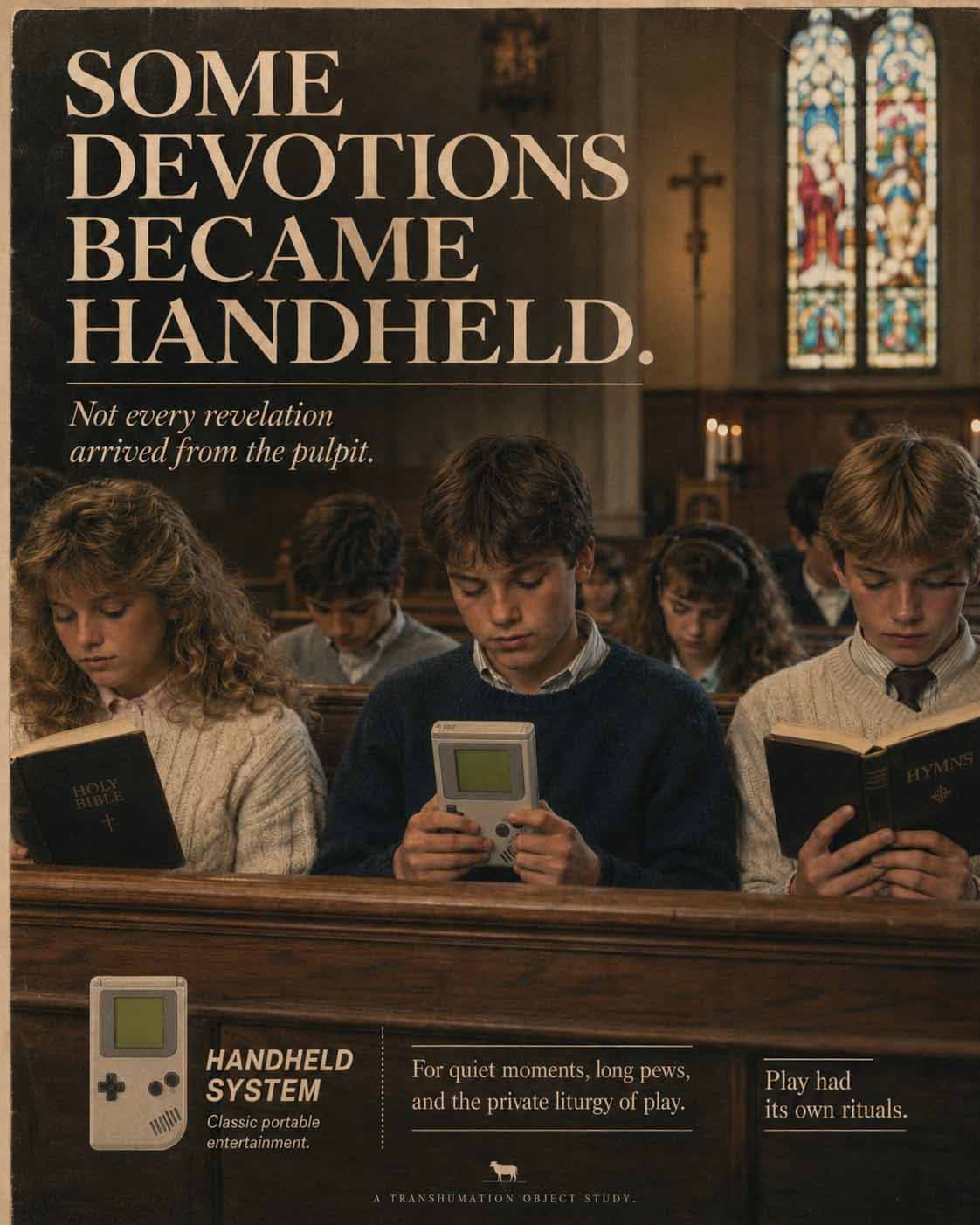
Modern science has not abandoned physical explanation. Physics, chemistry, biology and neuroscience remain foundational to our understanding of natural phenomena, and there is no established scientific evidence that information, consciousness or mathematical structure can exist independently of a physical substrate. Digital systems may appear abstract at the level of ordinary experience, but every functioning computation presently depends upon physical processes.
At the same time, many systems are usefully described at levels that cannot be replaced simply by cataloguing their material components. Software, languages, mathematical structures and biological organization depend on relationships between components. The same functional pattern can sometimes be implemented through different physical arrangements, a fact central to computer science and many areas of engineering.
Artificial intelligence can now perform tasks associated with language, pattern recognition, planning, visual generation and other forms of cognition. These capabilities do not establish consciousness. There is currently no agreed scientific test capable of demonstrating subjective experience in an artificial system, nor is there consensus that present AI systems possess it.
Consciousness itself remains an active scientific and philosophical problem. There are competing theories concerning its relationship to neural processing, information integration, global accessibility and other mechanisms, but no universally accepted explanation of subjective experience.
Open Questions
The first unresolved question is whether functional organization is sufficient for consciousness. If two systems perform exactly the same cognitive operations through different physical substrates, must they possess the same kind of experience? Functionalist theories lean toward one answer; other philosophical positions resist it. No experiment has yet settled the matter.
There is also the problem of continuity. A program can be copied without much conceptual difficulty. A person may not be so simple. If a complete informational model of a brain were reproduced somewhere else, would the new system continue the original person’s experience or begin a new one with inherited memories? Technology might eventually make the duplication possible without answering the identity problem it creates.
A broader question concerns the status of abstraction itself. Mathematics, software and information appear capable of retaining recognizable structures across different material realizations. Does this tell us something profound about reality, or merely about useful human descriptions of reality?
And finally, as AI systems participate increasingly in interpretation, classification and decision-making, who determines the metaphysical assumptions encoded inside them? What counts as a person, an agent, an intention, a memory or a meaningful choice may eventually become questions answered partly by software long before philosophy reaches consensus.
Transhumation Interpretation
Transhumation does not need to declare matter obsolete in order to take metaphysics seriously. The more interesting possibility is that civilization has spent several centuries becoming extraordinarily good at understanding carriers and is now rediscovering the difficulty of understanding the structures that move through them.
A book is a carrier.
The text is a structure.
A brain is a carrier of processes associated with memory, personality and experience.
Whether the experiencing self is itself a transferable structure remains unknown.
This distinction is essential.
The history of civilization repeatedly shows functions surviving changes of medium. Speech becomes writing. Writing becomes print. Print becomes digital storage. A drawing becomes vector geometry and can then appear at almost any scale without losing the relationships that define its form. The triangle is not identical to the pixels displaying it.
But we cannot simply extend this principle to consciousness and announce victory.
Perhaps consciousness is carrier-independent.
Perhaps it is inseparable from a particular class of biological processes.
Perhaps continuity matters more than material composition.
Perhaps our present categories are inadequate.
The correct Transhumation position is not belief but pressure.
Push the idea until it breaks.
Ask what evidence would disprove it.
Do not confuse pattern with proof merely because the pattern is beautiful.
Technology has made that discipline more important because we are increasingly capable of building systems before understanding what they imply.
There is an old philosophical question hiding inside every advanced interface: what remains the same when the form changes?
For a document, the answer appears relatively easy.
For a civilization, it becomes difficult.
For a human being, it may be the most important question we have.
The machines did not bring the supernatural back.
They brought back something more troublesome.
They brought back the need for metaphysics.
FAQ
What is metaphysics?
Metaphysics is the branch of philosophy concerned with the most fundamental questions about reality: what exists, what makes something the thing it is, how identity persists through change, what causation means and how mind relates to the physical world.
Why would technology bring metaphysics back?
Because increasingly advanced technologies create practical versions of questions that were once largely philosophical. Artificial intelligence raises questions about mind and agency. Digital copying raises questions about identity. Virtual environments raise questions about reality and presence. Neural technologies raise questions about where the person ends and the machine begins.
Does this mean science has failed?
No. The opposite is closer to the argument. Science and technology have become powerful enough to reach situations where empirical knowledge alone does not determine how concepts such as identity, consciousness or personhood should be defined.
Is information non-material?
Information is not currently known to exist without physical realization. A digital file requires a physical medium, just as writing requires some physical inscription. What makes information philosophically interesting is that similar structures can sometimes be realized in different physical carriers.
Did the information age prove materialism wrong?
No. Nothing in contemporary computing or information theory by itself disproves materialism. The stronger claim is that explaining a system purely by naming its material components may fail to capture the organizational relationships relevant to its function.
Is AI conscious?
There is no scientific consensus that current artificial intelligence systems possess subjective consciousness. AI can produce behavior associated with intelligence without that establishing an inner experience comparable to human consciousness.
Why does AI challenge human exceptionalism if it may not be conscious?
Because several abilities once used to distinguish humans—complex calculation, language generation, image production, game playing and pattern recognition—can now be performed by machines. This forces us to separate concepts that were previously bundled together, particularly intelligence, consciousness and personhood.
Is modern technology becoming Platonic?
Not literally. Digital technology does not prove Plato’s metaphysics. It does, however, make the distinction between physical instances and persistent structures intuitively familiar. The same software, image or mathematical relationship can appear through many different physical embodiments.
Is software an example of something existing independently of matter?
No. Software requires physical implementation. But its functional identity is not tied to one particular set of atoms. This makes it a useful example when discussing the relationship between carrier and structure.
Is consciousness just information processing?
That is one possible philosophical and scientific approach, but it is not an established fact. Even if neural information processing is necessary for consciousness, it remains disputed whether a functional description fully explains subjective experience.
Could a human mind eventually be transferred to a machine?
There is currently no evidence that this can be done. Even a perfect structural reproduction of a brain would raise the separate question of whether the resulting consciousness was the original person’s continuation or a new consciousness possessing copied memories.
If a perfect copy remembers being me, why wouldn’t it be me?
Because memory similarity and continuity may be different things. If both the biological original and digital copy existed at the same time, they could not literally remain one individual: each would begin accumulating different experiences immediately. Destroying the original during copying would hide this divergence rather than necessarily solve it.
Does Transhumation propose a new religion or metaphysics?
Transhumation is more useful here as a method of inquiry than as a catalogue of metaphysical answers. It begins with recurring structures—identity, continuity, carrier, transformation—and asks which of them survive serious attempts at falsification. It should be willing to leave an important question unresolved rather than fill the gap with belief.
What is the central idea of this article?
Modern technology did not demonstrate that ancient metaphysics was correct. It did something more unexpected: it recreated many of metaphysics’ central problems in forms that engineers, scientists, legislators and ordinary users can no longer avoid.
We once asked whether the soul could survive the body.
Now we ask whether the self can survive a change of substrate.
We once asked what lies behind appearances.
Now we build models and virtual worlds sophisticated enough to make the distinction operational.
We once wondered whether form could survive matter.
Now civilization performs that experiment every time information moves from one carrier to another.
The ancient questions did not return because civilization moved backward.
They returned because technology finally caught up with them.
Continue the Transhumation Series
- Forgotten Religion | Ancient Gods, Symbols and the Hidden Structures of Human Civilization
- The Last Religion | Death, Immortality and the Future of Humanity
- The New Theurgy | AI, Information and the Future of Human Civilization
- End of Branding: You Were Never Meant to Become a Product
- Baal vs Ishtar: Why Ancient Gods Never Disappeared