
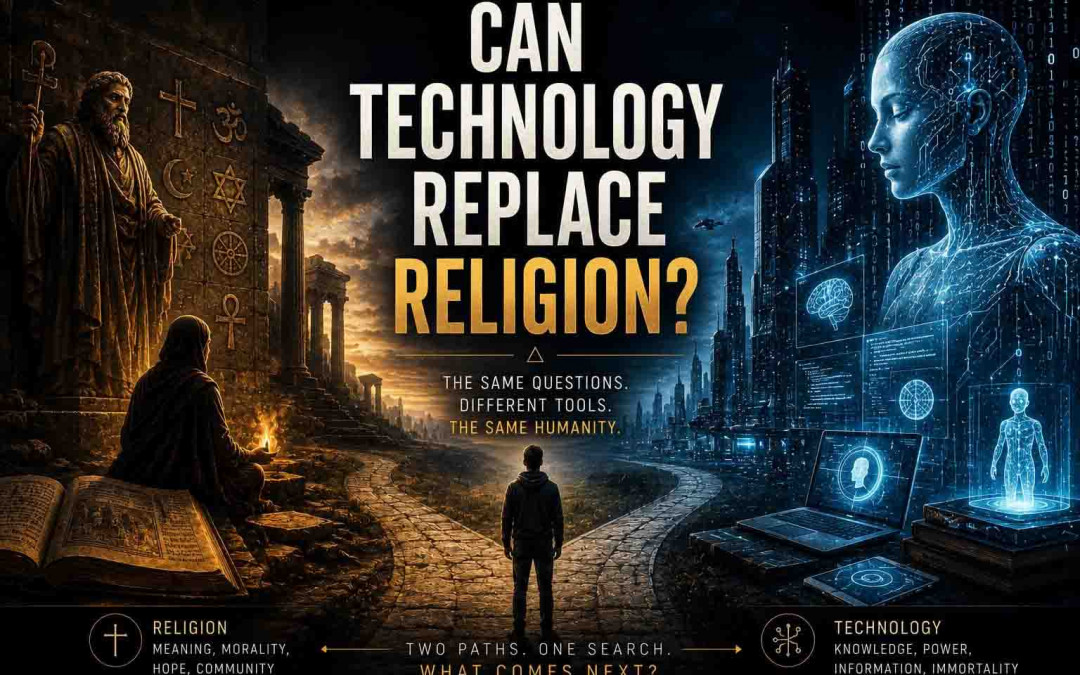
When Technology Enters Religious Territory
The machines were built to solve practical problems. Then they began reopening questions about death, identity, memory and meaning.
For most of human history, the sky was not simply weather.
It was order, danger, calendar, mystery and sometimes judgment. The dead did not merely disappear; their disappearance created questions. Birth was not only biology. Suffering was not only pain. Marriage, war, disease, harvest and death belonged to systems of meaning larger than the individual life.
Religion emerged inside that world.
To describe religion merely as belief in supernatural beings is to miss much of what religions actually did. They organized time. They marked adulthood, marriage and death. They created moral communities. They preserved stories. They established obligations between generations. They placed individual suffering inside narratives large enough to make suffering psychologically survivable.
They also offered answers—or at least forms in which answers could be sought—to questions that no practical technology could settle.
What is a person?
What survives death?
What is owed to the dead?
Why should one life matter?
How should a human being live knowing that the human being will die?
For centuries, technological progress seemed likely to push these questions toward the margins. Science would explain the mechanism. Medicine would reduce suffering. Secular institutions would organize society. The future would become less metaphysical because the unknown would steadily retreat.
Instead, technology became powerful enough to wander directly back into metaphysical territory.
Artificial intelligence forces us to ask what intelligence actually is. Digital replicas force us to distinguish resemblance from identity. Longevity research forces us to think about the consequences of radically extending life. Virtual worlds complicate the relationship between physical location and lived experience. Neural technologies make the boundary between person and machine less obvious.
The old questions did not return because science failed.
They returned because science became capable of touching them.
Religion Was Never Only an Explanation
It is easy, especially in technological culture, to imagine religion as an early scientific theory that survived too long.
Thunder needed an explanation, so humans invented a god.
Disease needed an explanation, so humans invented spirits.
The cosmos needed an origin, so humans invented creation stories.
There are certainly religious traditions that explained natural phenomena, and scientific explanation displaced many such accounts. But religion has never been reducible to explanation alone.
Knowing the meteorology of a storm does not tell a grieving person how to bury a child.
Understanding the neurochemistry of attachment does not determine what fidelity should mean.
Knowing the evolutionary history of human cooperation does not automatically tell a society which sacrifices it should demand from individuals.
Scientific knowledge can transform these conversations enormously.
It does not make every normative question disappear.
Religions survived partly because they dealt not merely with what happens, but with what should matter when it happens.
This distinction becomes increasingly important as technology grows more capable.
A machine may tell us what can be done.
That is not automatically the same as telling us what ought to be done.
The Ancient Questions Return Through New Doors
Consider consciousness.
For much of history, questions about consciousness belonged to theology and philosophy because there was little experimental access to the machinery of the mind. Today neuroscience can observe brain activity, manipulate neural systems and study the relationship between damaged tissue and altered experience. Artificial intelligence adds a new disturbance by producing sophisticated language and reasoning-like behavior without resolving whether anything comparable to human subjective experience exists inside the system.
The technological question therefore becomes philosophical almost immediately.
If a machine behaves intelligently, is intelligence enough?
If not, what is missing?
Consciousness?
Subjectivity?
Embodiment?
Personhood?
The same happens with identity.
A person leaves behind photographs, correspondence, video, recordings, preferences and thousands of digital traces. Future systems may be able to organize those traces into an interactive simulation recognizable to friends and family.
At what point does preservation become reconstruction?
At what point does reconstruction become impersonation?
At what point—if ever—could it become continuity?
Religion asked whether the person survives death.
Technology may eventually force us to distinguish several things that ancient language often placed together: memory surviving, influence surviving, information surviving, personality being simulated and the original observer continuing to exist.
Those are not the same event.
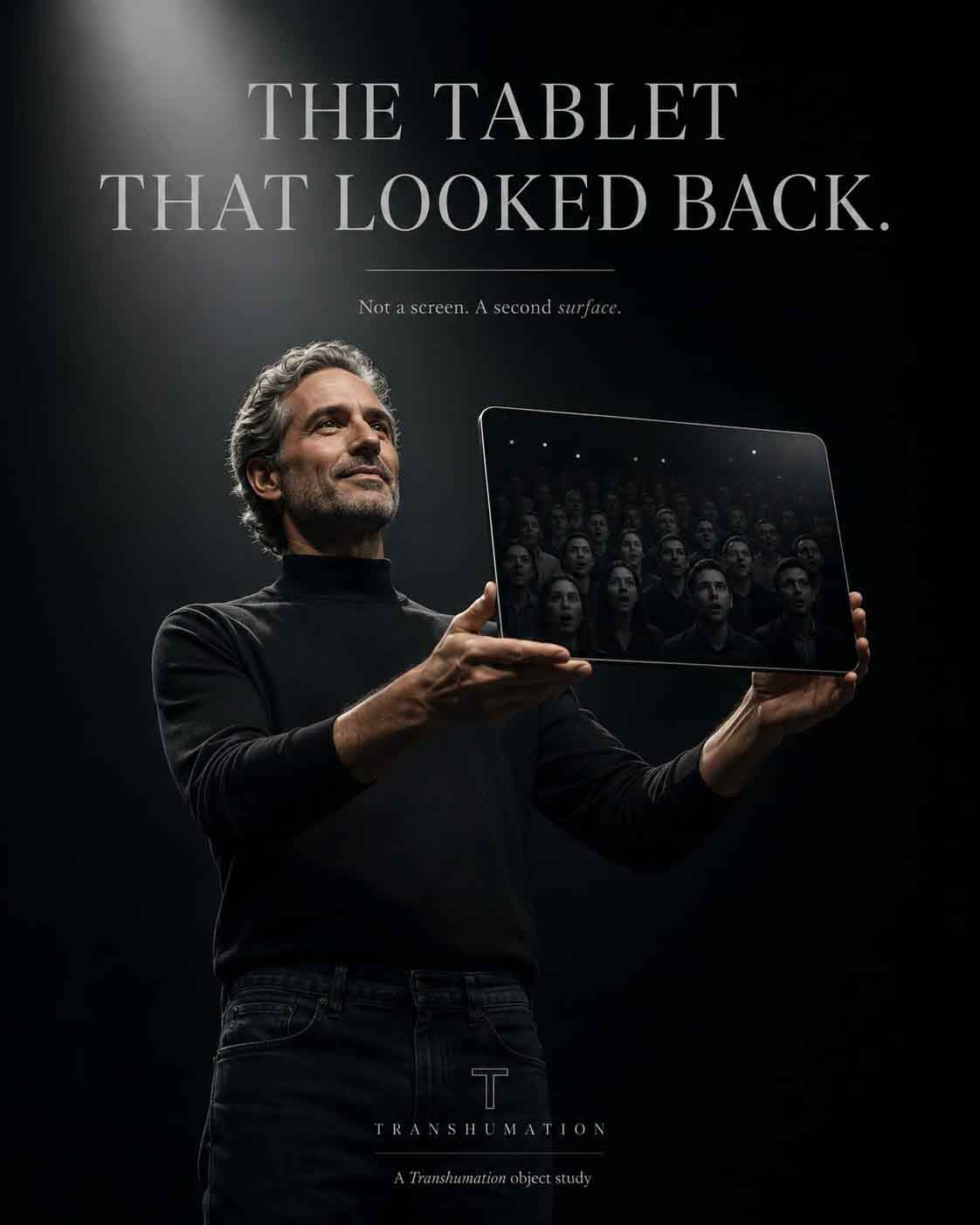
Immortality Becomes Less Simple When Engineers Arrive
Human beings have dreamed of defeating death for as long as we have evidence of human imagination.
The forms vary.
An afterlife.
Rebirth.
Resurrection.
Immortal fame.
Ancestral continuation.
Union with the divine.
Modern technology introduces another family of possibilities: longer healthy life, cryonic speculation, preserved biological material, digital archives, neural modeling and hypothetical mind uploading.
None currently provides demonstrated personal immortality.
But something important has changed.
The question can now be decomposed.
Perhaps mortality is partly a medical problem.
Perhaps memory preservation is an archival problem.
Perhaps identity continuity is a philosophical problem.
Perhaps consciousness transfer, if it is possible at all, is a problem we do not yet know how to formulate.
Technology therefore does not simply inherit religion’s promise of immortality.
It fragments the old promise into smaller questions that can be investigated separately.
What exactly are we trying to save?
The body?
The genome?
The memories?
The personality?
The relationships?
The subjective point of view?
The word immortality hides all of these distinctions.
Engineering exposes them.
The Oracle Returns as an Interface
The comparison between artificial intelligence and the oracle is tempting because the visual structure is so familiar.
A person approaches.
A question is asked.
An answer comes from a system whose internal operations the questioner does not fully understand.
The similarity is real.
So is the difference.
Ancient oracles belonged to religious institutions and cosmologies. Their authority could derive from divine communication, ritual status, tradition or political culture. Artificial intelligence is produced through computation, training data, statistical modeling and human engineering.
AI is not an oracle in the historical sense.
But it may occupy an oracle-like position psychologically.
The difference matters because people often respond to fluency as though fluency implied authority. A system that can answer almost anything can begin to feel like a system that knows everything. Once the process becomes invisible, interface can be mistaken for intelligence, and intelligence can be mistaken for wisdom.
That is where the ancient analogy becomes useful.
The problem with the oracle was never merely whether the answer was correct.
It was how much authority the listener gave the voice.
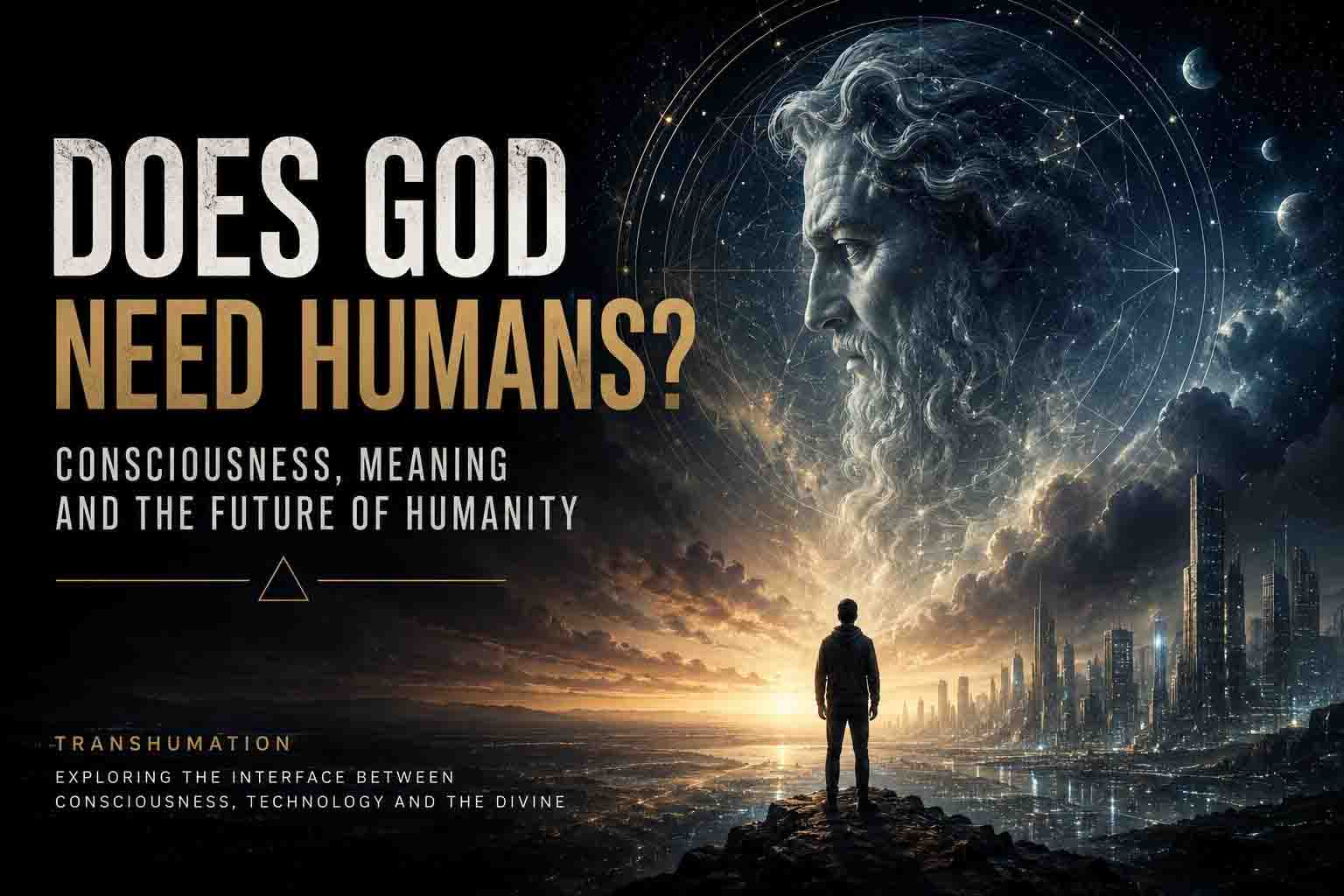
Meaning Is Not Another Data Layer
There is a recurring fantasy that enough information will eventually produce meaning automatically.
Collect enough data about the universe.
Model the brain well enough.
Preserve enough memories.
Build sufficiently capable artificial intelligence.
Eventually the machine will tell us what it all means.
This misunderstands the problem.
Meaning is not simply missing information.
Suppose an artificial system knew every scientific fact relevant to a person’s terminal illness. It could explain prognosis, treatment probabilities, molecular pathways and every documented response to grief.
It still would not automatically determine what the person should do with the final six months of life.
Spend them with family?
Continue working?
Travel?
Seek experimental treatment?
Accept death?
Those questions involve values, relationships, priorities and commitments.
AI may help a person examine them.
It can describe arguments, uncover possibilities and expose contradictions.
But meaning appears through the relationship between information and what a conscious being cares about.
That is why religion cannot simply be replaced by a larger database.
And it is why technology cannot remain philosophically neutral forever.
The Last Religion Is Not a New Church
If technology increasingly enters territory once occupied by religion, one conclusion would be to predict the rise of technological religion: AI gods, digital heavens, immortal minds and silicon salvation.
That may happen culturally in some forms.
But it is not the most interesting possibility.
The deeper convergence occurs because both religion and technology encounter the same limited creature.
The human being.
A creature that knows it will die.
A creature capable of imagining futures beyond its own lifetime.
A creature that stores memory outside itself.
A creature that wants explanation but also significance.
Religion historically approached limitation through ritual, theology, community and transcendence.
Technology approaches limitation through intervention.
Disease becomes something to treat.
Distance becomes something to compress.
Memory becomes something to store.
Physical weakness becomes something to augment.
Death becomes something whose causes can be delayed, decomposed and perhaps one day altered more radically than we currently imagine.
These approaches can conflict.
They can also coexist.
A person can use the most advanced medicine available and still pray.
A scientist can reject metaphysical claims while recognizing that scientific description does not automatically generate moral purpose.
A believer can regard technology as part of human responsibility rather than competition with God.
The future therefore need not belong to religion or technology.
The interesting question is what happens when civilization realizes that technological power does not remove the need to decide what human beings are for.
Watch The Video
How to Read the World
Current Knowledge
Religion is a highly diverse human phenomenon encompassing beliefs, practices, institutions, rituals, moral systems, identity and community. No single explanation adequately accounts for its emergence or persistence across cultures.
Scientific and technological development has replaced many supernatural explanations of natural phenomena, but religion has continued to play social, ethical, existential and cultural roles in many societies. Secularization has occurred unevenly across regions and historical periods rather than producing one universal disappearance of religion.
Medical science has substantially extended average human lifespan and reduced mortality from many diseases, while current longevity research investigates mechanisms of aging and age-related disease. There is no established scientific method for achieving personal immortality.
Artificial intelligence can process and generate large amounts of information and increasingly serves as an interface through which people seek explanations and advice. Current AI systems are not established sources of consciousness, moral authority or infallible knowledge.
Digital technologies can preserve large quantities of information about individuals after death, including writing, photographs, recordings and behavioral traces. Such preservation does not demonstrate continuation of the deceased person’s subjective consciousness.
Open Questions
The first question is functional. Which roles historically performed by religion can be partially replaced by technological systems, and which depend upon forms of community, ritual and shared commitment that information technology does not naturally provide?
There is also the problem of authority. If people increasingly seek guidance from artificial systems, what prevents informational authority from becoming moral authority by default? A system capable of explaining every available option may still have no legitimate basis for deciding which life a person should choose.
Death creates another unresolved problem. If technology eventually preserves highly detailed models of deceased individuals, will societies treat those models as memorials, descendants, legal persons or something entirely new?
There is also the question of ritual. Digital civilization has become excellent at communication but often poor at marking transitions. Birth, adulthood, marriage, loss and death may remain psychologically difficult partly because information cannot replace the social function of shared ritual.
Finally, what happens if technology becomes capable of solving many forms of material limitation while leaving the question of purpose untouched? Would this weaken religion, transform it or make existential questions more visible than before?
Transhumation Interpretation
Transhumation does not need to choose between religion and technology.
That choice assumes they are competitors trying to occupy one intellectual chair.
They are not.
Religion deals with many things technology does not attempt to do.
Technology solves problems religion was never designed to solve.
The interesting overlap appears at the boundary of human limitation.
Death.
Memory.
Identity.
Creation.
Consciousness.
Meaning.
Continuity.
For centuries these questions were approached through theological and philosophical language because there was no technological way to intervene in many of them.
Now intervention has begun.
We can prolong life.
Alter bodies.
Preserve voices.
Generate synthetic likenesses.
Build non-human systems that speak.
Construct virtual environments.
Externalize memory at enormous scale.
None of these achievements answers the old questions.
They make them operational.
This is where The Last Religion becomes useful as a Transhumation idea.
Not as the announcement of a final creed.
Not as the claim that technology secretly is religion.
The Last Religion asks what remains after belief systems, scientific models and technologies have all changed their language.
Perhaps the durable core is the human confrontation with limitation.
We know we are finite.
We build structures that reach beyond us.
Children.
Books.
Temples.
Institutions.
Machines.
Archives.
Artificial intelligence.
Civilizations.
We keep constructing carriers capable of continuing something after the individual disappears.
Sometimes what continues is genetic.
Sometimes cultural.
Sometimes informational.
Whether subjective consciousness can join that list remains unknown.
Religion gave one family of answers.
Technology is beginning to test pieces of the problem from another direction.
The two paths do not necessarily meet in certainty.
They meet at the question.
What must survive for a human life not to have disappeared completely?
FAQ
Can technology replace religion?
It may replace or transform some functions traditionally associated with religion, such as access to information, community formation or certain forms of guidance. Religion also involves ritual, identity, moral commitment, transcendence and shared meaning, which are not simply information problems.
Why did religions develop?
There is no single accepted explanation. Religions have been connected to social cohesion, ritual, morality, experiences interpreted as sacred, responses to death, group identity and attempts to understand reality.
Is religion simply an early form of science?
No. Some religious traditions offered explanations of natural phenomena, but religion also performs social, moral, ritual and existential functions that cannot be reduced to primitive scientific explanation.
Is technology making religion obsolete?
Not universally. Technological and scientific development can alter religious belief and practice, but religion remains important across many technologically advanced societies.
Is AI becoming an oracle?
Only metaphorically. AI can occupy a similar structural position when people ask questions of a system whose internal complexity they do not understand. Unlike historical oracles, AI is a technological system rather than a religious institution claiming divine communication.
Can AI provide meaning?
AI can help people explore ideas, values and possible interpretations. Meaning itself involves commitments, relationships and subjective significance, so it is not clear that it can simply be generated as another informational output.
Can technology make humans immortal?
There is currently no demonstrated technology capable of making a human person immortal. Medicine can extend life and improve health, while more speculative technologies raise questions about preservation and continuity.
Is digital preservation a form of immortality?
It can preserve traces of a person but does not establish survival of that person’s consciousness. A recording can preserve a voice without preserving the speaker.
Could an AI version of a dead person really be that person?
There is currently no basis for assuming so. A sufficiently advanced model might reproduce behavior, memories and speech patterns while still being a new system rather than continuation of the original person’s subjective experience.
Why do religion and technology keep touching the same questions?
Because both operate within human life, and human beings repeatedly confront mortality, uncertainty, limitation and the desire for continuity. The methods differ even when the questions overlap.
Does science answer questions of meaning?
Science can provide knowledge highly relevant to decisions about meaning, but empirical description alone does not automatically determine values, purposes or moral obligations.
Could future technology create new religions?
Possibly. Human societies repeatedly develop symbolic and communal systems around powerful technologies and social transformations. Whether these would qualify as religions would depend on their beliefs, rituals, institutions and claims.
What is The Last Religion?
Within Transhumation, The Last Religion is not necessarily a conventional religion. It is an inquiry into whether recurring questions about mortality, continuity, consciousness, transcendence and meaning survive even when the systems used to answer them change.
Does The Last Religion say religions were wrong?
No. It does not require a verdict that either believers or atheists must accept. Different religious traditions make different metaphysical claims, and Transhumation does not need to settle all of them in order to study the recurring structures of the questions.
Is technology itself becoming divine?
No. Technological power can resemble capacities once attributed to gods—creating artificial beings, altering life, predicting events, shaping environments—without becoming supernatural or divine.
Why does increased technological power create a philosophical problem?
Because power expands the range of choices faster than it supplies principles for choosing among them. Knowing how to change human beings does not automatically tell us which changes are desirable.
Could a civilization solve death and still need religion?
Yes. Even radical life extension would leave questions about identity, purpose, relationships, suffering, morality and the ultimate fate of individuals and civilizations. Removing one limitation does not remove every existential question.
What is the deepest question behind this article?
Perhaps it is not whether technology will destroy religion.
And not whether religion will defeat technology.
The more interesting possibility is that technology will continue removing practical limitations until humanity discovers which questions were never practical problems in the first place.
We can extend life.
Preserve memory.
Build intelligence.
Simulate worlds.
Perhaps someday we will alter the biological conditions under which human consciousness exists.
And after every successful intervention, there may still be someone standing beside the machine asking an ancient question:
What should we do with the life we have managed to preserve?
Continue the Transhumation Series
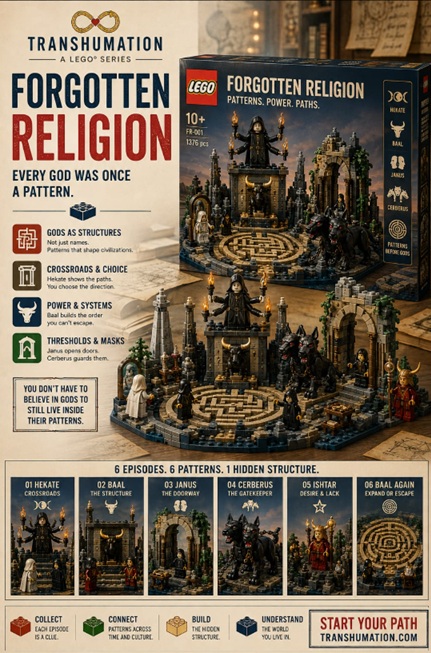
- Forgotten Religion | Ancient Gods, Symbols and the Hidden Structures of Human Civilization
- The Last Religion | Death, Immortality and the Future of Humanity
- The New Theurgy | AI, Information and the Future of Human Civilization
- End of Branding: You Were Never Meant to Become a Product
- Baal vs Ishtar: Why Ancient Gods Never Disappeared