
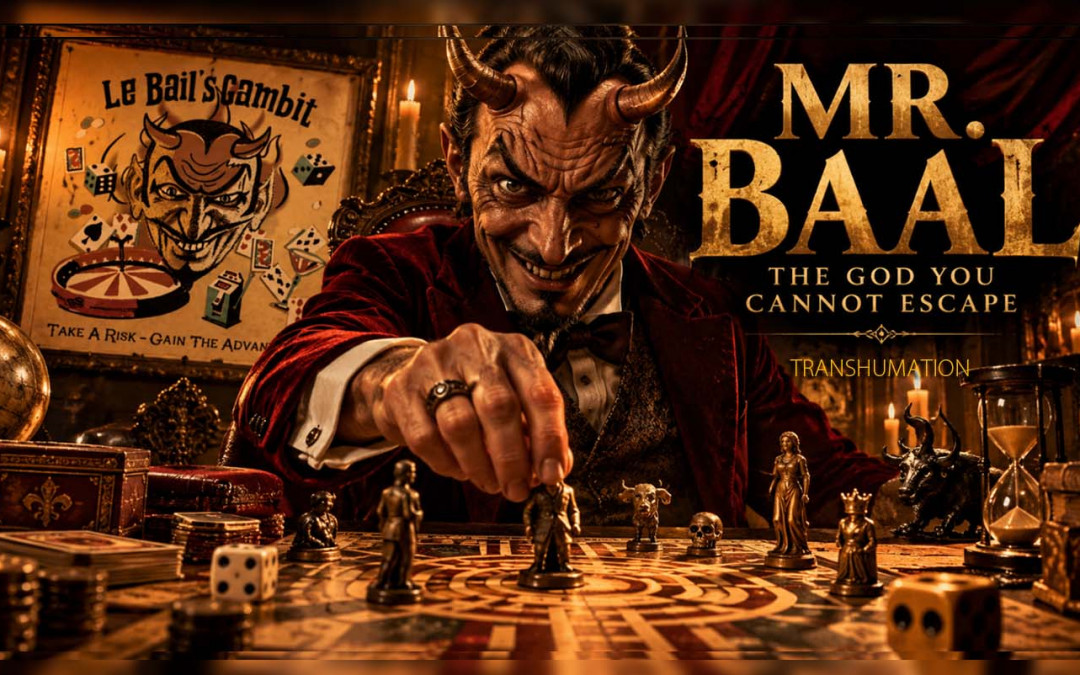
Mr. Baal Has Been Expecting You
The old Baal was a storm god. This one wears a good suit.
That is not history. It is not a proposal that the Canaanites secretly worshipped systems theory, nor that some Bronze Age deity has survived under an assumed name. It is simply what happens when an old problem acquires a modern face. The farmer who once looked at the sky and waited for rain knew something we have become very sophisticated at forgetting: you may have choices without having command.
We prefer to call this freedom. We are not wrong. We can choose a profession, leave a marriage, start a company, refuse a bus, move to Florida, build an airplane, rewrite a law. The list of things a modern person can alter would look supernatural to most of the dead. Yet every new freedom places us in front of another arrangement of other people, physical limits, consequences and choices we did not make.
So imagine a gentleman waiting beside a game board. He does not threaten you. He does not need to. He merely moves a glass aside so that you can see the pieces.
“We have rules here,” Mr. Baal says. “Very old rules.”
And because this is Transhumation, the interesting question is not whether he is right. It is which rules he means.
The God Who Became a Problem
Historically, Baal did not begin as the sort of personal name a modern reader might assume. The Northwest Semitic word meant something like “lord” or “master” and could function as a title. The Baal who emerges most vividly from the Late Bronze Age texts of Ugarit is associated with the storm deity Baal/Hadad: rain, fertility, kingship and conflict. In an agricultural society, these were not poetic accessories. Rain was the difference between a field and a funeral.
The Ugaritic Baal Cycle places him among divine conflicts involving Yamm, associated with the sea, and Mot, associated with death. Later Biblical polemics attacked Baal worship, and much later traditions helped turn the name into something infernal. Gods are unusually vulnerable to hostile takeovers. Lose the temples, lose the priests, lose the people who explain the story, and eventually your enemy gets to write the caption beneath your portrait.
But a defeated god can leave behind an undefeated question. The farmer could work, plan and choose. What he could not do was guarantee the rain. He had agency without sovereignty. Civilization has spent several thousand years narrowing that gap with irrigation, medicine, insurance, law, engineering, finance and technology. We have been spectacularly successful.
We have not closed it.
This is the point at which I would like to introduce Mr. Baal. Not as Baal resurrected, but as a useful fiction: the courteous face of the discovery that changing the board is not the same thing as standing outside it.
The Wall Becomes a Mirror
A wall is easy to understand from a distance. It is the thing in your way. Up close it becomes more interesting. Press your nose against a boundary and, sooner or later, it begins to resemble a mirror.
The job you did not get tells you how badly you wanted it. The person who does not love you back reveals an ambition you might have mistaken for affection, destiny or simple good taste. Age discovers the body. Parenthood discovers the limits of authority. Money discovers appetite. Failure has the irritating habit of introducing us to parts of ourselves that success was polite enough not to mention.
This does not make every wall good. Segregation was a wall. Disease is a wall. Ignorance can be a wall, and history contains a gratifying number of walls that deserved the hammer. But destroying a wall and escaping structure are not the same achievement. The Montgomery bus boycott worked precisely because a social rule depended on people continuing to participate in the system that enforced it. Walking was a move. Carpooling was a move. Refusing the expected move changed the board.
Gravity is less impressed by boycotts.
Intelligence begins, perhaps, with learning the difference. Is this wall physics, law, custom, money, fear, somebody else’s choice, or merely a sentence everyone has repeated for so long that it acquired masonry? Perspective does not remove the wall. It tells you what kind of wall you are looking at.
And sometimes it tells you that the reflection is the more useful part.
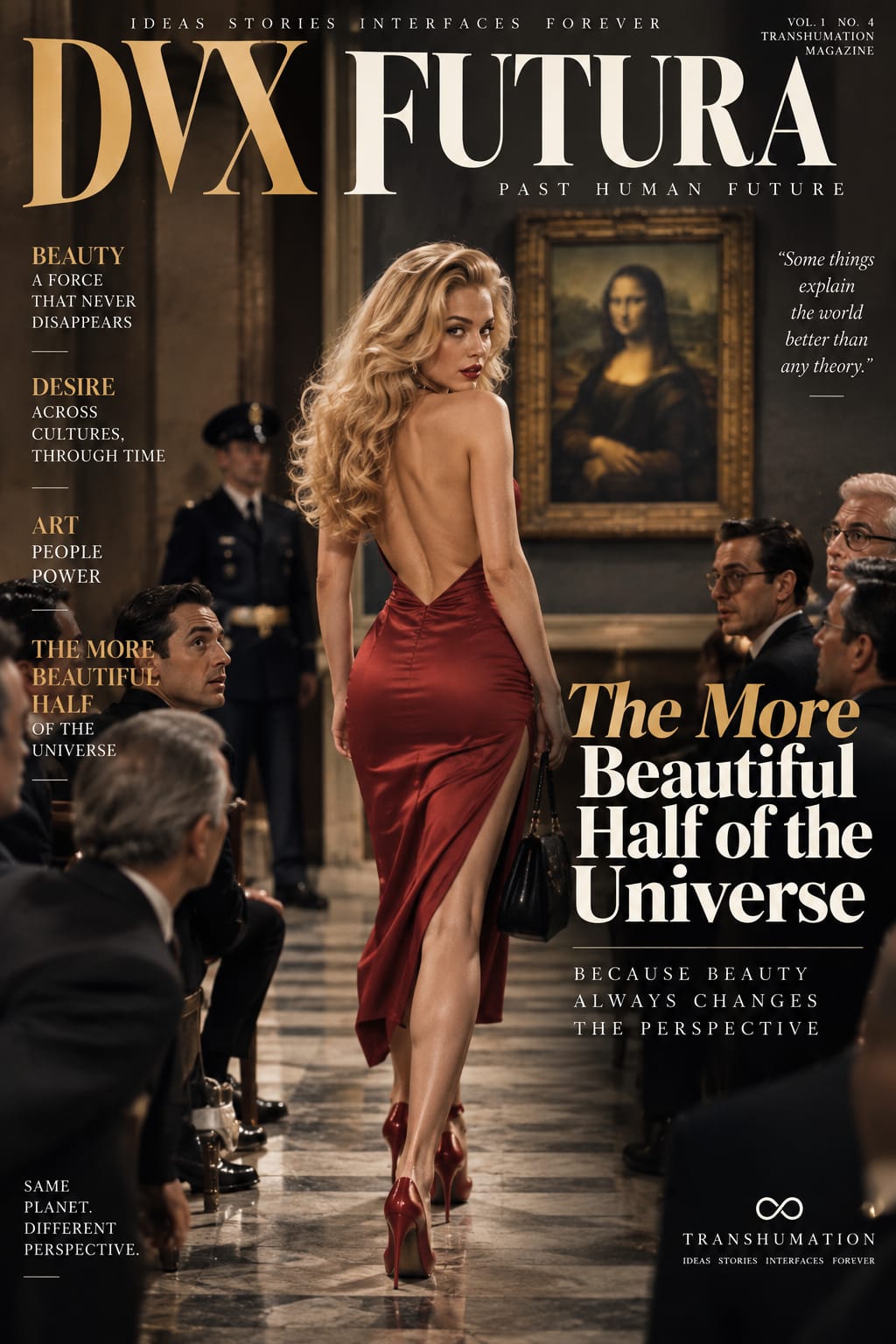
The Baal Room
Stanley Kubrick understood rooms. The Overlook Hotel in The Shining is frightening long before anything explicitly supernatural happens because its spaces never feel entirely passive. Corridors repeat. Doors promise explanations and produce other rooms. The hedge maze offers the joke in architectural form: movement is permitted almost everywhere, provided you accept that almost everywhere is not the same thing as out.
There is also Jack Torrance with his tennis ball, throwing it against the wall and catching what comes back. It is a wonderfully small image. Jack chooses the force and the angle. The wall contributes the return. Agency meets environment and receives an answer.
I would not burden Kubrick with Baal. There is no historical connection to establish, and none is needed. The cultural rhyme is more interesting than a conspiracy. We repeatedly invent houses, games, mazes and hosts because they give visible form to an experience that is otherwise difficult to point at: entering a situation whose possibilities are real but whose conditions are not entirely yours.
Then there is the ballroom. A ballroom looks like freedom of movement until you remember that dancing is possible because movement has form. A partner has choices. So do you. The floor permits thousands of steps and guarantees none of the outcomes. Somewhere in that elegant arrangement, “ballroom” comes perilously close to sounding like “Baal room,” and I am prepared to leave the coincidence exactly where it is. A good coincidence should occasionally be allowed to enjoy itself.
Our new Mr. Baal owes something to another fictional host as well: Mr. Le Bail in Ready or Not, the shadow behind a family fortune built around games. Again, this is not genealogy. It is recognition. Put a mysterious gentleman beside a board and we immediately understand that somebody is about to discover the rules.
You May Rewrite the Rules
Here is where the argument can become gloomy if we are careless. If every wall conceals another wall, every victory another problem and every system another system, then Mr. Baal becomes a tedious fatalist in an expensive jacket. He sits at the end of history saying no.
That is not the game.
Human beings rewrite rules constantly. A rule can be unjust and abolished. A technology can turn an old physical obstacle into an engineering problem. A social expectation can collapse because enough people stop performing it. Previous generations removed walls so successfully that we now encounter intersections they could never have reached. We did not leave the labyrinth. In many respects, we enlarged it.
That is progress, not failure. More roads create more wrong turns, but they also create more destinations. A choice does not merely destroy possibilities. It creates possibilities that did not exist before the choice was made. Every serious yes contains noes, but it can also open a room that was not on yesterday’s map.
Now take the thought experiment to its absurd limit. Give yourself the agency of a creator. Move any wall. Rewrite any law. Remove ageing. Abolish scarcity. Create artificial intelligence. Alter biology. Even from that imaginary height, how would you know that the world produced by your solution would not contain a new wall invisible from the old one?
The Internet removed extraordinary barriers to information and created problems of abundance, selection, credibility and attention that could scarcely have existed in the same form before it. Search solved one problem and helped create the conditions for algorithms to solve another. Algorithms then produced questions about influence, incentives and control. This does not mean the Internet was a mistake. It means solutions change the landscape in which future problems become possible.
Mr. Baal does not say, “You cannot change the rules.”
He says, “Go ahead.”
The Game Does Not Need an Exit
There is a temptation to imagine freedom as an exit door. The Matrix trained an entire generation to look for one: discover the prison, wake up, get outside. It is a magnificent story. Reality may be less considerate.
There may be no useful “outside” to structure itself. Leave one institution and you enter relations with another. Reject a culture and the rejection can become a culture. Refuse to choose and the refusal occupies time, affects other people and changes what remains possible. Even absence plays. Ask anyone who grew up with a parent who was never there.
None of this requires a cosmic jailer. That may be the most important point. The board can emerge from millions of players following different incentives at once. The developer wants to sell the apartment. The bank wants the mortgage paid. The city wants density. The employer wants labour. The couple wants a child and somewhere to put the crib. Nobody needs to design the final absurdity in which two adults work full-time to finance forty square metres in a development called Green Oxygen Bahama Gardens. The game can be cruel without having a villain.
Perhaps this is what gods were good at. They gave a face to rules nobody remembered making.
Mr. Baal is that face. Not the designer of the maze. Not the owner of every piece. Not a demon hiding behind your electricity bill. He is the figure standing beside the board when we discover that other players are real, consequences travel farther than intention, and perspective is sometimes more valuable than another move.
You can love someone. You cannot command the answer. You can make a law. You cannot command every consequence. You can break a wall. You cannot see every room that becomes visible once it falls.
But this is not defeat.
It is a better description of play.
The object is not to defeat Mr. Baal, because Mr. Baal is not another player. Nor is the object to escape the board. The useful move is to see enough of it to decide which game deserves your time, which walls deserve the hammer, which ones deserve study, and which boundary has become close enough to show you your own reflection.
Mr. Baal leans back.
There is no verdict. No thunder. No punishment.
Only the board between you.
“Your move.”
Watch The Video
How to Read the World
by
Current Knowledge
Baal was a title meaning approximately “lord” or “master” in Northwest Semitic traditions. The Baal prominent in the Late Bronze Age texts from Ugarit is associated with the storm deity Baal/Hadad and with rain, fertility, kingship and conflict. The Baal Cycle includes conflicts involving Yamm, associated with the sea, and Mot, associated with death. Biblical polemics opposed Baal worship, while later traditions contributed to the increasingly demonic image attached to the name.
There is no historical evidence that ancient worshippers understood Baal as the rules of reality, a cosmic game master or the architecture of a labyrinth. Mr. Baal is a modern Transhumation device used to explore a recurring human relationship with agency, limitation, consequence and systems.
Open Questions
Which limits are genuinely immovable, and which merely look permanent because we have inherited them? Does increasing freedom reduce constraint, or does it also create new categories of choice and consequence? How much of intelligence consists not in finding an answer, but in finding a perspective from which a better question becomes visible?
Transhumation Interpretation
Mr. Baal is not the claim that one ancient god secretly survived inside modern institutions. He is a face placed on a structural observation: human beings continually change their rules and environments, yet every new arrangement produces relationships, limits and consequences of its own. The important distinction is between fatalism and structure. A wall can be broken. A rule can be rewritten. A game can be changed. None of this guarantees that the next landscape will be wall-free.
Transhumation therefore treats perspective as an instrument of freedom. Seeing more of the board does not make the player omnipotent. It makes more moves imaginable.
FAQ
Who was Baal historically?
Baal was a title used in ancient Northwest Semitic religious traditions. The Baal best known from Ugaritic texts is associated with the storm god Baal/Hadad, especially rain, fertility, kingship and conflict.
Is Mr. Baal an ancient religious figure?
No. Mr. Baal is a modern Transhumation literary device inspired by the historical Baal and by the recurring cultural image of a host, game master or guardian of rules. The article does not claim that ancient worshippers understood Baal this way.
What does the labyrinth mean here?
The labyrinth represents a world in which choices are real but never made in isolation. Some walls can be broken, some can be negotiated, and some are properties of the environment itself. Breaking one wall may also reveal possibilities and problems that could not be seen before.
What does The Shining have to do with Baal?
There is no proposed historical connection. The Overlook Hotel, its maze and Kubrick’s use of rooms and boundaries provide a modern structural comparison for people moving through environments whose conditions are not entirely theirs to choose.
Is this a fatalistic argument?
No. The argument depends on the opposite possibility: rules can change, walls can fall and human agency matters. The point is that freedom does not require a world without structure. Better perspective can reveal which structures can be changed and what new possibilities a change might create.
Continue the Transhumation Series
- Forgotten Religion | Ancient Gods, Symbols and the Hidden Structures of Human Civilization
- The Last Religion | Death, Immortality and the Future of Humanity
- The New Theurgy | AI, Information and the Future of Human Civilization
- End of Branding: You Were Never Meant to Become a Product
- Baal vs Ishtar: Why Ancient Gods Never Disappeared