
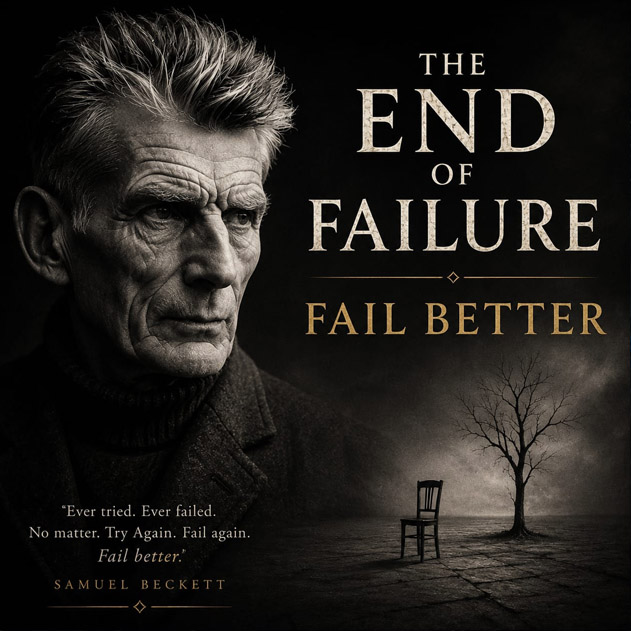
Why You Never Know When You Change the World
Failure Is Not What You Think
Most people imagine failure as something obvious. A bad decision. A visible mistake. A missed opportunity. A moment you can point to and say: this is where everything went wrong.
But what if failure almost never looks like failure?
The Illusion of Immediate Results
We expect important moments to feel important.
We wait for applause, recognition, or clear evidence that our actions mattered.
Reality rarely works that way.
The biggest turning points often arrive quietly, disguised as ordinary conversations, simple decisions, or moments we almost ignore.
The Invisible Architecture of Reality
History is rarely changed by dramatic events alone.
It is built from thousands of tiny choices made every day.
A message you decided to send. A person you decided to help. An idea you chose to share.
Most of these moments seem insignificant—until much later.

Failure Is Often Just Interpretation
What we call failure is usually only our interpretation of incomplete information.
We assume nothing happened because we cannot immediately see the consequences.
But invisible does not mean unimportant.
Your Brain Was Built for Another World
Human biology evolved for immediate feedback.
We expect quick rewards, visible progress, and direct cause and effect.
Modern civilization no longer works like that.
Today’s world is connected, distributed, and highly complex.
Small Actions Create Large Systems
One decision can influence another person.
That person influences someone else.
Ideas spread through conversations, technology, culture, and generations.
The original action disappears—but its effects continue.
Why Recognition Becomes Misleading
Most people don’t simply want success.
They want proof that they mattered.
When that proof never arrives, the mind creates a simple explanation:
„I failed.”
But the absence of recognition is not evidence that nothing changed.
Transhumation Begins with a New Perspective
Transhumation is not only about technology.
It begins with changing the way we see reality.
It asks us to accept that our influence may extend far beyond what we can observe.
Our actions can continue moving through systems long after we stop looking.
The Moment That Changes Everything
The most important decision of your life will probably not feel extraordinary.
It may feel uncertain.
Small.
Ordinary.
You might even regret it at first.
Only later—perhaps years later—will its true importance become visible.
The End of Failure
Perhaps failure never looked the way we imagined.
Maybe the real mistake is believing that only visible results matter.
You never know which word, idea, or decision will continue changing the world through people, networks, and generations.
Sometimes the greatest impact is the one you never live to see.
Continue reading

FAQ
What is the main idea behind „The End of Failure”?
The article argues that failure is often an illusion created by our inability to see the long-term consequences of our actions.
Why do people feel they have failed?
Because they expect immediate feedback, recognition, or visible success.
What is meant by the „invisible architecture of reality”?
It refers to the hidden network of decisions, relationships, and systems through which small actions create large consequences.
How does this relate to Transhumation?
Transhumation encourages a broader perspective, where human influence is understood as extending beyondimmediate perception and biological limits.
Can small actions really change the future?
Yes. Many historical and personal transformations begin with decisions that seemed completely ordinary at the time.
Continue the Transhumation Series
Explore the full journey:
- End of Reality — Where Do You Really Exist?
- End of Physics — Are the Laws of Reality Real?
- End of the Real World — Reality Is No Longer Required
- End of Consciousness — Beyond the Human Mind
- End of Death — When Human Limits Disappear
- End of Religion — When Technology Replaces Faith