

Ishtar, Columbus and Isabela`s High Heels
I am a tall woman who wears high heels.
This is difficult to defend on engineering grounds. The shoe is less stable than it needs to be. It makes running harder. It adds height to a person who has no obvious shortage of it. If a committee of sensible engineers were asked to redesign the human foot for efficient movement through an airport, I doubt they would begin by raising the heel several inches above the floor.
And yet I wear them.
Perhaps the first mistake we make when judging something is assuming that we know what it is for.
The same problem appears when we talk about desire. We usually treat dissatisfaction as a defect. We want something, acquire it, enjoy it, adapt to it, and begin wanting something else. Psychology has a respectable name for part of this phenomenon: hedonic adaptation. Ordinary language has a less respectable one: nothing is ever enough.
But what if we are applying the wrong standard?
What if dissatisfaction is not simply the failure of desire?
What if it is one of the things that makes desire useful?
Ishtar Has a Case to Answer
The ancient Mesopotamian goddess Inanna-Ishtar is an inconvenient figure for anyone who likes clean categories. She is associated with sexual love and war. Her symbols include the star or rosette, weapons and the lion, and the planet Venus was associated with her. These are not modern contradictions imposed upon a conveniently exotic goddess. The conjunction genuinely belongs to her ancient religious identity.
It would nevertheless be a mistake to claim that ancient Mesopotamians invented Ishtar as a theory of hedonic adaptation. They did not leave us a neuroscience textbook disguised as a goddess.
The interpretation that follows is ours.
And my first instinct is to put Ishtar on trial.
Why combine attraction with danger? Why make desire so close to conflict? Why allow human beings to want things they simultaneously fear? Sex and its consequences. Intimacy and lost independence. Children and lost freedom. Longer life and fear of a world in which death retreats. Intelligent machines and fear of machine intelligence.
An engineer might separate these functions.
Ishtar does not.
She looks suspiciously like a badly designed goddess.
Then I look down at my shoes.
The Perfect Pleasure
Oscar Wilde gave Lord Henry one of those lines that initially sounds frivolous and becomes more disturbing the longer one thinks about it:
“A cigarette is the perfect type of a perfect pleasure. It is exquisite and it leaves one unsatisfied.”
The cigarette is perfect precisely because it fails to finish the job.
A pleasure that permanently eliminated the desire for pleasure would be extraordinarily efficient. It might also be commercially disastrous, romantically inconvenient and civilizationally peculiar. Desire seeks fulfilment, yet complete fulfilment threatens to extinguish the desire that produced the movement in the first place.
This gives dissatisfaction another possible interpretation. Perhaps pleasure does not always function as a destination. Sometimes it functions as an update.
You wanted something. You moved toward it. You acquired it. For a while the world changed. Then your position changed with it.
The horizon moved because you moved.
That is not necessarily pathology.
It may sometimes be navigation.
Somewhere in Here Is a Pony
There is an old joke about an optimist and a pessimist. Their father gives the pessimist a room filled with toys and fills the optimist’s stable with manure.
The pessimist looks at the toys and immediately sees batteries to replace, instructions to read, pieces to lose and things that will eventually break.
The optimist grabs a shovel.
With this much manure, he reasons, there must be a pony somewhere.
It is not a scientific theory of optimism. Sometimes there is no pony. Sometimes there is only an impressive quantity of manure.
But the joke reveals something interesting about desire: it does not merely respond to reality. It selects what in reality deserves investigation.
The pessimist and optimist may possess exactly the same amount of information. What differs is the search they are prepared to conduct.
This is why dissatisfaction can become generative. The person who assumes that nothing better exists has little reason to search. The person who suspects that something might exist begins moving things around.
A scientist has unexplained data. An inventor has an irritating limitation. An archaeologist has dirt. An entrepreneur has a market that does not yet exist.
Somewhere in here is a pony.
Not always.
But you cannot find the pony you refuse to look for.

The Useful Obstacle
Difficulty does something else.
It selects.
This is where the high heels return.
Why would a tall woman make herself taller? Perhaps because height was never the problem. Perhaps amplification is the point. Perhaps fashion, sexuality, confidence, ritual or sheer aesthetic preference matters more than locomotor efficiency. Human cultural practices can serve several functions simultaneously, and it would be foolish to pretend that every woman wearing heels is performing the same biological or social calculation.
But the structural joke remains.
Raise the woman. Raise the difficulty. Raise the bar.
See what happens.
A barrier changes the population willing to cross it. A marathon of one kilometre would be more accessible, but it would cease to select for the same capacities. A mountain with an elevator would remain geographically identical while becoming experientially different. Sometimes removing the difficulty changes the thing we believed we were improving.
This does not make every obstacle valuable. Poverty is not secretly a motivational programme. Disease is not a character-building service. Pain does not become good merely because it can carry information.
The point is narrower and more dangerous:
Before removing a difficulty, it may be worth asking what else the difficulty is doing.
A Dove Crosses the Ocean
Christopher Columbus provides an almost indecently good example because history gave him a name that sounds as though a novelist invented it.
Colombo belongs to the linguistic family of the dove.
A dove crossing the waters and returning with news of land is such an obvious biblical image that one should resist doing too much with it. Coincidence does not become causation merely because it has good literary taste.
Still, history occasionally has appalling subtlety.
Columbus sailed west looking for Asia. More importantly, his geographical model was wrong. Ancient scholars had already done surprisingly good work on the size of the Earth. Around the third century BCE, Eratosthenes used the angle of sunlight and a known terrestrial distance to estimate the planet’s circumference.
Columbus worked with assumptions that made the westward distance to Asia far smaller than it actually was.
This gives us a wonderfully uncomfortable proposition.
Columbus was wrong.
And he sailed.
The people who thought the voyage dangerously long had an important point. Had another enormous landmass not intervened, the error would have mattered rather more.
But another landmass did intervene.
A mistaken model produced an expedition that encountered a reality absent from the model.
The Map You Do Not Have
We have a habit of imagining people in 1492 as knowing that they lived in primitive times.
They did not.
They lived in the most recent year that had ever existed.
Their ships were not museum exhibits. Ocean-going vessels, sails, compasses, astronomical observations and generations of accumulated Atlantic experience were technologies of their present. We can debate how particular European ships compared with sophisticated Chinese shipbuilding traditions, but that misses the psychological point.
Nobody boards his own century believing it to be antique.
Every generation has a version of the same advertisement:
WHITER THAN THIS?
The fastest. The cleanest. The smartest. The final improvement. The best picture. The most advanced machine.
Then somebody moves the frontier.
The irony is especially sharp in Columbus’s case because useful knowledge was not entirely absent. Eratosthenes had demonstrated centuries earlier what could be accomplished with shadows, distance and geometry.
Sometimes progress requires discovering new information.
Sometimes the information already exists and somebody must connect it differently.
Sometimes somebody connects it incorrectly and discovers something else.
And sometimes no amount of thinking on shore can supply the missing information.
You have to sail.
The Parachute Someone Else Packed
There is a difference between danger and uncertainty.
An astronaut travelling to the Moon accepts extraordinary danger, but the Moon is visible. Its existence is not the speculative part of the mission. A sailor entering poorly known waters faces another category of problem: the destination, distance, conditions and even the adequacy of his model can all remain uncertain.
It resembles jumping with a parachute packed by somebody else.
You can understand aerodynamics. You can inspect the equipment. You can know the statistics. You can trust the person who folded it.
But one piece of information remains unavailable while you are standing inside the aircraft.
Whether this particular parachute will open.
Action begins where certainty ends.
That does not mean we should celebrate ignorance. Quite the opposite. Measure everything that can be measured. Check the ship. Count the water. Listen to the sceptic. Ask whether somebody two thousand years ago already measured the Earth better than you did.
Then admit that analysis eventually reaches a boundary.
Some information exists only on the other side of action.
The Kraken Factory
The visionary has another problem.
The same imagination that produces possibilities can produce monsters.
Perhaps there is land beyond the horizon.
Perhaps there is a kraken.
Unknown territory is wonderfully accommodating. Until somebody visits it, we can populate it with almost anything.
This makes the conventional opposition between the brave visionary and the cowardly sceptic too simple. The sceptic may be correct. The engineer who says the ship will fail may save everybody aboard. The accountant asking about provisions may understand the problem better than the charismatic man pointing west.
But groups can also become extraordinarily efficient at manufacturing reasons not to move.
Risk analysis becomes a kraken factory.
Every new proposal receives another tentacle.
This is where my height becomes inconvenient even to me. Standing higher lets you see farther. Unfortunately, it also lets you see more things to fear.
The advantage of perspective is not certainty.
It is a larger horizon.
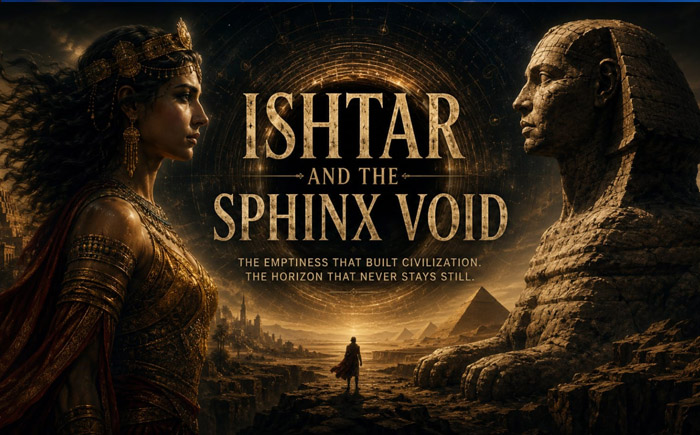
The New World. And…?
There is a terrible unfairness in the way we judge explorers.
We know the ending.
Of course Columbus should continue sailing. We can see America from here.
He could not.
But there is another joke hidden inside the phrase New World.
Nothing remains new merely because it was once unimaginable.
Imagine Columbus returning to court stripped of five centuries of historical importance. He has crossed the ocean and returned carrying the most preposterous piece of information a European monarch could reasonably expect to receive.
Another world.
I imagine the presentation.
“The New World, Your Majesty.”
Isabella looks at him.
“And…?”
Poor Columbus.
He brings back a world and Ishtar is already bored.
Perhaps this is what we misunderstand about dissatisfaction. The miracle does not have to become smaller. We merely have to become accustomed to its existence.
The impossible, once incorporated into experience, becomes familiar. The miracle acquires coordinates. Then borders. Then administrators. Eventually paperwork.
America does not become less astonishing.
We become accustomed to America.
There is an old Polish expression, borrowed from Aleksander Fredro’s nineteenth-century comedy The Revenge. A woman demands an absurd proof of devotion from her admirer:
Krokodyla daj mi, luby.
My darling, bring me a crocodile.
The line survived because the crocodile is beside the point. The joke is the escalation itself. Give me something unreasonable. Accomplish the improbable. Cross the ocean. Bring me the crocodile.
And once you have done it?
And…?
Yesterday’s impossibility has already become today’s possession.
This may be the strangest property of novelty. We imagine that obtaining an extraordinary thing should produce an extraordinary amount of lasting satisfaction. But extraordinary things do not remain extraordinary simply because they were difficult to obtain.
The horizon that obsessed us becomes the ground beneath our feet.
And somewhere beyond it another line appears.
Perhaps Ishtar does not become bored because the world has failed her.
Perhaps she becomes bored because the world has succeeded.
You Cannot See America From 1492
That does not make Columbus right in any general sense, and it certainly does not turn recklessness into wisdom.
History turns uncertainty into narrative. It removes all the roads not taken, labels the people who eventually succeeded “visionaries,” and quietly forgets the thousands who were equally certain and spectacularly wrong.
People living through history do not possess that luxury.
They inhabit a living organism filled with contradictory evidence, incomplete models, brilliant eccentrics, persuasive fools, cautious experts, reckless geniuses and people who are right for entirely wrong reasons.
We do too.
Some ideas currently dismissed as absurd will remain absurd.
Others may become embarrassingly ordinary.
The difficulty is that we do not possess the footnotes of the future.
You Do Not Always Reap What You Sow
This is where Ishtar finally gets to answer the charge.
Perhaps contradiction is not necessarily evidence of bad design.
Desire produces movement, but movement changes the person who desired. Satisfaction arrives, but the person receiving it is no longer precisely the person who began the journey. Obstacles frustrate us, but frustration can produce alternative routes. Risk threatens loss, but without risk certain information remains permanently unavailable.
We sow for one harvest and sometimes receive another.
Columbus sought Asia and encountered lands Europeans had not incorporated into their geography. The consequences became vastly larger than his intentions, and many were catastrophic. European expansion brought conquest, enslavement, violence and epidemic disease to Indigenous populations.
Generativity is not the same thing as goodness.
That distinction matters enormously.
Ishtar does not promise that movement produces moral progress.
She represents, in this contemporary reading, something more unsettling:
Movement produces consequences.
Some are desired. Some are terrible. Some are inherited by people not yet born.
The seed does not contain a contract specifying the harvest.
The View From the Heels
I began by accusing Ishtar of contradiction.
Love and war. Desire and fear. Pleasure and dissatisfaction. Attraction and danger.
I wanted to tidy her up.
Now I am less certain.
Human beings routinely construct things that make little sense when evaluated against a single criterion. Cathedrals are inefficient shelters. Literature is an inefficient transmission system for factual information. A mechanical watch can be less accurate than a cheap electronic one. High heels are inefficient walking equipment.
Perhaps efficiency is occasionally the wrong question.
The more interesting question is what the apparent inefficiency makes possible.
There is no guarantee that every contradiction has a hidden purpose. Evolution does not design toward a final plan, culture accumulates accidents, and human beings preserve plenty of harmful habits simply because we are human beings.
But there is also no guarantee that a feature is useless merely because we do not yet understand everything it does.
That distinction may become increasingly important as we acquire the ability to modify ourselves.
Before eliminating fear, ask what fear carries.
Before eliminating dissatisfaction, ask what begins moving when satisfaction ends.
Before removing every obstacle, ask what the obstacle was selecting.
And before declaring a horizon empty, remember that you are judging it from shore.
I am still wearing the heels.
Perhaps I wear them because raising the bar changes the climb. Perhaps I enjoy seeing a little farther.
Or perhaps I simply like the shoes.
Ishtar, I suspect, would consider all three answers acceptable.
For a while.
Then she would probably want another pair.
Watch the Video
How to Read the World

By Alistair Brightworthton
Current Knowledge
Psychological research supports the broad phenomenon commonly called hedonic adaptation: emotional responses to many positive and negative changes can diminish over time, although the speed and degree of adaptation vary substantially among people, experiences and domains. It does not follow that humans inevitably return to one fixed level of happiness after every event.
Motivation is likewise not reducible to permanent dissatisfaction. Human behaviour reflects interacting reward, learning, social, biological and cognitive systems. Curiosity, uncertainty, anticipated reward, avoidance of harm and intrinsic motivation can all contribute to exploration.
Historically, Inanna/Ishtar genuinely combined domains that modern readers may experience as opposites, especially sexual love and warfare. The star or rosette, lion and weapons belong to her ancient iconography, and Venus was associated with her. Our interpretation of her as a figure for generative contradiction is explicitly a modern Transhumation reading, not a claim about ancient Mesopotamian psychology.
Eratosthenes developed a geometric method for estimating Earth’s circumference more than seventeen centuries before Columbus’s first Atlantic voyage. Columbus nevertheless worked with geographical assumptions that made the westward distance to Asia much smaller than it actually was.
The famous Polish phrase Krokodyla daj mi, luby comes from Aleksander Fredro’s Zemsta (The Revenge), where Klara sets Papkin the absurd task of bringing her a crocodile. Its use here is literary analogy, not historical connection.
Open Questions
Can a motivational system produce lasting satisfaction without reducing the motivation to seek further change?
Does novelty lose its power because the object changes, or because the observer does?
How much of creativity depends on constraints rather than freedom?
When does scepticism protect us from a bad voyage, and when does it merely keep us in port?
Can we distinguish a harmful human limitation from a limitation that performs another function before removing it?
If future biotechnology or artificial intelligence allows us to reduce fear, boredom, dissatisfaction or desire, how would we test the secondary functions of those states before altering them?
And perhaps the most uncomfortable question: if we actually obtained what our civilisation currently considers impossible, how long would it remain miraculous?
Transhumation Interpretation
Transhumation does not require the belief that every human limitation is secretly valuable. That would turn accident into providence and suffering into design.
It asks for something harder:
Do not confuse a feature you dislike with a feature you understand.
We are beginning to acquire technologies capable of changing biological functions that previous civilizations could only endure, ritualise or imagine away. That makes the engineer’s temptation increasingly powerful. Fear looks inefficient. Ageing looks inefficient. Forgetting looks inefficient. Dissatisfaction certainly looks inefficient.
Perhaps some of them are.
But living systems are not clean machines assembled from independent components. Change one variable and another relationship may change with it. A limitation can simultaneously impose a cost, transmit information, constrain behaviour and create pressure for adaptation.
The lesson of Ishtar is therefore not that contradiction is sacred.
It is that contradiction deserves investigation before elimination.
The lesson of Columbus is not that reckless people are eventually rewarded.
It is that the result of an experiment can exceed the conceptual world in which the experiment began.
And the lesson of Eratosthenes may be the strangest of all. Sometimes the future is not waiting for somebody to invent the truth.
Sometimes somebody has already measured it.
The rest of us have not yet built the ship.
And if we ever do reach the New World?
Give us a moment.
We will probably ask what comes next.
FAQ
Why does satisfaction fade after we get what we want?
Part of the explanation is hedonic adaptation: repeated or continuing exposure to a positive change can reduce its emotional intensity. But adaptation is neither universal nor complete, and different experiences show different patterns. The larger argument of this essay is that renewed desire may sometimes have behavioural consequences beyond happiness itself: it can motivate exploration, comparison and change.
Was Ishtar really the goddess of love and war?
Yes. Inanna/Ishtar was associated with sexual love and warfare in ancient Mesopotamia. Her iconography included the star or rosette, lions and weapons, and she was associated with Venus. The claim that these contradictions represent a general mechanism of human creativity is our modern interpretation, not a documented ancient doctrine.
Did ancient people know the Earth was round before Columbus?
Yes. Educated traditions in antiquity included a spherical Earth, and Eratosthenes developed a geometric method for estimating its circumference in the third century BCE using observations of shadows and terrestrial distance.
Was Columbus right about the distance to Asia?
No. His westward geographical estimates made Asia substantially closer than it really was. The existence of the Americas transformed what otherwise would have been a much more serious error in the practical assumptions behind the voyage.
What does “Krokodyla daj mi, luby” mean?
Literally, approximately, “My darling, bring me a crocodile.” The phrase comes from Aleksander Fredro’s Polish comedy Zemsta, in which Klara demands a crocodile from Papkin as an impossible proof of devotion. In this essay it becomes a joke about escalating desire: once yesterday’s impossible has been delivered, desire is remarkably capable of inventing tomorrow’s crocodile.
Does difficulty always make people more creative?
No. Constraints can sometimes stimulate alternative strategies, but they can also waste resources, prevent participation or cause harm. The argument is not that obstacles are inherently good. It is that removing an obstacle without understanding its wider effects can change more than the obstacle itself.
Is dissatisfaction therefore good?
Not necessarily. Chronic dissatisfaction can be destructive, and satisfaction itself has obvious psychological and social value. The more useful distinction is between dissatisfaction as suffering and dissatisfaction as information or motivation. The same state can perform different roles in different circumstances.
What does this have to do with Transhumation?
Human enhancement increasingly raises a practical version of the essay’s question. If technology gives us the ability to remove traits we experience as limitations, we need to know whether those traits perform other functions before changing them. Transhumation treats that uncertainty as something to investigate rather than as an argument either for preserving humanity unchanged or modifying it without restraint.
Continue the Transhumation Series
- Forgotten Religion | Ancient Gods, Symbols and the Hidden Structures of Human Civilization
- The Last Religion | Death, Immortality and the Future of Humanity
- The New Theurgy | AI, Information and the Future of Human Civilization
- End of Branding: You Were Never Meant to Become a Product
- Baal vs Ishtar: Why Ancient Gods Never Disappeared