
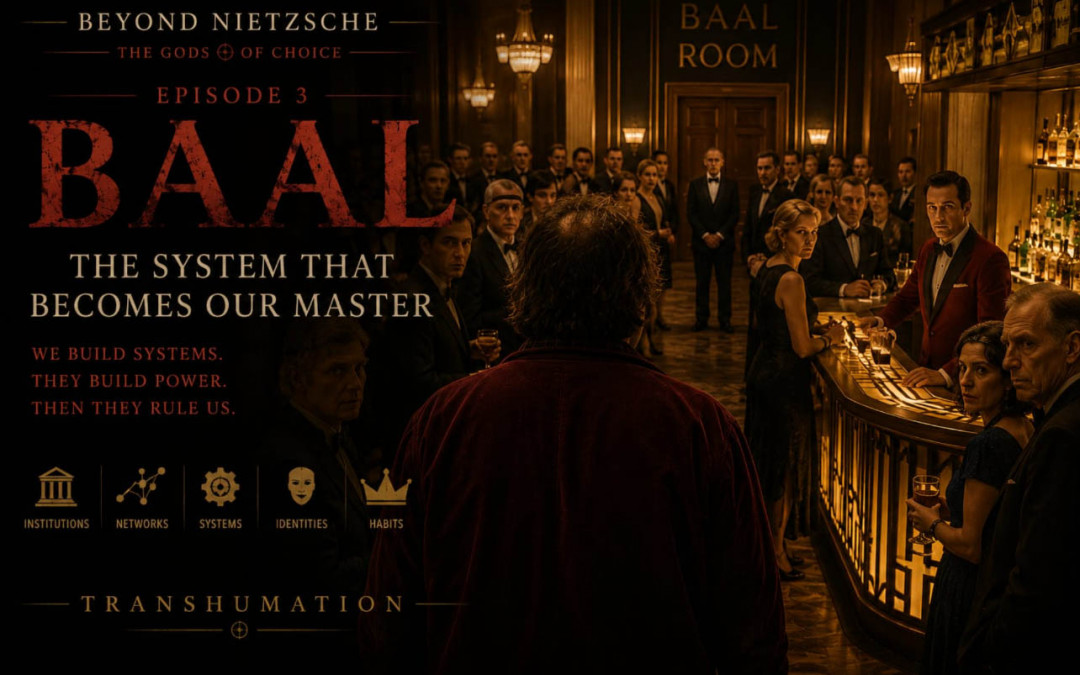
The Baal Room Looks at You
There is a surprisingly effective way to discover how much freedom you still possess over a machine you own. Try leaving it.
Buy a different phone. Not merely a newer model of the same device, but one belonging to another ecosystem. For a moment the decision seems almost comically easy. A telephone is a product; you purchased it, therefore you can replace it. Then the small negotiations begin. Where are the photographs? Which applications did you buy? Will the watch still work? What happens to the passwords, subscriptions, family accounts, authentication codes and years of habits accumulated around one particular interface? Nothing physically prevents you from leaving. There is no locked gate and no guard standing beside it.
The road is simply more expensive than it used to be.
This is one of the quietest transformations in modern life. We choose tools because they make something easier. If enough people make the same choice, other things begin arranging themselves around it. Developers build for the platform. Employers assume its presence. Banks connect to it. Friends send messages through it. The original product becomes an ecosystem, the ecosystem becomes infrastructure, and eventually the infrastructure begins shaping which future choices remain convenient.
The strange thing is that nobody needs to enslave us for this to happen.
We can build the master ourselves.
The Lord Who Did Not Begin as a Devil
The ancient word baʿal could mean lord, master, owner or possessor. It was used as a title and in the names of different West Semitic deities rather than originally identifying one universal embodiment of evil. Centuries of religious conflict and later cultural memory transformed “Baal” into something much darker and simpler than the historical picture deserves.
For Transhumation, the older meaning is more useful.
Master.
Not necessarily a monster descending from outside. Not a tyrant who suddenly appears and confiscates human freedom. A master can emerge from a relationship that originally looked useful.
That is the important structural move. A company begins because several people can accomplish something together that one person cannot. A state coordinates defence, law and infrastructure. A family creates continuity. A scientific institution preserves standards beyond the career of one researcher. A platform connects strangers. Structures are not unfortunate accidents in civilization; civilization is impossible without them.
The problem begins later, when the question quietly changes.
At first we ask: What is this structure for?
Eventually the structure begins asking: What must be done so that I continue to exist?
Those questions can produce the same answer for decades.
Then, one day, they do not.
That is where Baal enters.
Augustus Became Augustus
Political power provides an unusually clear version of this paradox because rulers appear, from a distance, to possess almost unlimited freedom. Augustus conquered rivals, reconstructed Roman political order and accumulated extraordinary authority. If anyone should have been able to behave according to personal preference, one might imagine it was the man whose title eventually became a synonym for emperor.
Yet Augustus did not merely occupy an office. Over time he helped construct Augustus as a political form.
Public morality, family discipline, restored tradition, dynastic continuity and the performance of Roman restraint became part of the architecture supporting his rule. The private man Octavian could not simply stand outside that architecture whenever it became inconvenient. His household became political material. His relatives became symbols. Private scandals became public problems because the emperor had tied legitimacy to a moral order larger than his personal preferences.
This is why some of Augustus’s family decisions remain so uncomfortable. We do not need to pretend that one abstract “system” mechanically controlled every action he took. Personal motives, political calculation and Roman social norms all mattered. The more interesting point is that the stronger the Augustan order became, the narrower certain private freedoms became with it.
The creator acquired obligations to the creation.
Every successful founder eventually encounters a milder version of the same problem. A person can close a business containing only a desk and an idea without asking many people for permission. Close the same company after ten thousand employees, suppliers, lenders and customers depend upon it, and personal ownership no longer feels like personal sovereignty. The founder may still legally control the structure while being morally, economically and politically constrained by everything that grew around it.
Success has produced a peculiar reversal.
The structure survived because people became dependent upon it.
Now the creator is one of them.
Hecate Shows the Road. Baal Owns the Road
This is where Baal fits into the larger sequence of The Gods of Choice.
Ishtar begins with desire: the present arrangement is no longer enough. Hecate arrives at the crossroads, where several futures remain possible. Choice therefore initially feels like freedom. Keep the old system. Leave it. Build something else. Follow another road.
But roads do not remain abstract possibilities once millions of people begin travelling them. They acquire paving, signs, property, maintenance, tolls and rules. Businesses appear beside them. Towns orient themselves around them. Eventually not taking the road becomes a decision with consequences that did not exist before the road was built.
Repeated choice creates structure.
Structure reorganizes future choice.
That is Baal.
This does not destroy Hecate. Alternatives remain. You can leave the platform, resign from the institution, change profession, abandon the reputation you built or refuse the technology everybody else adopted. Baal’s most effective form rarely needs to abolish alternatives completely.
He merely makes them expensive.
The distinction becomes particularly important because domination can therefore emerge without a dictator. Nobody needs to sit in a secret room deciding that users should become dependent on a platform. Developers follow incentives, customers prefer convenience, businesses standardize, investors seek growth and other systems integrate with the successful one. Each local action can be understandable while the combined structure produces an outcome nobody individually designed.
The master may have no throne because the throne is distributed across relationships.
When the Measurement Becomes the Goal
There is a smaller version of the same transformation taking place around us constantly. Someone invents a measure because reality is complicated.
A school wants to know whether students are learning, so it creates a test. A company wants to know whether employees are productive, so it develops metrics. A platform wants to know whether people value its content, so it measures engagement. Each number begins as a representation of something more difficult to see directly.
Then people learn that the number matters.
Teachers begin teaching toward the test. Employees learn how productivity is recorded. Creators learn which emotions keep people clicking. Slowly the representation begins modifying the reality it was supposed merely to describe.
The map starts disciplining the territory.
This is one reason large systems can produce absurd results without containing an obviously malicious person. Everyone may be following a locally sensible rule. The employee wants to keep a job. The manager wants to hit a target. The executive must satisfy investors. The investor compares returns. The customer wants a lower price. The complete outcome can become destructive while no individual participant possesses enough freedom to redesign the entire chain.
Replacing the person at the top may help.
Sometimes it changes remarkably little.
Baal survives because the relationships survived.
And artificial intelligence may make this problem more visible rather than inventing it. The important threshold will not necessarily arrive when an AI system becomes conscious or “takes control.” Something more mundane could happen first: institutions reorganize around automated evaluations, and human beings begin modifying their behaviour to satisfy classifications produced by systems they cannot meaningfully contest.
The machine does not need to issue commands.
Its score merely needs to matter.
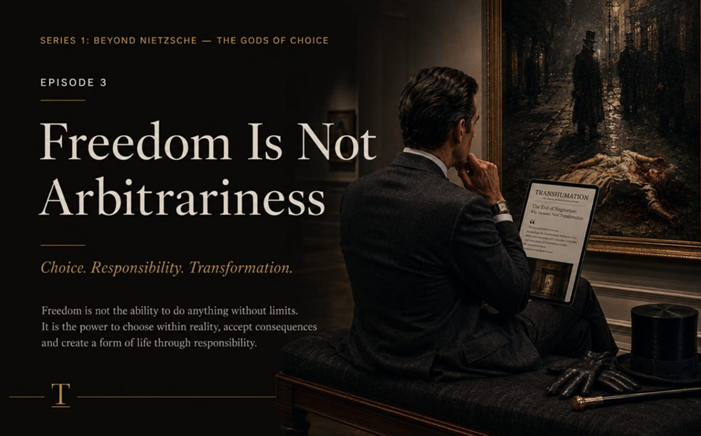
The Most Dangerous Baal Has Your Name
Institutions make this structure easy to see because their machinery is external. The more uncomfortable version begins inside the person.
You develop a reputation for being strong. At first the reputation is useful. People trust you in a crisis. Then one day admitting fear becomes difficult because strong people are not supposed to be afraid. Another person becomes known for intelligence and gradually discovers that saying I don’t know threatens something larger than a single conversation. An artist finds a successful style and begins repeating it after curiosity has moved elsewhere because the audience expects the recognizable version.
An identity has become infrastructure.
The person no longer asks only what is true or desirable. Another question arrives first: What would someone like me do?
That is a remarkably small Baal and perhaps the hardest one to overthrow. A political system can be escaped geographically. A company can be sold. A platform can be deleted. The structures built from memory, reputation and repeated choice travel with us.
This is also why mortality gives institutions such strange power. Human beings know they will disappear. A company, dynasty, nation, artwork or family name offers the possibility that something carrying our pattern will continue. That desire can produce cathedrals, discoveries and extraordinary sacrifices for people not yet born.
It can also reverse the relationship between life and legacy.
The monument meant to preserve the person begins governing the person before it has even been built.
The Master Behind the Throne
The simplest response would be to destroy Baal.
It would also destroy civilization.
Large societies require durable rules precisely because every decision cannot return permanently to the crossroads. Hospitals need procedures. Scientific communities need standards. Families need obligations that survive moods. Contracts are valuable because tomorrow’s desire does not automatically erase yesterday’s promise. A structure can protect human beings from arbitrary power just as easily as it can acquire arbitrary power of its own.
The real question is therefore not how to eliminate mastery.
It is how to keep mastery visible.
Can the institution still explain the human purpose for which it exists? Can its rules be challenged? Can the measurement be changed when it begins replacing the goal? Can people leave without losing their entire social identity? Can responsibility be traced through the structure rather than disappearing between departments? Most importantly, can the system imagine its own ending?
A dangerous structure eventually treats those questions as attacks on its existence.
A healthier one understands that its existence was never the highest value.
That may be the line separating loyalty from worship.
And perhaps this is why the ancient title Baal remains useful after the deity has disappeared from ordinary Western religious life. The name points toward something civilization repeatedly rebuilds: a lord, possessor or master. Sometimes that master has a face. Sometimes it is a state, a company, an algorithm, an ideology or a reputation.
Sometimes it is simply the road everybody chose yesterday.
We began with a telephone because it seemed trivial. That was the clue. The most durable masters rarely announce themselves with temples and sacrifices. They arrive as useful things, solve genuine problems and become woven into the landscape until leaving them requires considerably more courage than choosing them ever did.
Hecate still stands at the crossroads.
But by the time we return, someone has built a city around one of the roads.
And the city would very much like us to stay.
Watch the Video
How to Read the World
Current Knowledge
The Semitic term baʿal broadly carried meanings including lord, master, owner or possessor and could function as a title for different deities and human authorities. The later simplification of “Baal” into a singular demonic figure reflects subsequent religious and cultural developments rather than the full complexity of its ancient use.
Modern sociology, economics and organizational theory provide many ways of describing phenomena resembling the structural pattern discussed here without invoking Baal: institutional inertia, path dependence, switching costs, principal-agent problems, bureaucratic self-preservation, lock-in effects and incentive structures can all cause organizations or technologies to constrain the people who originally created or adopted them.
Complex systems can also produce emergent outcomes without one central actor intending the total result. This does not mean systems literally possess minds or desires; language such as “the system wants to survive” is a metaphor for incentives and behaviours that tend to preserve an existing arrangement.
Open Questions
When does useful dependence become domination? The boundary cannot simply be dependence itself, because human beings depend on families, institutions, technologies and shared rules for almost every capability of complex civilization.
Can a sufficiently large institution remain genuinely responsive to its original purpose, or does scale inevitably create competing interests around preservation of the institution itself? How much transparency and possibility of exit are necessary before loyalty remains meaningful rather than compulsory?
Artificial intelligence adds another problem. If institutions increasingly reorganize work and judgment around automated classifications, will human beings retain meaningful power to question the criteria shaping them, or will adapting to the model become easier than challenging the model?
And perhaps the hardest question is personal: how do we recognize when an identity that once helped organize a life has begun preventing that life from changing?
Transhumation Interpretation
Transhumation does not claim that ancient worshippers understood Baal as a theory of institutional power. The historical deity and the structural interpretation developed here must remain separate.
The useful continuity lies in the older meaning of master.
Transhumation reads Ishtar, Hecate and Baal as three stages in a recurring structure rather than as a hidden ancient system. Desire destabilizes the present. The crossroads exposes alternatives. Repeated choice stabilizes one path until the path itself begins shaping future movement.
Desire → choice → repetition → structure → dependence → new desire.
The cycle does not return to its starting point. Every structure changes the landscape from which the next choice is made.
Baal therefore does not represent evil structure.
He represents the moment when we forget that the structure was created.
That is when the road begins to look like nature, the metric begins to look like reality and the identity begins to look like destiny.
Behind the throne stands something more durable than the king.
The question is whether we can still see it.
FAQ
What did the word Baal originally mean?
The Semitic word baʿal could mean lord, master, owner or possessor and was also used as a title for different deities. It should not historically be reduced to a single universal evil god.
What does Baal mean in Transhumation?
Transhumation uses Baal as a structural metaphor for the point at which something created to serve human purposes acquires enough dependencies, rules and incentives to begin constraining its creators.
Can a company or technology become “Baal”?
Metaphorically, yes. A company, platform or technology becomes Baal-like when people reorganize their behaviour around preserving or satisfying the system rather than the original purpose for which it was adopted.
How are Ishtar, Hecate and Baal connected?
In this Transhumation interpretation, Ishtar represents dissatisfaction or desire, Hecate the crossroads of possible responses, and Baal the stable structure that emerges when one path is repeatedly chosen.
Is every structure oppressive?
No. Durable structures make civilization possible. The danger appears when preserving the structure becomes more important than the human purpose it was created to serve.
Continue the Transhumation Series
- Forgotten Religion | Ancient Gods, Symbols and the Hidden Structures of Human Civilization
- The Last Religion | Death, Immortality and the Future of Humanity
- The New Theurgy | AI, Information and the Future of Human Civilization
- End of Branding: You Were Never Meant to Become a Product
- Baal vs Ishtar: Why Ancient Gods Never Disappeared