
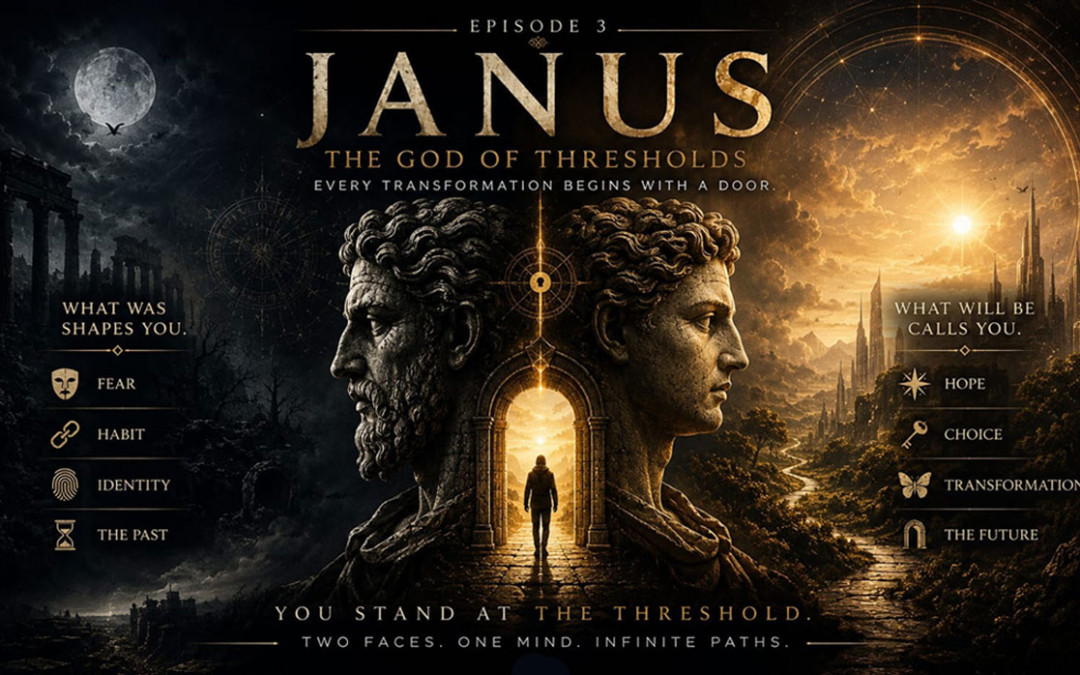
There is something peculiar about the things human beings voluntarily do.
We climb mountains from which we might fall. We cross oceans when there is nothing on the other side that cannot be seen in a photograph. We leave familiar cities, change careers, fall in love with people capable of breaking our hearts, read books that disturb our convictions and occasionally spend fortunes travelling somewhere merely to stand in front of an object we have already seen a thousand times on a screen.
Curiosity explains some of this. Pleasure explains some more. Status, ambition and boredom deserve their share.
But there may be a structure beneath all of them.
Human beings seem unusually unwilling to remain exactly what they already are.
Perhaps this is why the most important experiences in a life are rarely remembered simply as events. They become borders. There was the person before the marriage and the person after it; before the child and after; before the diagnosis, the death, the journey, the humiliation, the success, the book that arrived at precisely the wrong—or right—moment.
The calendar records a date.
The mind remembers a doorway.
A Door Must Lead Somewhere
Civilizations understood this long before psychology gave us a vocabulary for identity.
Initiations, pilgrimages, marriages, funerals and mystery rites differed enormously in what they meant, but many shared a remarkably persistent structure. A person entered in one condition and emerged in another. A child became an adult. Two individuals became a married pair. An initiate became someone who had seen what others had not. The dead crossed from the community of the living into whatever category a culture reserved for those who were gone.
The ritual did not merely represent change. Ideally, it performed it.
This distinction explains why old rituals can become strangely hollow when separated from the world that once made them consequential. The candles survive. So do robes, music, architecture and gestures. They can be beautiful. Yet when nothing is different after the ceremony, the doorway has been preserved while the room behind it has disappeared.
A ritual without passage eventually becomes theatre.
The problem is not theatre. Theatre knows that it is theatre.
The more interesting problem begins when a civilization preserves the architecture of transformation while losing confidence that transformation is actually possible.
Modern culture has not eliminated the desire. It may simply have relocated it. The pilgrimage becomes travel. Initiation becomes education. Conversion becomes therapy. Rebirth becomes reinvention. The retreat, the marathon, the startup, the tattoo, the extreme journey and even the obsessive project can all, under very different circumstances, acquire the old grammar:
I went in as one person. I came back as another.
The carrier changes.
The structure survives.
Janus Was Standing in the Doorway
The Romans had an unusually elegant symbol for this problem.
Janus was associated with beginnings, transitions, gates and doorways, conventionally represented with two faces: one turned toward what has been, the other toward what is coming. The beginning of the year still carries his name.
There is something almost embarrassingly simple about the image. A threshold contains two realities at once. From one side it is an exit. From the other it is an entrance.
You cannot cross it without losing one position.
That may be the part modern discussions of transformation prefer to omit. We like the language of growth because it sounds additive: more knowledge, more experience, more capability, a better version of ourselves. But genuine transformation usually contains destruction as well. The child cannot become an adult while remaining entirely a child. The immigrant gains one country while becoming more distant from another. A discovery can enlarge the world while making an old certainty impossible to recover.
Every real doorway closes something behind us.
Perhaps that is why thresholds attract ritual. Human beings seem to understand instinctively that change needs marking precisely because change has a price.
And this makes stagnation more complicated than simple laziness.
Sometimes we remain where we are because moving forward requires accepting that we cannot bring everything with us.
The Mountain Is Not the Point
This also changes the familiar idea that growth begins outside the comfort zone.
It does, sometimes. But discomfort by itself is not transformative. A delayed flight is uncomfortable. So is food poisoning. Neither necessarily produces wisdom.
The important element is not suffering.
It is perspective.
Climb a mountain and the geography changes before the mountain does. Streets that appeared unrelated at ground level become part of the same system. Buildings lose their dominance. Distances become legible. The higher position does not automatically make the climber wiser or morally better. It simply reveals relationships that were difficult to see below.
This is the same ladder that appears elsewhere throughout Transhumation.
A scientist changes scale and discovers a structure. A historian places two centuries beside one another and notices a recurrence invisible inside either century alone. An artist rearranges familiar objects until we suddenly see them differently. A child leaves home and discovers that the rules of the household were not necessarily rules of the universe.
Transformation often begins with displacement because displacement makes another perspective possible.
You do not necessarily need to climb higher.
Sometimes you only need to stop looking from the same place.
Even Death Has Moved
There is one threshold, however, that appears different from all the others because no living person can return from it carrying an account.
Death seems like the ultimate closed door.
Yet even here, something curious has happened. The biological reality of death remains, but medicine has repeatedly refined the criteria by which death is determined. Breathing and heartbeat were once practical signs around which ordinary understanding clustered. Modern intensive care, mechanical ventilation and transplantation forced medicine and law to distinguish cardiopulmonary failure from irreversible loss of brain function and to define death with much greater precision.
Technology did not abolish death.
It made the border more complicated.
That distinction matters.
There is an enormous difference between saying that humanity will conquer death and observing that technologies can change where particular practical boundaries are drawn. The first is speculation. The second has already happened.
And once a boundary has moved once, the imagination naturally asks whether it can move again.
Life extension, cryonics, brain-computer interfaces, digital replicas and speculative mind uploading all orbit this question from radically different distances. Some are active fields of research; others remain conjectural. None currently demonstrates that subjective consciousness can be transferred out of a biological human brain.
But collectively they reveal something about us.
We have begun treating even the oldest boundary not only as destiny, but as a problem that can be examined.
That change in attitude may itself be a threshold.
When Evolution Looks in the Mirror
For almost the entire history of life, adaptation occurred without organisms understanding evolution.
Then one evolutionary process produced a creature capable of reading Darwin.
That creature can now sequence genomes, alter environments, replace organs, build artificial cognitive systems and deliberately change the conditions under which future generations will live. None of this means humanity has escaped natural selection, and calling it “conscious evolution” too casually risks turning a complicated biological process into a slogan.
Something significant has nevertheless changed.
Evolution produced an organism capable of forming models of evolution—and then acting on those models.
The loop has partially closed.
Nature has produced something that can observe one of nature’s own mechanisms and interfere with it deliberately.
Whether this becomes wisdom is another question entirely.
But it may be one of the strangest gateways humanity has ever crossed.
Current Knowledge
Anthropologists have documented rites of passage across many societies, particularly ceremonies associated with changes in social status such as birth, adulthood, marriage and death. Arnold van Gennep famously described a recurring structure of separation, transition and incorporation, later developed by scholars including Victor Turner.
Psychological research supports the broader idea that major life events can alter identity, priorities and self-conception, although people vary substantially in how they respond to change. There is no scientific basis for claiming that humans possess a universal biological requirement for continual personal transformation.
Medical definitions and criteria for determining death have developed alongside technologies capable of maintaining circulation and respiration artificially. Brain-death standards emerged partly from these twentieth-century medical developments.
Humans also deliberately modify themselves and their environments through culture, medicine and technology. This interacts with biological evolution but should not be confused with humanity consciously controlling evolution as a whole.
Open Questions
Why do human cultures so consistently create symbolic thresholds around major transitions?
Are modern practices of reinvention replacing functions once performed by religious initiation, or do they merely resemble them superficially?
Can a society become so optimized for stability that it begins suppressing the transformations necessary for its own adaptation?
And as technology makes increasingly fundamental aspects of biology technically negotiable, how do we distinguish genuine transformation from the desire to escape every limitation?
The Transhumation Interpretation
Transhumation begins with a possibility rather than a doctrine:
perhaps the recurring structure is not progress, but passage.
Civilizations repeatedly build doors.
Religion called them initiation, conversion and resurrection. Literature gave them journeys. Psychology speaks of identity and development. Biology gives us metamorphosis and adaptation. Technology offers increasingly literal opportunities to alter bodies, environments and perhaps eventually some of the boundaries by which we define a human life.
These things are not equivalent.
But they may occupy related positions in an older structure.
A threshold separates one stable condition from another. Crossing it introduces uncertainty, and uncertainty is precisely what stagnation avoids. This may explain why transformation attracts and frightens us at the same time. We want what lies on the other side while understanding, somewhere beneath the language of self-improvement, that the person who crosses cannot remain entirely identical to the person who approached the door.
Janus therefore needs both faces.
One looks toward what we might become.
The other reminds us what becoming costs.
Perhaps humanity’s defining quality is not that it always progresses. History makes that claim difficult to defend.
It may be something subtler:
we keep finding doors in walls previous generations mistook for the edge of the world.
And eventually, someone reaches for the handle.
Watch The Video
How to Read the World
FAQ
Why do humans seek transformation?
There is no single scientific explanation. Curiosity, novelty seeking, social development, ambition and adaptation all contribute. Transhumation asks whether these different behaviours can also be examined through the recurring structure of passage.
What is a rite of passage?
A rite of passage is a ceremony associated with a transition between social or existential states, such as adulthood, marriage or death.
Who was Janus?
Janus was the Roman god associated with beginnings, gates, transitions and endings, traditionally represented with two faces looking in opposite directions.
Why is Janus important to Transhumation?
He provides an unusually clear symbolic model of the threshold: every transition simultaneously faces what is being left behind and what has not yet arrived.
Does discomfort automatically create growth?
No. Difficulty can sometimes contribute to development, but suffering or discomfort alone does not guarantee transformation.
Has the definition of death changed?
Medical and legal criteria for determining death have developed substantially, particularly after technologies made it possible to maintain respiration and circulation artificially.
Can technology defeat death?
There is currently no demonstrated technology capable of making humans biologically immortal or transferring subjective consciousness into another substrate.
Are humans directing their own evolution?
Humans increasingly influence biology through medicine, reproductive choices, genetic technologies and environmental change. That is different from controlling evolution as a whole.
What does “the end of stagnation” mean?
It describes the idea that human beings and civilizations repeatedly challenge apparently fixed conditions by discovering new possibilities for change.
What is the central Transhumation idea in this article?
Transformation may be better understood as passage rather than automatic progress. Humanity does not always move upward, but it repeatedly discovers that boundaries once considered permanent can sometimes become thresholds.
Continue the Transhumation Series
- Forgotten Religion | Ancient Gods, Symbols and the Hidden Structures of Human Civilization
- The Last Religion | Death, Immortality and the Future of Humanity
- The New Theurgy | AI, Information and the Future of Human Civilization
- End of Branding: You Were Never Meant to Become a Product
- Baal vs Ishtar: Why Ancient Gods Never Disappeared