
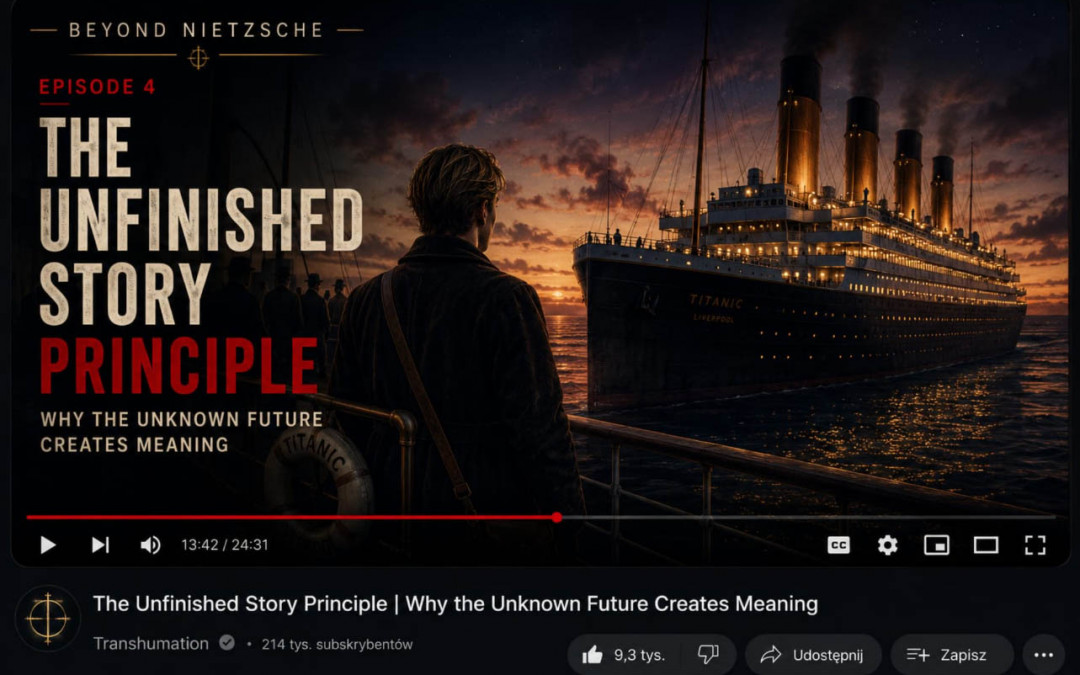
Some Stories Never Ends
Why the unknown future may be one of the things that makes life worth entering
There is a peculiar disappointment hidden inside many childhood adventures. You spend two hours following a map, opening doors, escaping traps and wondering what might be waiting in the final chamber. Then the chamber opens. The treasure is found. The monster is explained. The map has no unexplored corner left.
You got exactly what you wanted.
And somehow, something has disappeared.
This may be one of the stranger properties of human curiosity: we are drawn toward answers, yet the answer can destroy part of what made the question valuable. The unopened door contains a hundred possible rooms. The opened door contains one.
Perhaps this is why some stories survive not despite their missing endings, but partly because of them. A blank space is not always an absence. Sometimes it is machinery.
It keeps the story running.
The Man Who Escaped the Last Page
In 1888, a series of murders transformed a small part of Victorian London into something larger than geography. Whitechapel became a stage onto which newspapers, police investigators, frightened residents and eventually generations of historians projected competing explanations.
The murderer we call Jack the Ripper was never conclusively identified.
That absence matters.
Had an ordinary criminal been arrested, tried and photographed in 1888, the murders would still have been historically important. But the story would have acquired walls. There would be a biography, motive, chronology and eventually the peculiar dullness that comes with knowing where everything belongs.
Instead, there is a hole.
New suspects continue to enter it. New technologies promise to close it. Letters are re-examined. DNA claims appear and are disputed. Old photographs acquire new meanings. Each generation arrives with instruments the previous generation did not possess and briefly wonders whether it might finally be the one to finish the story.
Jack the Ripper therefore occupies an unusual position. He belongs to history, but his story behaves almost like the future.
Something remains unresolved.
And because something remains unresolved, we can still enter.
The Treasure Is Sometimes the Missing Piece
Civilization is full of these negative spaces.
We are fascinated by lost works, vanished archives, undeciphered writing, missing expeditions and incomplete buildings. The Library of Alexandria has become culturally enormous partly because what disappeared from it cannot be inventoried with certainty. We do not merely mourn known books. We imagine unknown ones.
The missing object develops possibilities the surviving object cannot possess.
A manuscript on a museum table can be studied. Its dimensions can be measured, its ink dated, its sentences translated. A lost manuscript can contain almost anything.
This does not make ignorance superior to knowledge. Knowledge allows civilization to advance precisely because possibilities are eliminated. Eventually we need to discover what is behind the door.
But something happens during that process.
Mystery contracts.
The map becomes territory.
The monster becomes an animal with a Latin name.
The strange light in the sky becomes an atmospheric phenomenon.
We gain reality and lose possibility.
Usually this is an excellent trade. But perhaps not every part of human life should be optimized for certainty.

Why We Keep Returning to the Door
This may help explain something about mythology as well.
Ancient symbols have survived enormous changes in language, religion and political order. Hecate can still stand at a crossroads thousands of years after the society that first gave her recognizable form disappeared. Janus still makes intuitive sense whenever we stand between what has ended and what has not yet begun.
Their durability may come partly from what they do not specify.
A crossroads is powerful because the road has not yet been chosen. A gate matters because we have not yet crossed it. The ocean beyond the map matters because we cannot yet describe its shore.
Completely defined symbols often become historical objects. Underdetermined symbols can remain interfaces.
Each generation is able to approach them carrying different questions.
Perhaps this is why attempts to explain a symbol completely can occasionally feel strangely destructive. We begin with something capable of producing questions and finish with a paragraph telling us what it “means.”
The mystery has been converted into documentation.
The door is now labelled.
We Have Seen This Film Before — Or Have We?
Technology produces the same effect at extraordinary speed.
Think about the first time you saw a device do something that seemed impossible. A screen responded to touch. A map knew where you were. Software recognized a face. A machine produced an image from a sentence. A conversation with artificial intelligence appeared on an ordinary laptop.
For a brief period, the object belongs partly to science fiction.
Then comes normalization.
The miracle gets an account password.
The impossible becomes a subscription.
Within a few years we become irritated when the magic takes three seconds to load.
This creates a strange historical blindness. Because we live inside technological change, we experience its most extraordinary developments as inconveniences almost immediately after they arrive.
But imagine stopping the film in the middle.
We do not know what artificial intelligence becomes. We do not know whether persistent virtual worlds remain entertainment or become places in which meaningful portions of human life occur. We do not know how biotechnology will alter aging, whether machine consciousness is possible, how far humans will travel from Earth, or whether personal identity can ever meaningfully survive a change of biological carrier.
We discuss these subjects as though somebody has already seen the final reel.
Nobody has.
That may be the most important fact about the present.
We are already halfway through the film.
And for once, there is nobody in the projection booth who knows the ending.
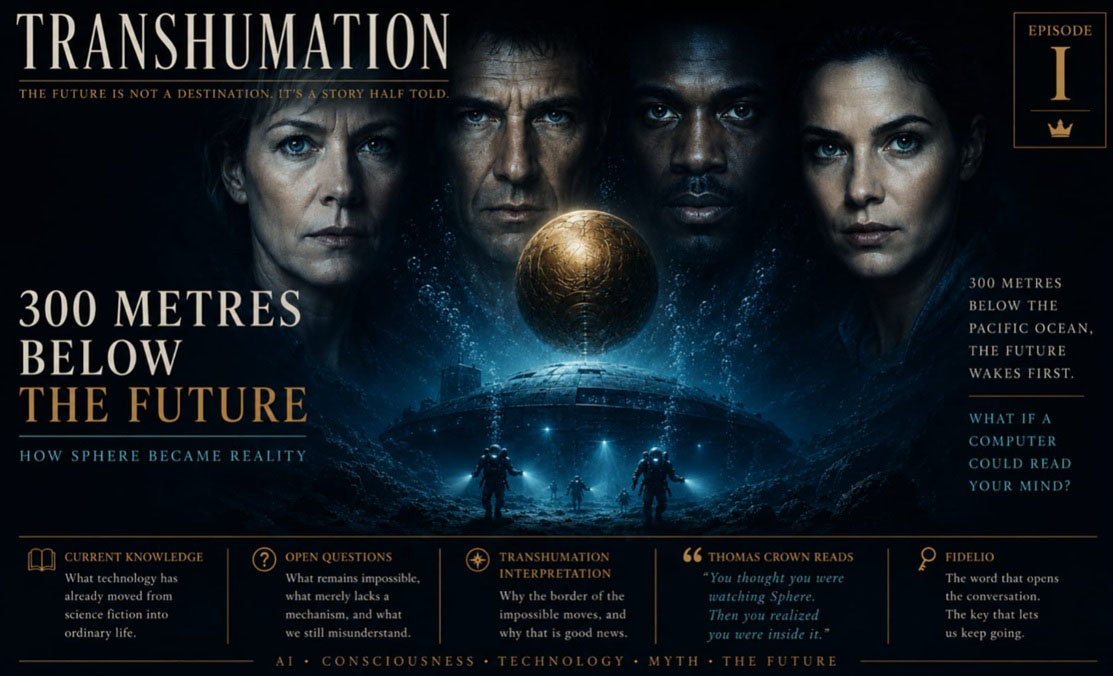
God Is Always Plus One
There is a temptation in every age to believe that the great mystery is nearly over.
The map is almost complete. Physics has found most of the important laws. History has reached its mature political form. Technology is impressive, certainly, but the truly unimaginable things belong to fantasy.
Then another door appears.
Behind every explanation seems to stand another question that could not have been formulated properly before the previous answer existed.
Perhaps this gives us a different way to understand the old human instinct for transcendence.
God — in the broadest structural sense, not as a theological claim — is always plus one.
Not necessarily a being hidden behind the next planet or equation, but the persistent remainder beyond whatever boundary has just become ordinary. The known world expands, and the horizon moves with it.
This is why complete knowledge is such a strange fantasy. If we actually possessed the final explanation of everything — every mechanism, every future event, every consequence of every decision — we might gain perfect prediction at the price of something enormous.
Adventure would become itinerary.
Choice would become execution.
Hope itself would become unnecessary, because hope requires a future capable of being otherwise.
Uncertainty frightens us because terrible things can hide inside it.
But every possibility we have ever desired was hidden there too.
The Unfinished Story Principle
This suggests a principle worth keeping.
The things we cannot finish are often the things that stay with us the longest.
Not because ignorance is inherently beautiful. Not because mysteries should be protected from evidence. Jack the Ripper should not remain unidentified merely because the mystery sells books. Diseases should not remain unexplained because uncertainty feels poetic. Science should continue opening doors.
The more interesting possibility is that knowledge and wonder are not opposites.
Every solved mystery changes the location of the unsolved one.
The treasure is real, but so is the next map.
This is where the idea becomes important for Transhumation. Humanity may be the largest unfinished story we have ever encountered, and unlike Jack the Ripper or a missing manuscript, we are not merely investigating it.
We are inside it.
Artificial intelligence, biological engineering, digital identity, space exploration and technologies we have not yet named are not simply inventions waiting to be catalogued. They may alter what the word human is capable of containing.
There is no final chapter available for consultation.
No civilization before ours reached the end and left a review.
We have the strange privilege of being both the reader and one of the characters.
Perhaps that is why the future should not be treated merely as a destination to be predicted. A destination already exists. You simply have not arrived there yet.
An unfinished story is different.
Its ending may depend on what happens in the middle.
And we are already there.
Watch the Video
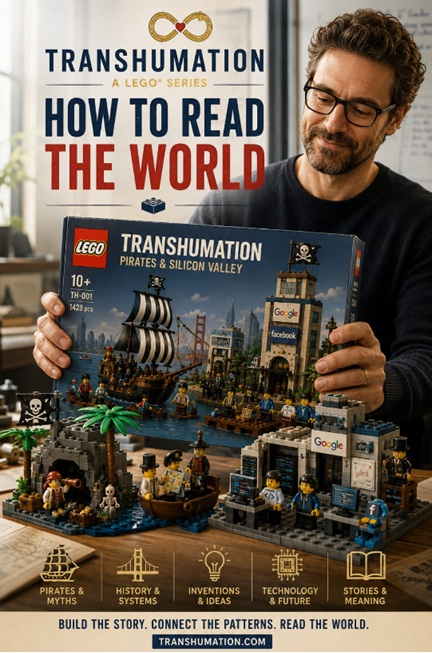
How to Read the World
Current Knowledge
Psychology and narrative research provide several mechanisms that can help explain why unresolved material remains cognitively powerful. People tend to seek closure and coherent explanations, while incomplete or interrupted tasks can sometimes remain unusually accessible in memory. Storytelling also routinely uses ambiguity, withheld information and open endings to sustain interpretation beyond the formal end of a work.
Historical mysteries such as the Whitechapel murders demonstrate another mechanism: unresolved evidence permits repeated investigation as new methods and new interpretive frameworks appear. None of this establishes a universal law that unfinished stories are always more memorable than completed ones. Context, emotional importance, repetition and cultural transmission all matter.
Open Questions
Why do some unanswered questions generate centuries of curiosity while others are simply forgotten? Is there an optimal distance between mystery and explanation — enough information to create structure, but enough absence to permit participation?
And as technology answers questions previous civilizations considered unreachable, does wonder actually diminish? Or does it simply migrate toward a new boundary?
Most importantly: if uncertainty contributes to meaning, how much uncertainty does a human life need?
Transhumation Interpretation
Transhumation treats the unfinished story not as a defect awaiting repair but as a recurring structure.
Hecate stands before the unchosen road. Janus occupies the threshold. Lost histories preserve spaces into which later generations can enter. Technology repeatedly turns yesterday’s impossibility into today’s infrastructure — while producing an entirely new frontier of questions.
Humanity may follow the same pattern.
We continually attempt to define ourselves, only to create technologies and ideas that destabilize the definition.
Perhaps the future remains meaningful partly because it has not yet hardened into history.
The future is older than we think. But its final chapter has never been written.
FAQ
What is The Unfinished Story Principle?
It is the idea that stories remain powerful not because they answer every question, but because they leave room for imagination, continuation, and future possibilities.
Why do unfinished stories fascinate us?
Because uncertainty allows us to participate. A completely closed story becomes an object of the past, while an unfinished story remains alive.
How does this relate to history?
History is not a completed book. Every civilization inherits unfinished questions, unresolved conflicts, and dreams that future generations continue.
Why do mysteries survive for centuries?
Because some mysteries become more than events. They become structures that invite each generation to reinterpret them through new knowledge and perspectives.
How does this connect to Transhumation?
Transhumation explores the largest unfinished story of all: humanity itself. The question is not what humanity was, but what humanity may become.
Continue the Transhumation Series
- Forgotten Religion | Ancient Gods, Symbols and the Hidden Structures of Human Civilization
- The Last Religion | Death, Immortality and the Future of Humanity
- The New Theurgy | AI, Information and the Future of Human Civilization
- End of Branding: You Were Never Meant to Become a Product
- Baal vs Ishtar: Why Ancient Gods Never Disappeared