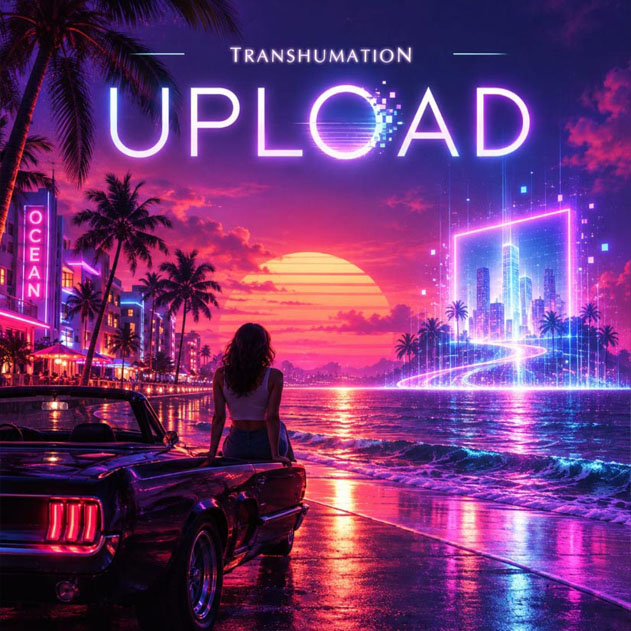
Immortality Belonged to the Gods
Human beings could build monuments, preserve names, write books and establish dynasties, but the individual body remained stubbornly temporary. Aging, decay and death were not problems waiting for better engineering. They were conditions of existence. Religion could promise continuation beyond death, philosophy could reinterpret mortality, and art could resist oblivion symbolically, but biology retained the final veto.
Then civilization began to scale faster than the organism carrying it.
A human being can now speak across continents almost instantly, preserve a voice long after death, store more books in a pocket than ancient rulers could assemble in a lifetime, enter simulated environments, collaborate with artificial intelligence and project ideas into systems that continue operating while the body sleeps. Memory has escaped the skull in practical terms, even if consciousness has not. Culture has become networked. Knowledge has become searchable. Identity has become partially distributed across photographs, messages, databases, social systems and other people.
The strange part is that the biological observer at the center of all this remains almost unchanged.
The civilization became scalable.
The person did not.
That contradiction may become one of the defining philosophical problems of the next century.
What If Biology Is Too Small for the Universe?
The universe does not operate on human timescales.
Light takes more than eight minutes to reach Earth from the Sun. Crossing even our local stellar neighborhood would require journeys measured in years under conditions far beyond present human travel. Galaxies exist on scales so large that ordinary intuition becomes almost useless. Stars are born and die over spans of time that make an eighty-year human life look less like a chapter than a punctuation mark.
This does not mean biology is somehow a mistake. Evolution produced organisms adapted to local environments, not beings designed for interstellar continuity. Human bodies are astonishingly capable within the scale for which they evolved. The problem appears only when civilization starts imagining participation far beyond that scale.
Once a species begins thinking in terms of centuries, planets and artificial environments, biological duration becomes harder to ignore.
A civilization may survive for thousands of years.
A person does not.
An archive can remain.
A witness disappears.
A spacecraft might eventually cross distances no individual human could endure consciously from departure to arrival.
At that point, the idea of upload stops looking like mere science fiction fantasy and starts looking like a response to scale.
Not proof.
Not inevitability.
A response.
Is Upload Really About Immortality?
Popular culture often presents mind uploading as a simple exchange: biological brain out, digital version in, death defeated.
The philosophical problem is much harder.
Suppose a perfect digital copy could reproduce your memories, mannerisms, humor, preferences, fears and conversational patterns. Suppose it could answer questions exactly as you would have answered them. Suppose your family recognized it instantly.
Would that mean you had continued?
Or would it mean that something extremely convincing had begun after you?
This is where the language of upload becomes dangerous because it compresses several distinct problems into one word. Copying information is not the same as preserving first-person continuity. Reproducing behavior is not necessarily preserving subjectivity. Reconstructing memory does not establish that the original observer crossed the boundary.
A database can preserve facts.
A model can preserve patterns.
Neither fact alone proves survival of the self.
The branching problem makes this even clearer. Imagine the upload process creates a perfect digital continuation while the biological original remains alive. There are now two entities with the same past and different futures. Both cannot be numerically identical to the one original in the ordinary sense. The thought experiment does not solve identity. It exposes how difficult the problem really is.
This is why Transhumation should treat upload as a continuity question, not as a technological promise.
The crucial issue is not whether we can copy more.
It is whether we understand what must not be lost.

Civilization Already Uploads Almost Everything Except the Observer
There is still a reason the idea keeps returning.
Human beings have spent thousands of years externalizing themselves.
Writing moved memory outside the brain. Painting moved perception into durable representation. Musical notation allowed patterns of sound to survive the musicians who first played them. Photography preserved optical traces. Film preserved motion and voice. Computers transformed representation into searchable, editable, reproducible structures. Networks made those structures globally accessible.
The result is that large portions of human existence already operate beyond the body.
Your address book is outside you.
Your photographs are outside you.
Much of your autobiographical memory is supported by external records.
Your work may survive in files, repositories, publications and systems you no longer control.
Friends and family carry models of you inside their own memories.
None of this means consciousness has been distributed in the scientific sense. It means something subtler: the human self has always depended on structures beyond the skin.
Civilization did not invent this recently. Language itself is an external scaffold. Culture is a shared memory system. Institutions preserve rules no single individual could hold alone.
The Internet accelerated the process dramatically.
AI may accelerate it again.
But the observer remains stubbornly local.
What Exactly Would Have to Survive?
This may be the central question of upload.
If a future technology could preserve memory but not emotion, would the result be you?
If it preserved personality but removed suffering, would that count as continuation or redesign?
If it preserved your preferences while gradually replacing every memory, at what point would the surviving system become a descendant rather than yourself?
There is no agreed scientific answer because neuroscience can study the mechanisms associated with memory, perception, attention and self-modeling without yet resolving the metaphysical question of first-person identity.
That uncertainty matters.
The temptation will be to define the human being according to whatever future technology happens to preserve most easily.
If memory is easy to copy, we may decide memory is the self.
If behavioral patterns are easy to model, we may decide personality is the self.
If language models can imitate voice convincingly, we may start treating linguistic resemblance as personal survival.
Technology has a long history of encouraging us to redefine the problem in terms of the tool.
Upload therefore requires an unusual discipline: we should decide what matters before allowing the available machinery to decide for us.
That is where the ancient injunction know thyself returns in an unexpectedly technological form.
Why Meaning Matters More Than Duration
Even if consciousness could eventually be preserved indefinitely, another problem would appear immediately.
Why continue?
Mortality is often treated as the central obstacle, but endless duration does not automatically produce meaning. A life can be finite and profound. It can also be long and empty. Extending duration merely extends whatever structure is already present.
This is why immortality fantasies often become unsettling when examined closely. Remove biological decline and death, and questions of boredom, identity, memory overload, social hierarchy and purpose become more difficult rather than less. If a person lives for centuries, does every relationship retain the same weight? If memories can be edited or stored externally, what does forgetting mean? If versions of a person can branch, which commitments remain binding?
The technical achievement would not eliminate existential questions.
It would multiply them.
The same applies at civilizational scale. An intelligent system capable of preserving itself indefinitely could continue operating without possessing anything we would recognize as purpose. Persistence is not meaning. Optimization is not meaning. Complexity is not meaning.
A civilization capable of scaling intelligence without scaling wisdom could become extraordinarily powerful while becoming less capable of answering why any of that power should be used.
This is where upload becomes inseparable from philosophy.
The problem is not merely keeping consciousness running.
The problem is preserving a reason for participation.
Maybe Upload Will Not Look Like Upload
The most plausible path, if anything like upload ever occurs, may not resemble the dramatic moment imagined in science fiction.
There may be no final scan, no switch, no cinematic awakening inside a machine.
Instead, human cognition may extend gradually through interfaces.
We already outsource navigation to digital systems, factual recall to search engines, scheduling to software and increasingly portions of reasoning, drafting and analysis to AI. Brain-computer interfaces remain limited, but the broader integration between humans and computational systems is already underway culturally and behaviorally.
Future systems may make that boundary less visible.
Memory assistance could become continuous.
AI companions may preserve context across decades.
Virtual environments may support long-term identity.
Cognitive prosthetics may become as ordinary as glasses.
None of this would prove that consciousness has left biology. But it could make the border between the biological person and the surrounding cognitive infrastructure increasingly difficult to draw.
This suggests a different model.
Upload may not be migration.
It may be extension.
The person remains biological while more of the processes involved in participation move outward.
Only later would civilization confront the harder question of whether those external structures can continue when the biological center disappears.
At that point, the issue would no longer be hypothetical.
We would already have spent generations building partial versions of the answer.
The Last Religion Was Always About Continuity
Religion has addressed death for as long as we have evidence of complex human culture. Burial practices, ancestral memory, afterlife traditions, resurrection, reincarnation and heavenly continuation are extraordinarily diverse, but many share one existential problem: human consciousness experiences itself as significant and yet encounters a world in which individual biological existence ends.
Technology does not simply replace those questions.
It translates them.
Heaven asks whether the person continues beyond bodily death.
Upload asks whether identity can continue across a change of substrate.
Reincarnation asks what, if anything, crosses from one life into another.
Digital continuity asks what must survive a change of carrier.
These are not equivalent doctrines, and technological language should not be used to retroactively turn ancient religion into computer science. But the pressure beneath them can be compared.
Human beings repeatedly resist disappearance.
We record names.
We keep photographs.
We preserve voices.
We write books.
We build graves, monuments, archives and libraries.
We tell stories about the dead.
Technology may simply be opening a new route through an old problem.
The language changes.
The refusal to vanish does not.
How to Read the World
Current Knowledge
Modern neuroscience strongly links known human consciousness to functioning biological brains. Changes to brain structure, injury, anesthesia, sleep, drugs and neurodegenerative disease can alter memory, perception, personality and conscious experience. There is currently no demonstrated method for transferring a human first-person consciousness from a biological brain into a computer, and there is no experimental evidence showing that a digital reconstruction of a person’s memories or behavior would preserve subjective continuity.
At the same time, many components associated with human identity are increasingly externalized. Digital systems already store photographs, messages, location histories, writing, voice recordings and behavioral traces at a scale previous generations could not have imagined. AI systems can reconstruct style, simulate dialogue and generate convincing approximations of a person’s linguistic patterns from sufficiently rich data. These capabilities may preserve information about a person, but information preservation should not be confused with preservation of the person.
Research in brain-computer interfaces, neuroprosthetics and computational neuroscience continues to improve our ability to read and influence particular neural signals. These fields may eventually allow much richer integration between biological cognition and machines. However, gradual functional integration is scientifically different from demonstrating substrate-independent consciousness. The strongest statement currently justified is that cognition can be technologically assisted and extended in specific ways; whether first-person consciousness can be transferred remains unknown.
Open Questions
The largest unanswered question is deceptively simple: what constitutes personal continuity? Memory appears important but is clearly not sufficient by itself. People forget large parts of their lives without becoming different legal persons. Personality changes over time. Bodies undergo continuous material replacement. Yet ordinary human experience still treats the person as persisting through these changes. We do not yet know which features of that continuity are necessary, sufficient or merely correlated with the experience of being a continuing self.
A second problem is branching. If a future system creates two equally accurate continuations of one person, identity can no longer be treated as straightforward copying. Both descendants may remember the same childhood and claim the same history, yet they immediately begin becoming different individuals. Any theory of uploading that ignores this problem risks mistaking duplication for continuation.
There is also a social question. If digital persons or extremely convincing reconstructions become possible, what obligations would biological society have toward them? Would they own property, inherit debts, enter contracts or maintain marriages? Could a person legally exist in several versions? These questions may initially sound speculative, but law has repeatedly had to adapt when technology changed previously stable assumptions about identity, reproduction, ownership and communication.
Finally, there is the problem of meaning. Even if continuity became technically possible, unlimited duration would not tell us what a person should do with it. The question of purpose does not disappear when lifespan increases. It may become harder.
Transhumation Interpretation
Transhumation treats upload as a problem of passage rather than escape. The important question is not how quickly humanity can leave biology behind, but what would have to cross the boundary for the word continuation to remain meaningful.
Civilization has already learned to move ideas, memory, art and institutions between carriers. Human consciousness may prove more difficult because a pattern that resembles a person is not automatically the same observer who began the journey. That distinction should remain central even as technology becomes more convincing.
If some future form of consciousness does become scalable, the real achievement will not be endless duration alone. It will be the preservation of enough identity, agency and meaning for participation to remain worth continuing.
A future that survives without knowing why it survives has solved only half the problem.
FAQ
What is mind uploading?
Mind uploading is the hypothetical idea that enough information about a human brain could be captured and instantiated in another substrate, usually a computer, in a way that reproduces some or all mental functions.
Can consciousness currently be uploaded?
No. There is currently no demonstrated technology capable of transferring human consciousness from a biological brain into a digital system.
Would a perfect digital copy of me actually be me?
We do not know. A perfect behavioral or informational copy could reproduce memories and personality while leaving unresolved whether first-person subjective continuity had transferred.
Why does Transhumation connect upload with scale?
Because civilization increasingly operates across timescales, distances and information systems far beyond the capacities of an individual biological lifespan. Upload can therefore be examined not only as a desire for immortality but as a question of whether conscious participation could ever expand to match the scale of civilization.
Could AI preserve a person after death?
AI may increasingly preserve or reconstruct aspects of a person’s language, preferences, voice and recorded history. That could create sophisticated representations or interactive memorials. It would not, on present evidence, establish that the deceased person’s consciousness had continued.
If upload ever becomes possible, what may be the hardest problem?
Not storage or computation, but identity. A future civilization would have to determine what exactly must remain continuous before an uploaded entity can reasonably be treated as the same person rather than a highly accurate successor.
Continue the Transhumation Series
- Forgotten Religion | Ancient Gods, Symbols and the Hidden Structures of Human Civilization
- The Last Religion | Death, Immortality and the Future of Humanity
- The New Theurgy | AI, Information and the Future of Human Civilization
- End of Branding: You Were Never Meant to Become a Product
- Baal vs Ishtar: Why Ancient Gods Never Disappeared