
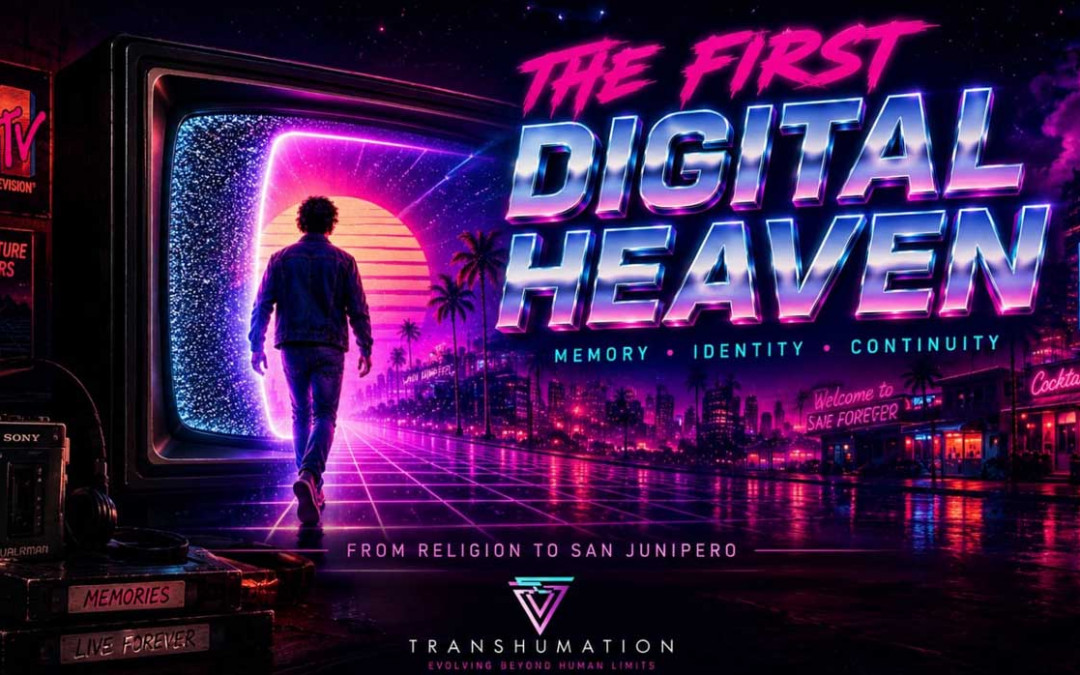
What if heaven was not above us?
What if heaven was a place we built ourselves?
This idea sounds futuristic.
Yet humanity has imagined versions of it for thousands of years.
The desire is surprisingly simple.
People do not merely want survival.
They want continuity.
They want memory.
Identity.
Love.
Relationships.
Meaning.
The promise of heaven was never only eternal life.
It was eternal life without losing yourself.
The Same Dream
When ancient civilizations imagined paradise, they rarely imagined abstract mathematics.
They imagined recognizable worlds.
Gardens.
Cities.
Families.
Conversations.
Feasts.
Music.
Community.
The details changed.
The structure remained.
People wanted a place where consciousness could continue.
Technology is beginning to ask a strangely similar question.
What if continuity could be engineered?
The San Junipero Moment
One of the most interesting modern examples appeared in Black Mirror.
San Junipero was presented as a digital afterlife.
A virtual environment where people could continue existing after biological death.
The story felt revolutionary.
Yet it was also ancient.
The technology was new.
The desire was old.
The same emotional question existed thousands of years ago:
Can something essential survive the body?
Heaven Becomes a Location
For most of history heaven existed outside physical reality.
Technology changes the framework.
A server has a location.
Data has storage.
Information has architecture.
The question shifts.
Instead of asking where heaven is, people begin asking how it might be built.
The conversation moves from mythology to engineering.
The destination remains surprisingly similar.
The End of Distance
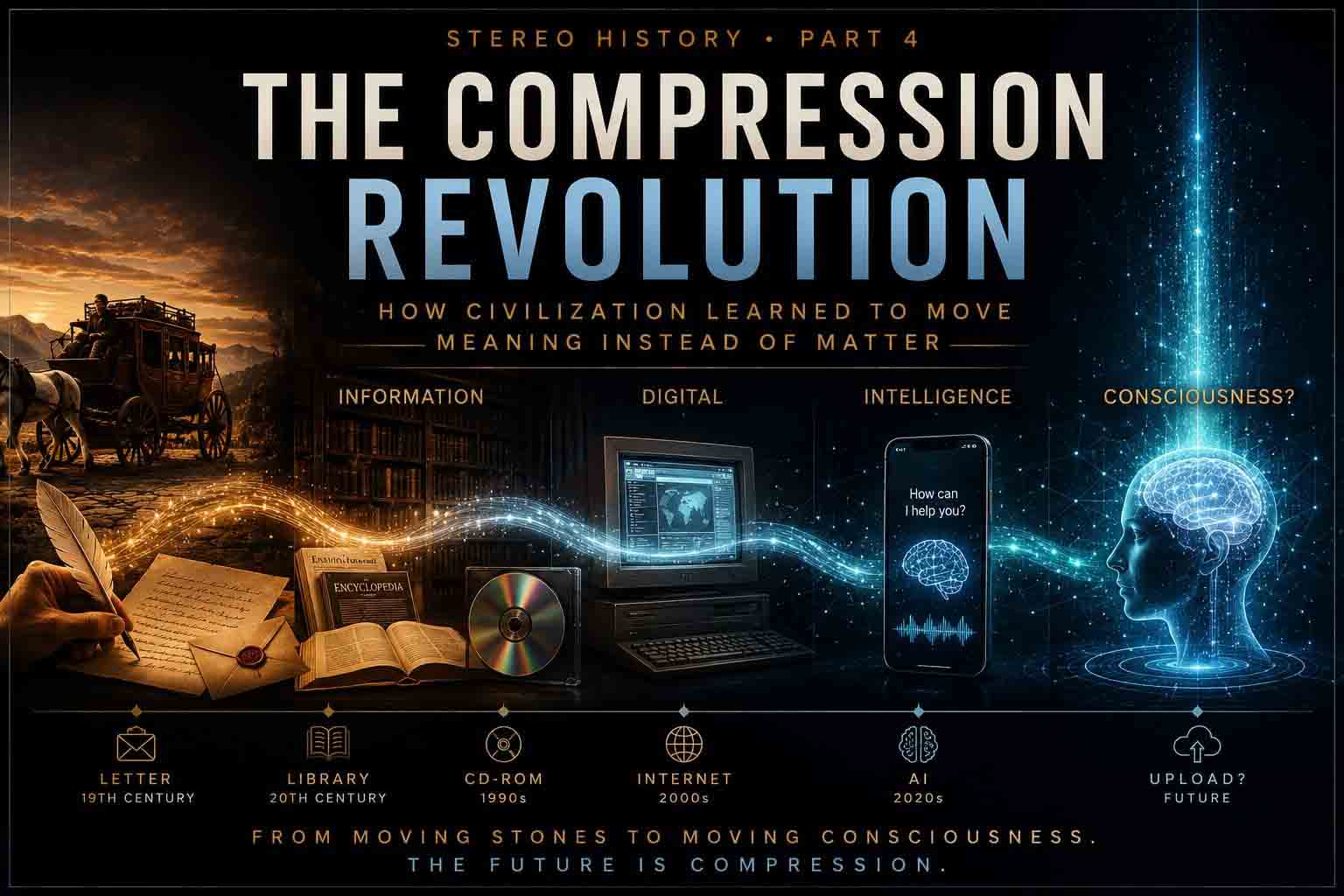
Technology has always reduced distance.
Letters became telephones.
Telephones became video calls.
Photographs became virtual presence.
Every step reduced separation.
The same process appears in discussions about consciousness.
Death itself becomes a form of distance.
And distance is exactly the kind of problem technology repeatedly attempts to solve.
Memory Is Already External
The strange part is that this process has already begun.
Human memory increasingly exists outside the brain.
Photos.
Videos.
Messages.
Cloud storage.
Social media.
Personal archives.
Large portions of identity already exist as information.
Not because humanity planned it.
Because it was useful.
The result is a civilization continuously exporting memory into technological systems.
Heaven Is a Problem Solver
Perhaps the most important question is not whether digital heaven is possible.
The important question is:
What problem does heaven solve?
Religion answered this question emotionally.
Technology attempts to answer it practically.
Both address the same human concerns.
Loss.
Separation.
Mortality.
Meaning.
Hope.
The methods differ.
The motivations are remarkably similar.
The First Digital Heaven
Maybe digital heaven does not begin with superintelligence.
Maybe it begins with something much simpler.
A photograph.
A message.
A voice recording.
A virtual world.
A memory preserved beyond the moment it was created.
The first digital heaven may already exist.
Not as a final destination.
But as a growing collection of technologies designed to preserve what humans fear losing most.
The future may not invent entirely new dreams.
It may simply build new pathways toward very old ones.
Want to Explore More..?
Watch The Video Below
Continue reading…
Is the Physical World Still Real
FAQ
What is a digital heaven?
Digital heaven is the idea that technology could preserve identity, memory, or consciousness in a digital environment.
Is digital heaven the same as mind uploading?
Not necessarily. Mind uploading is one possible path. Digital heaven is a broader concept involving continuity of identity and experience.
How does San Junipero relate to Transhumation?
San Junipero illustrates a technological version of questions traditionally explored through religion, philosophy, and mythology.
Is this article arguing that heaven is technological?
No. The article explores how technology and religion often attempt to solve similar human problems.
Why is memory important in digital heaven?
Because continuity of memory is often considered essential to continuity of identity.
What is the connection between religion and technology?
Both can be understood as systems designed to reduce human limitations, including distance, suffering, uncertainty, and mortality.

Continue the Transhumation Series
Explore the full journey:
- End of Reality — Where Do You Really Exist?
- End of Physics — Are the Laws of Reality Real?
- End of the Real World — Reality Is No Longer Required
- End of Consciousness — Beyond the Human Mind
- End of Death — When Human Limits Disappear
- End of Religion — When Technology Replaces Faith
This is not a theory. This is a transition.