
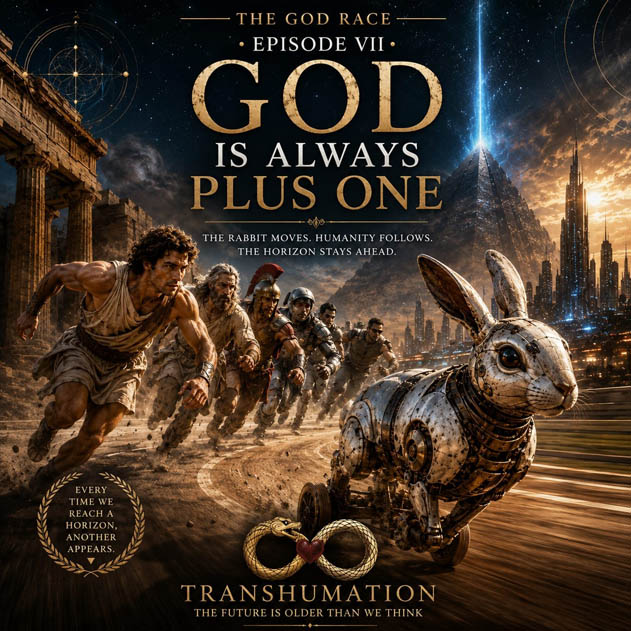
God`s Race
For most of human history, gods represented everything human beings could not do.
They crossed the sky.
They spoke across impossible distances.
They saw what mortals could not see.
They controlled nature, preserved memory, defeated enemies, and sometimes escaped death itself.
Then civilization began turning those myths into engineering.
Human beings learned to fly.
They created machines capable of speaking across continents.
They preserved faces, voices, and movement after death.
They built artificial worlds and systems that can generate language, images, music, and decisions.
The abilities once reserved for gods slowly entered ordinary life.
Yet something strange happened.
Godhood did not disappear.
It moved.
The Miracle Becomes Normal
A smartphone would have looked supernatural to most civilizations that ever existed.
It can locate its owner through satellites, display distant places, translate languages, preserve memories, summon voices, and connect a person to knowledge gathered across centuries.
And yet nobody bows before it.
People complain about the battery.
This is one of civilization’s most unusual abilities:
Humanity converts miracles into routine.
Electricity becomes a utility.
Flight becomes transportation.
Cinema becomes entertainment.
Artificial intelligence becomes another application.
The extraordinary is absorbed into everyday life so quickly that people forget it was ever extraordinary.
Every present mistakes its own miracles for normality.
The Mechanical Rabbit
There is an old image from dog racing.
The dogs chase a mechanical rabbit around the track. The rabbit is close enough to inspire pursuit, but it remains slightly ahead.
The dogs run faster.
The track continues.
The rabbit moves again.
Civilization may operate according to the same structure.
Humanity approaches a power once considered divine. The moment that power is achieved, a greater possibility appears beyond it.
Flight is reached.
Then spaceflight becomes the horizon.
Global communication is reached.
Then direct communication between minds becomes the horizon.
Longer life becomes possible.
Then biological immortality becomes the horizon.
Human-level artificial intelligence appears conceivable.
Then superintelligence takes its place.
The destination keeps changing because human imagination expands alongside human capability.
This is the central idea of The God Race:
God is always plus one.
Godhood is not simply the possession of great power.
It is the capability that remains beyond the current limit.
The Future Will Consider Us Primitive
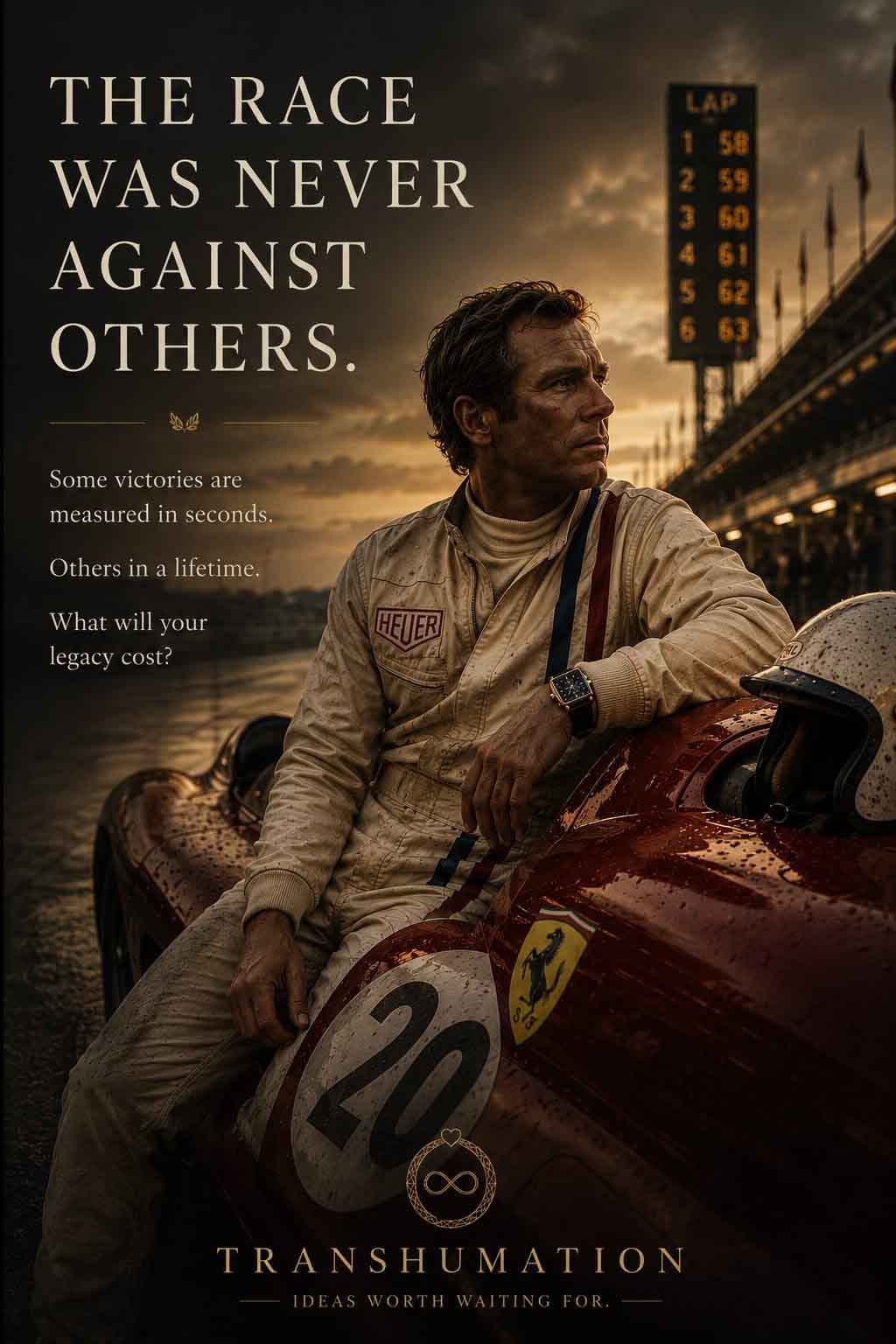
Ancient Rome considered itself advanced.
Medieval courts considered themselves sophisticated.
Early industrial society believed it had entered a completely new age.
Every civilization lives near the frontier of its own knowledge, and therefore experiences itself as modern.
Future societies may look at us the same way we look at the past.
They may see biological aging as barbaric.
They may find our dependence on physical bodies unnecessarily restrictive.
They may consider our educational systems slow, our political systems unstable, and our communication painfully indirect.
What appears miraculous to us may become basic infrastructure to them.
That does not mean civilization is approaching a final state.
It means the meaning of “advanced” is always relative to the next horizon.
Myths as Previews of Capability
Ancient myths imagined flying beings, artificial life, divine memory, invisible communication, and journeys beyond death.
This does not prove that ancient gods were advanced machines or historical visitors.
That would replace one mystery with an unsupported claim.
A more interesting possibility is that myths preserved recurring human desires.
The desire to escape distance.
The desire to defeat limitation.
The desire to create life.
The desire to preserve identity.
The desire to reach beyond death.
Technology does not repeat mythology because myths were technical manuals.
It repeats mythology because both emerge from the same human dissatisfaction with limitation.
Myths imagined the impossible.
Technology attempts to operationalize it.
Power Does Not Create Meaning
There is, however, a serious problem.
Humanity now possesses abilities that would once have appeared divine, yet many people feel more disoriented rather than more fulfilled.
Power increased.
Meaning did not increase at the same speed.
Human beings can cross continents in hours but may not know where they are going.
They can communicate instantly but still struggle to understand one another.
They can preserve thousands of photographs while feeling that their lives are disappearing.
They can access nearly unlimited information while remaining uncertain about what deserves attention.
This reveals the weakness inside the race.
The rabbit keeps moving, but civilization increasingly forgets why it is running.
Progress can provide new capability.
It cannot automatically provide direction.
Why Religion Returns Through Technology
Religion and technology are often presented as opposites.
One looks backward.
The other looks forward.
But both confront the same questions.
What should humanity become?
Which limitations should be accepted?
Which should be overcome?
What deserves preservation?
Does consciousness have a purpose beyond survival?
Religion gave symbolic answers.
Technology creates operational possibilities.
This is why the oldest questions return every time civilization becomes more powerful.
The more humanity can do, the more urgently it must decide what it should do.
The Horizon May Be Necessary
Perhaps the mechanical rabbit is not a cruel joke.
Perhaps it is one of the structures that keeps civilization alive.
A completely reachable horizon might eventually produce stagnation.
No mystery.
No unfinished task.
No reason to explore.
The moving horizon creates curiosity, ambition, invention, and transformation.
That does not mean every pursuit is wise.
It means that consciousness may depend on the presence of something beyond its present condition.
Maybe gods were never destinations waiting to be reached.
Maybe they were symbols of infinite ascent.
Not beings humanity must replace, but representations of the next impossible step.
Conclusion: The Race Without a Finish Line
Transhumation does not claim that humanity will become the final god.
There may be no final god.
There may only be expanding levels of capability, understanding, and continuity.
Every time civilization reaches one horizon, reality reveals another.
Every miracle becomes ordinary.
Every solution produces a deeper question.
Every god humanity approaches becomes the beginning of another race.
Perhaps that is why God is always plus one.
Not because humanity fails.
Because consciousness expands whenever it reaches the edge of what it once believed possible.
The rabbit moves.
Humanity follows.
And the horizon remains alive.
Watch the Video
Is God a Vacant Position?
FAQ
What does “God Is Always Plus One” mean?
It means that every time humanity reaches a capability once considered divine, the definition of godlike power moves to a higher level. Godhood becomes a moving horizon rather than a fixed destination.
What is The God Race?
The God Race is the idea that civilization continually pursues powers once associated with gods, including flight, extended life, artificial intelligence, global communication, and control over nature.
Does Transhumation claim that humans will become gods?
Not in a final or absolute sense. Transhumation suggests that humanity repeatedly reaches abilities previous civilizations would have considered divine, while new limitations and possibilities continue to appear.
Why is the mechanical rabbit important?
The mechanical rabbit symbolizes an objective that remains slightly ahead of those pursuing it. It represents the way technological and civilizational horizons keep moving as humanity advances.
How does technology turn miracles into routine?
Once a technology becomes reliable and widely available, people stop experiencing it as extraordinary. Electricity, aviation, cinema, satellites, and artificial intelligence all followed this pattern.
Are ancient myths predictions of modern technology?
Not necessarily. Myths may be better understood as symbolic expressions of recurring human desires, such as flight, immortality, distant communication, artificial life, and transcendence.
Why does technological progress not guarantee happiness?
Because capability and meaning are different. Technology can increase what humanity is able to do, but it cannot automatically determine why those abilities should be used.
What connects religion and technology?
Both address humanity’s relationship with limitation, power, death, meaning, and transformation. Religion expresses these questions symbolically, while technology increasingly approaches them through engineering.
What is the main idea of the article?
The main idea is that godhood is not a final condition. It is the next level of possibility beyond humanity’s current reach, which is why every achievement creates another horizon.
The Core Questions of Transhumation
Explore the full journey:
- End of Reality — Where Do You Really Exist?
- End of Physics — Are the Laws of Reality Real?
- End of the Real World — Reality Is No Longer Required
- End of Consciousness — Beyond the Human Mind
- End of Death — When Human Limits Disappear
- End of Religion — When Technology Replaces Faith