

The Signature
A signature is one of the smallest things a human being can create. A few strokes of ink, a name, sometimes nothing more than a mark. Physically, it is almost worthless. Yet houses have changed owners because of signatures. Wars have ended because of signatures. Fortunes have passed between generations because of signatures. People have married, surrendered kingdoms, created companies and accepted debts with movements of the hand lasting only a few seconds.
There is something strange hidden inside this ordinary act. The ink has almost no power of its own. The paper can burn. The hand that made the mark eventually disappears. And still the decision can remain.
Perhaps the signature is one of civilization’s earliest technologies for separating a human choice from the human body.
Before the Name Could Survive Us
Imagine making an agreement in a world without reliable records. I promise you land. You promise me grain. A ruler grants a privilege. A parent divides an inheritance. As long as the people involved remember what happened, the agreement exists. But memory is fragile, witnesses die, stories change, and eventually certainty disappears with them.
Complex civilization requires something more durable than biological memory.
Writing provided part of the solution, but recording words alone created another problem: who stands behind them? A document could preserve a promise, yet civilization still needed a way to connect that promise to a particular person, office or authority.
The signature became one answer to that problem. It created a bridge between an invisible thing—a decision—and a visible mark that could remain after the decision-maker had left the room.
This was not invented in a single moment. Ancient societies used seals, names, witnesses, marks and other systems of authentication long before the modern handwritten signature became standard. But the underlying structure is remarkably persistent. Civilization needed a method for saying: this action belongs to this identity.
Once that connection could be preserved, responsibility acquired a longer lifespan than the person responsible.
The Invisible Bridge
A signature is valuable precisely because the physical object is not.
Consider a contract worth millions. The ink may cost a fraction of a cent. The paper may be replaceable. What matters is the network of recognition surrounding the mark: laws, institutions, archives, witnesses, conventions and the shared assumption that this particular sign connects a decision to a particular identity.
Remove that network and the signature becomes a scribble.
Preserve it and a dead person’s decision can continue directing the living.
That makes the signature an extraordinary example of how civilization transforms symbols into real forces. A border is a line until institutions recognize it. Money is paper, metal or data until people recognize its value. A title is a sequence of words until society attaches authority to it.
The signature belongs to the same family. It demonstrates that information becomes powerful when a civilization agrees to remember what the information means.
Perhaps civilization itself can be understood, at least partly, as a network of remembered promises.
Louis Cyphre Wants a Signature
This is why the contract in Angel Heart is more interesting than it initially appears.
Louis Cyphre does not merely represent supernatural force. His power is expressed through agreement. Somewhere behind the horror lies a transaction, and behind the transaction lies a signature. The terrifying possibility is not simply that someone can take your soul. It is that at some earlier moment, you agreed to give it away.
The distinction matters.
Chains represent external force. A contract represents responsibility.
That is why contracts occupy such an enduring place in stories about devils, bargains and forbidden knowledge. Faust does not merely encounter evil; he makes an agreement with it. The mythology works because civilization already understands the deeper structure. Once a person attaches identity to a promise, the promise can return later with consequences the signer no longer wants.
Angel Heart pushes this idea even further because identity itself becomes unstable. Harry Angel can forget who he was. His memory can fail him. His name can cease to tell him the truth about himself.
But the contract remembers.
Here the signature becomes almost metaphysical: what happens when the record of your choice survives your own knowledge of making it?
The person forgets.
The information does not.
Shakespeare’s Feather
There is another, quieter way to see the same structure.
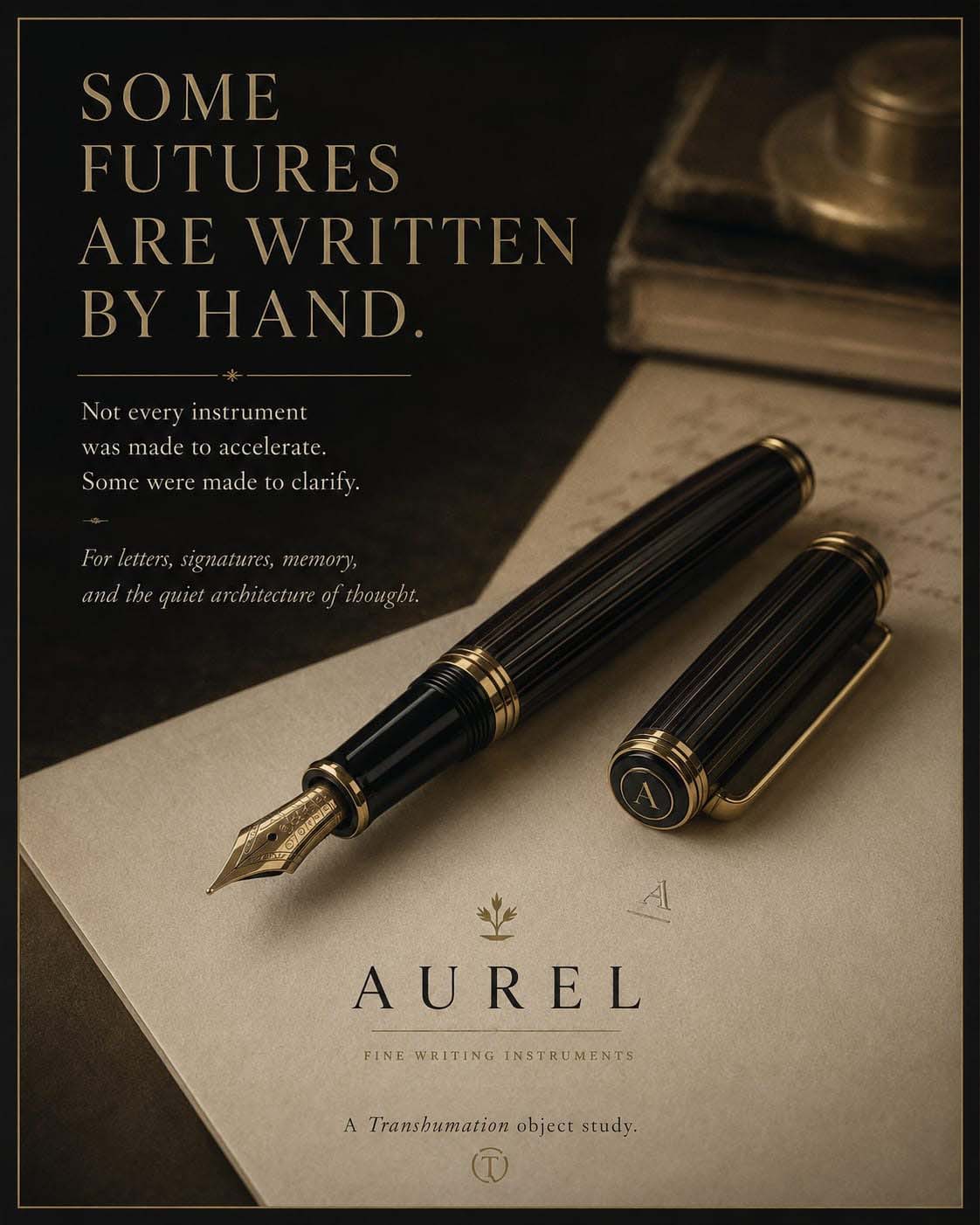
Imagine Shakespeare holding a sack of grain. Without context, he might be almost anyone: merchant, farmer, worker, traveler. Put a quill in his hand and our interpretation changes immediately. The object connects the body to an activity, and the activity connects the person to something capable of surviving him.
The signature performs a similar operation. It attaches authorship to action.
This matters because civilization does not remember human beings as complete organisms. It remembers fragments associated with names. Shakespeare becomes plays. Caesar becomes decisions, texts and institutions. An architect becomes buildings. A scientist becomes discoveries. Most of the biological person disappears.
What survives is a pattern of attributed actions.
The name becomes an address through which civilization can find the pattern.
In that sense, a signature does more than authenticate a document. It participates in one of humanity’s oldest attempts to answer a difficult question: how can an action remain attached to a person after the person is gone?

Every Click Is Becoming a Signature
The handwritten signature now occupies a smaller part of daily life, but its underlying structure has not disappeared. It has multiplied.
We press Accept. We enter passwords. We approve payments. We unlock phones with faces and fingerprints. We confirm identities through devices. Cryptographic digital signatures can authenticate data without reproducing anything resembling handwriting.
The feather disappeared. The function survived.
This is important because it reveals what a signature really is. It was never fundamentally about handwriting. Handwriting was simply one interface available to a particular technological age.
The deeper function is attribution.
Who acted? Who agreed? Who authorized this?
Digital civilization is becoming extraordinarily good at preserving answers to those questions. Servers can record actions automatically. Transactions receive timestamps. Accounts accumulate histories. Photographs contain metadata. Devices recognize their owners. Our identities increasingly leave informational traces without requiring a deliberate ceremonial act of signing anything.
The signature is becoming invisible precisely because it is becoming ubiquitous.
Identity Beyond Biology
Transhumanism often begins with a dramatic question: can a human being survive the biological body?
But civilization solved a smaller version of this problem thousands of years before anyone imagined uploading a mind.
It learned to make human consequences survive human bodies.
A signature does not preserve consciousness. It does not contain a soul, reproduce experience or prove that personal identity can exist independently of biology. But it does something philosophically important: it extracts a decision from a temporary biological event and gives that decision continuity in another medium.
The hand dies.
The agreement remains.
This is a primitive form of informational persistence—not immortality of the person, but continuity of something produced by the person.
And perhaps that distinction becomes increasingly important as civilization becomes more digital. The first things humans transferred beyond biology were not minds. They were names, obligations, stories, laws, debts, images and choices.
Before humanity tried to preserve the self, it learned to preserve the traces of the self.
Watch the Video
Current Knowledge
Systems for authenticating identity and agreements existed long before the modern handwritten signature. Ancient civilizations used seals, signet rings, witnesses, written names and other marks to establish authorship, ownership and authority. Handwritten signatures later became increasingly important within legal and commercial systems, while modern electronic and cryptographic signatures perform related authentication functions through entirely different technologies.
A signature does not possess legal or social power simply because of its physical appearance. Its significance depends upon institutional systems capable of connecting the mark or authentication method with an identity and recognizing the resulting agreement.
Digital identity has extended this principle beyond handwriting. Authentication can now involve passwords, cryptographic keys, biometric information, devices and other mechanisms designed to establish that a particular person or entity authorized an action.
Open Questions
If a person’s memory conflicts with a permanent record of their actions, which should define responsibility?
As authentication becomes increasingly automatic, will people still experience the psychological weight once associated with physically signing their names?
If algorithms eventually act autonomously on behalf of individuals, where will the signature of human responsibility actually reside?
How much of personal identity can be represented by the accumulated record of our choices without confusing that record with the person who made them?
And if civilization can preserve our decisions indefinitely, do we gain a form of continuity—or merely create increasingly permanent shadows of temporary human beings?
Transhumation Interpretation
The signature may be one of the earliest clues that civilization has always been moving toward informational continuity.
Not because a signature contains the person. It clearly does not.
But because it demonstrates a principle that becomes increasingly important throughout technological history: something produced inside a biological life can be detached from the moment of its creation, encoded into another medium and allowed to continue operating after its creator is gone.
The stone tablet did it with law. The book did it with thought. Photography did it with appearance. Film did it with movement and voice. Digital systems now do it with enormous portions of human activity.
The signature occupies an unusually important position in this sequence because it preserves something more specific than information.
It preserves attribution.
This was mine.
I chose this.
I agreed.
I was here.
That may be why the forgotten soul in Angel Heart remains such a powerful image. Harry can lose his name, his history and his understanding of himself. The biological person remains conscious, yet the person he believes himself to be has become disconnected from the record of his own past.
Louis Cyphre does not need Harry to remember.
He has the signature.
And perhaps this is the darker lesson hidden inside one of civilization’s simplest technologies: memory belongs to human beings, but records belong to time.
A person can forget.
Civilization can remember for them.
FAQ
Why is a signature so important?
A signature connects an identity to an action or agreement, allowing responsibility and trust to persist beyond immediate human memory.
How is The Signature related to Transhumation?
It represents an early form of informational continuity: a human decision can be encoded outside the body and continue producing consequences after the individual is gone.
Why does the article mention Angel Heart?
The film creates a powerful philosophical problem in which memory and identity become unstable while a past agreement remains. The contract therefore becomes a symbol of information surviving personal memory.
Are signatures a modern invention?
No. Modern handwritten signatures developed gradually, while much older societies used seals, marks, witnesses and written names to authenticate people, property and agreements.
Are digital signatures the same as handwritten signatures?
Technologically, no. Digital signatures can use cryptographic systems rather than handwriting. Structurally, however, both address a similar problem: connecting identity with authorization.
Can a signature preserve identity?
Only partially. It can preserve attribution and evidence of a decision, but it does not preserve consciousness or the complete identity of the person.
Why are digital clicks compared with signatures?
Many digital actions now authenticate decisions—accepting terms, approving transactions or confirming identity—without requiring physical handwriting.
What is the central idea of The Signature?
Before humanity could dream of transferring consciousness beyond biology, civilization had already learned something simpler: how to make a human choice outlive the human who made it.
Continue the Transhumation Series
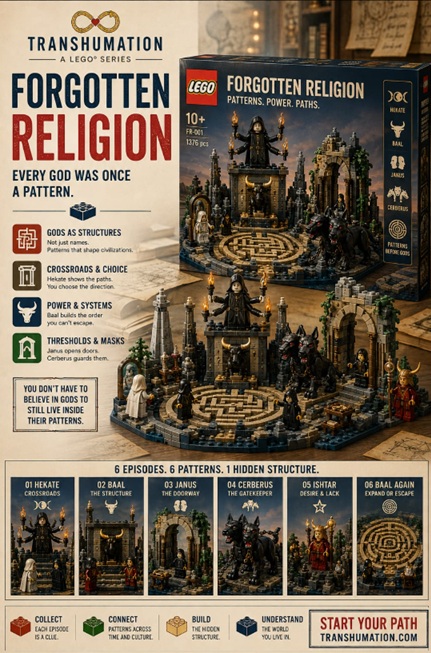
- Forgotten Religion | Ancient Gods, Symbols and the Hidden Structures of Human Civilization
- The Last Religion | Death, Immortality and the Future of Humanity
- The New Theurgy | AI, Information and the Future of Human Civilization
- End of Branding: You Were Never Meant to Become a Product
- Baal vs Ishtar: Why Ancient Gods Never Disappeared