
A Window from Apple
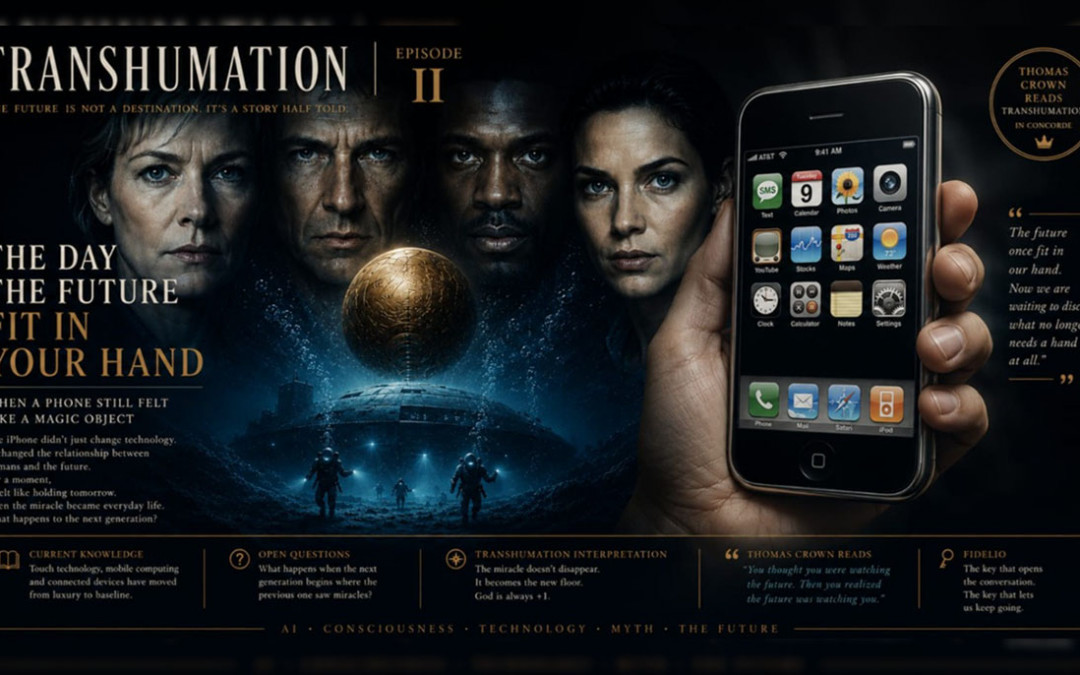
There is a photograph almost everyone carries somewhere in memory, even if they were not in the room when it was taken. Steve Jobs stands on a stage in January 2007 holding a small black rectangle. The object is almost comically modest compared with the promises surrounding it. There are no exposed mechanisms, no keyboard, no antenna jutting from the top, no visible evidence that a new category of machine is about to enter ordinary life. Jobs is not presenting a spacecraft or a humanoid robot. He is holding something that looks, at first glance, like a piece of glass.
That modesty is part of what made the moment so powerful. The future did not arrive looking like the future. It arrived looking simpler than the present.
It is difficult to recover the emotional distance now. A smartphone wakes us in the morning, remembers where we parked, stores photographs we rarely revisit, tells us when a flight is late, allows an employer to reach us at dinner and fills the small silences that used to belong to boredom. We complain about battery life and screen time with the familiarity reserved for plumbing. The object has become so deeply embedded in ordinary life that its original strangeness is almost inaccessible.
But for a short period, touching a piece of glass and watching the contents respond directly to the movement of a finger did not feel like using an improved telephone. It felt like being shown a small breach in the wall of the present.
The interesting thing was not that the object contained a computer.
It was that the computer had learned how to disappear.
The Machine Behind the Glass
For most of the personal-computing era, machines had announced their complexity. They had keyboards, menus, folders, drives, ports and cables. Even elegant computers required the user to understand, at least loosely, that there was an operating system somewhere between intention and result. The machine had its own visible grammar, and using it meant learning enough of that grammar to get what you wanted.
The iPhone changed the relationship by hiding more of the negotiation. The complexity did not vanish; it retreated behind the surface. A photograph could expand under two fingers. A list could be moved directly rather than through a scrollbar. A page responded to touch in a way that made the interface feel less like a control panel and more like an object.
This was not technically unprecedented. Touchscreens, mobile computing, graphical interfaces and gesture-based interaction all had histories that predated the iPhone. The significance lay in the integration and in the way Apple made those technologies culturally legible. An engineer might see sensors, software, processors and radio systems. A user saw a finger move and something happen.
That difference matters because it resembles one of civilization’s oldest ideas about magic. In stories, magic rarely presents the mechanism. A word is spoken and a door opens. A ring is turned and a hidden force responds. The gesture is small; the machinery, whatever its nature, is enormous. The user does not need to understand the system in order to activate it.
Modern technology increasingly works through the same structural asymmetry. A child can make a video call without knowing anything about packet switching. A traveller can watch a blue dot move across a map without understanding orbital mechanics. A person can ask a machine a question in ordinary language while layers of computation operate far beyond the scale of the gesture that initiated them.
The resemblance is not mystical. It is architectural.
The more sophisticated the system becomes, the more successfully the interface can pretend that almost nothing is happening.
That may be why the most advanced objects often feel the least mechanical.
The Treasure Was Not the Phone
Apple understood that a technological object is rarely sold only through its capabilities. It is also sold through an imagined relationship between the buyer and the future.
The company had already spent years surrounding itself with a particular mythology: Einstein, Picasso, Amelia Earhart, Gandhi, people presented as refusing to accept the world in the form in which they had received it. The historical accuracy of advertising mythology is almost beside the point. What mattered was the invitation. The customer was not merely buying electronics; he was being encouraged to imagine himself as someone for whom the present remained unfinished.
The iPhone entered through the same door. Its early power was not simply that it performed several functions in one object. It suggested that the shape of everyday life itself could still change, and that the change might arrive not through some vast public machine but through something intimate enough to fit in a pocket.
That is why the device is difficult to understand properly as a museum object. A first-generation iPhone behind glass preserves the hardware, but it cannot preserve the atmosphere around the hardware. We know too much now. We know the apps, the cracked screens, the battery anxiety, the social-media addictions, the convenience, the surveillance concerns, the midnight emails and the strange transformation by which almost every café table eventually acquired several identical black rectangles.
The unopened possibility has disappeared.
What people often miss when they become nostalgic for early technology is not the device itself. By almost every measurable standard, the old device is worse. The screen is dimmer, the camera weaker, the network slower, the processor primitive.
What they miss is the interval before the object became ordinary.
The future still contained unopened rooms.
When Miracles Become Furniture
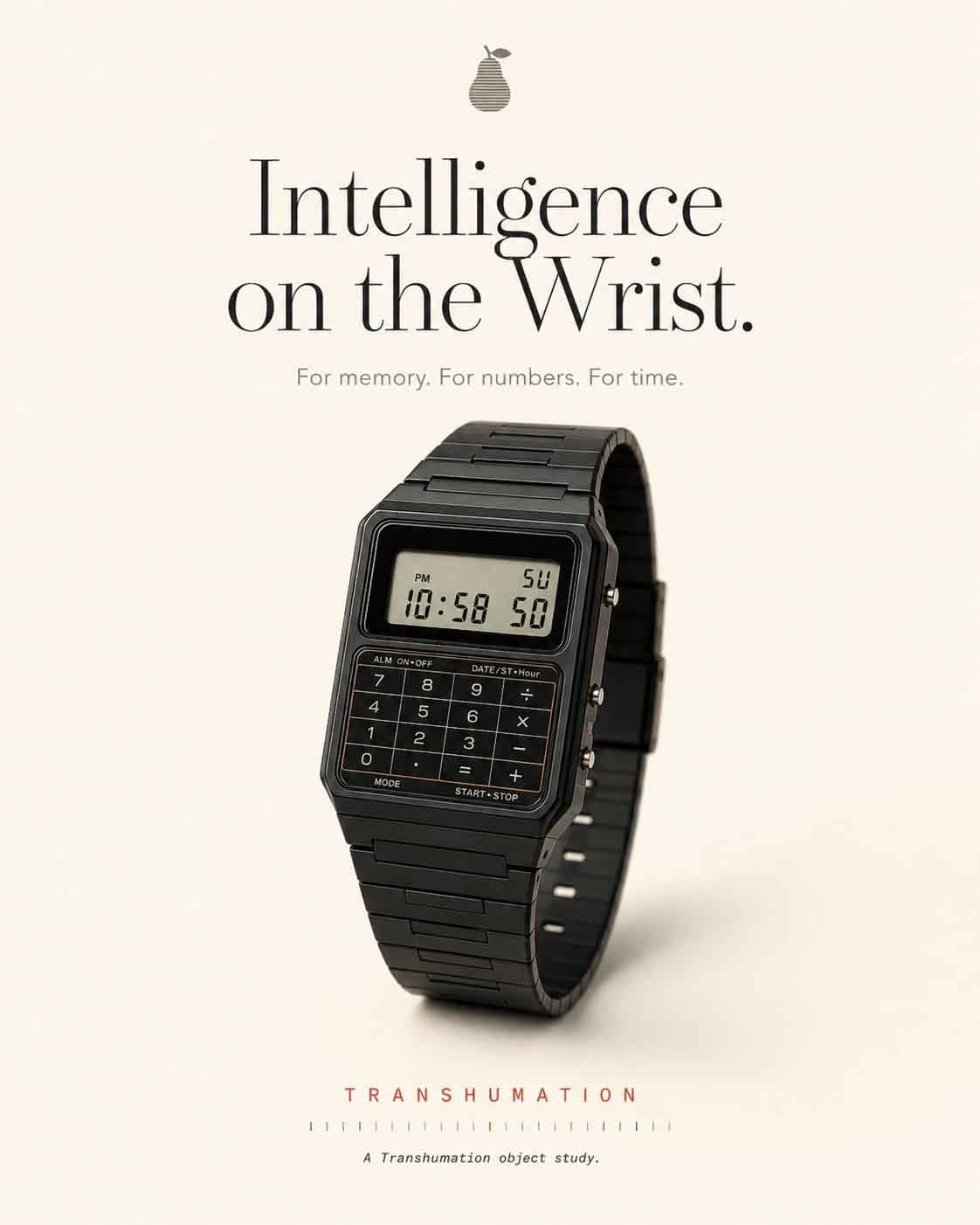
Successful technologies suffer a peculiar fate. The more completely they enter life, the less visible their achievement becomes.
A castle can become a workplace if you clean it every morning. A private aircraft can become transportation if you fly often enough. A view that once stopped you at the window eventually becomes the thing behind the curtains. Familiarity does not destroy the object; it changes the observer.
Technology follows the same path. The first touch interface can produce astonishment and, a few years later, irritation because a button is in the wrong place. The same camera that would once have seemed miraculous becomes disappointing because the newest model performs slightly better in low light. Navigation by satellite stops being extraordinary and becomes annoying when the estimated arrival time is wrong by six minutes.
This is not evidence that the original wonder was naive. It is evidence that the technology succeeded.
The remarkable has been absorbed into the baseline.
That process changes more than mood. It changes what the next generation considers normal. Someone who remembers computers before touchscreens can still experience a smartphone historically; there is a visible before and after. A child born later encounters only the after. Glass is supposed to respond to fingers. Maps are supposed to know where you are. Music is supposed to be available everywhere. Questions are supposed to produce answers in seconds.
The breakthrough becomes inheritance.
This may be one of the deepest consequences of technological progress. An invention does not merely add a capability to the world. It removes an old impossibility from the imagination of everyone who grows up after it.
The first generation sees a door open.
The second generation grows up in the room beyond it and wonders why the next door is still closed.
The Sphere in the Pocket
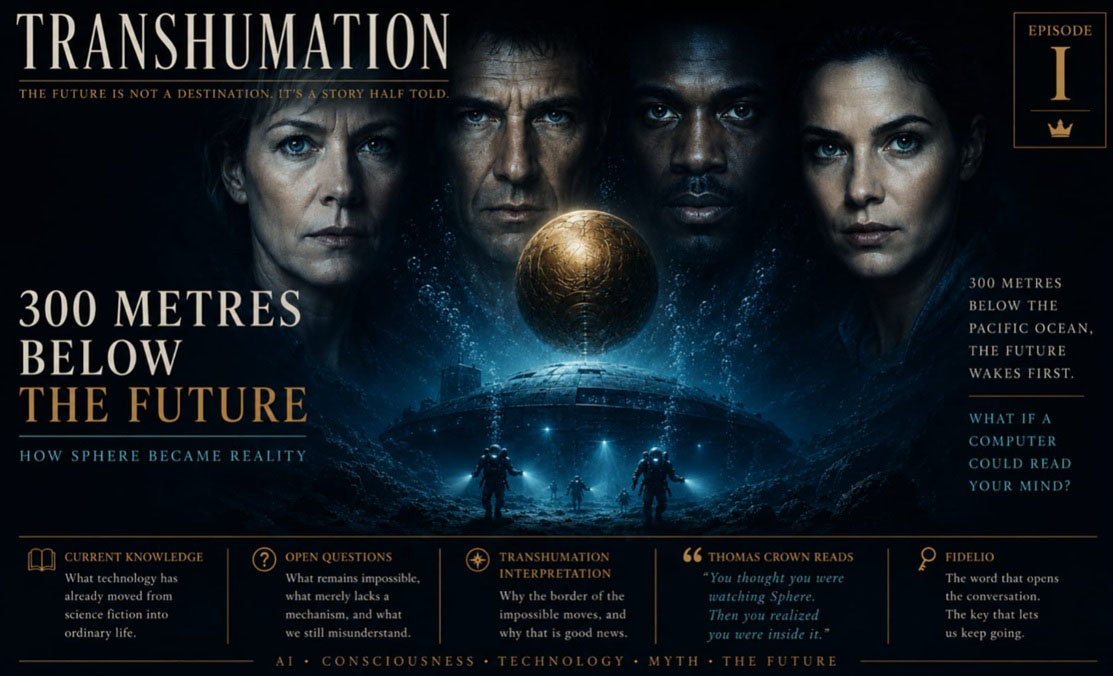
This is where the iPhone connects, unexpectedly, to the golden sphere in Sphere.
The comparison is not technological. One object is a commercial device; the other is science fiction. The connection lies in the emotional structure of the encounter.
The sphere is powerful partly because its surface explains almost nothing. It presents a simple exterior around an interior whose possibilities cannot yet be measured. The characters see the object before they understand the rules. Its visible form is smaller than the questions it generates.
Treasure maps work in the same way. So do locked rooms, mysterious books and keys whose doors have not yet been found. The child does not need an inventory of what lies inside. In fact, an inventory would weaken the object. The attraction comes from the suspicion that the visible thing is only the boundary of something larger.
For a brief period, the first iPhone occupied a similar cultural position. It was familiar enough to approach and strange enough to suggest that the world behind it might be larger than expected. Its screen did not display merely functions; it displayed possibility.
That quality rarely survives ownership.
A treasure chest is most powerful before the contents have been catalogued. A technological object is often most beautiful before routine discovers every way to use it badly.
This is why old advertisements can feel unexpectedly moving. They preserve the device before the fingerprints. Before the forgotten password, the cracked glass, the charging cable left at home and the employer who discovers that the same miraculous machine can be used to reach you at midnight. The object still possesses unspent possibility because history has not yet finished happening to it.
The future has not become property.
God Is Always +1
There is a larger Transhumation structure hidden inside this transformation.
Human beings have a habit of relocating the extraordinary one step beyond whatever has just become ordinary. Flight ceases to be miraculous and the horizon becomes space. Spaceflight becomes real and attention moves to permanent settlement. Computers learn to calculate, then to play chess, then to recognize speech, then to generate language. Each solved impossibility changes the location of the next one.
This is what God is always +1 means in technological terms.
It does not mean that technology becomes divine. It means that the boundary carrying the emotional weight once associated with the impossible keeps moving outward. The extraordinary is not destroyed when it enters reality. It is absorbed, and the human appetite for wonder relocates itself just beyond the new edge.
That is why disappointment can sometimes be the emotional shadow of success. We imagine that a technological promise failed because the object no longer amazes us. Quite often, the opposite has happened. The promise worked so thoroughly that the technology disappeared into normal life.
Yesterday’s miracle becomes infrastructure.
The child opens the treasure chest and discovers that treasure, once possessed, becomes something else: an object to insure, maintain, upgrade and eventually replace.
So the map begins again.
The Future Before We Owned It
Transhumation should not romanticize that cycle into a faith that every new technology deserves admiration. Plenty of inventions fail, disappoint, concentrate power or solve one problem by creating another. A future worth wanting still has to survive contact with economics, psychology, politics and ordinary human behavior.
But realism does not require us to pretend that wonder was foolish.
Sometimes the door really did open.
In 2007, a small piece of glass helped change the relationship between ordinary people and computation. Within a few years, millions of people were carrying capabilities that had previously belonged to separate machines, and children were beginning to grow up without any memory of the earlier boundary.
That is more interesting than the phone itself.
The device became normal. The expectation it created did not.
One generation learned that a computer could disappear behind glass. The next began asking why the glass was still necessary.
Perhaps the most important technological revolutions do not merely give us new tools. They teach the next generation that reality is more negotiable than the previous one believed.
The first iPhone was once a treasure because nobody knew exactly what kind of world would grow around it.
Now that world is ordinary.
The better question is what object, interface or possibility we are currently treating as mundane because we happen to be standing on the wrong side of the miracle.
Watch the Video
How to Read the World
Current Knowledge
Apple introduced the first iPhone in 2007. It combined telephony, internet access, media playback and a multi-touch interface in a consumer device that helped reshape expectations around mobile computing. Touchscreen technology, graphical interfaces and mobile computing existed before the iPhone; Apple’s significance lay largely in integration, software, industrial design, commercial execution and the mass adoption of direct-touch interaction.
Modern smartphones combine functions that once required numerous separate devices, including photography, navigation, media playback, communication, internet access and increasingly AI-assisted services. Research and public debate continue over their effects on attention, work, social behavior and mental load, with outcomes varying according to usage patterns and context.
Open Questions
What happens to imagination when one generation grows up inside technologies the previous generation experienced as extraordinary? Does every successful breakthrough eventually disappear psychologically into the background, and if so, how quickly does wonder become expectation?
As interfaces become simpler while the systems beneath them grow more complex, will the next major technological transition arrive as an obvious new object, or quietly emerge inside something already familiar? And if technological progress repeatedly removes boundaries from one generation’s imagination, what happens when the next generation begins with almost no memory of those boundaries having existed at all?
Transhumation Interpretation
Transhumation treats the iPhone less as a product than as evidence of a recurring sequence:
impossibility → arrival → wonder → adoption → normalization → new horizon
The important change is not only technical. Once the extraordinary becomes ordinary, it alters the psychological baseline of the people who come afterward. The generation that witnesses the breakthrough experiences the collapse of a boundary; the generation that follows begins life on the other side of it.
This is the technological form of God +1. The unknown does not disappear as knowledge expands. It moves outward. Yesterday’s miracle becomes infrastructure, and human attention relocates to the next unresolved edge.
The most interesting moment may therefore be the brief interval between invention and familiarity, when the object is real enough to touch but still strange enough to contain treasure.
FAQ
Why was the first iPhone culturally important?
Its significance came not only from its technical capabilities but from the way it helped make direct touch, simplified interaction and hidden computational complexity feel natural in a mainstream consumer product.
Did Apple invent touchscreen technology?
No. Touchscreens and related technologies existed earlier. Apple combined and refined several technologies into a coherent device that helped make multi-touch interaction a mass-market expectation.
Why compare technology with magic?
The comparison is structural rather than supernatural. In both cases, a small and understandable gesture can provide access to a mechanism vastly more complex than the action used to activate it.
What does “God is always +1” mean here?
It describes a moving horizon of the extraordinary. Once one former impossibility becomes familiar, human imagination shifts toward the next unresolved boundary.
Why can old technology feel more magical in memory?
Because memory preserves the period before familiarity. Once a technology becomes infrastructure, its original strangeness becomes difficult to recover.
What is the central Transhumation idea of the article?
Technological progress changes not only what people can do, but what the next generation assumes has always been possible.
Continue the Transhumation Series
- Forgotten Religion | Ancient Gods, Symbols and the Hidden Structures of Human Civilization
- The Last Religion | Death, Immortality and the Future of Humanity
- The New Theurgy | AI, Information and the Future of Human Civilization
- End of Branding: You Were Never Meant to Become a Product
- Baal vs Ishtar: Why Ancient Gods Never Disappeared