
Doll Sold Separately
I was eight when I discovered that a picture could lie without technically lying at all. There was an enormous present under the Christmas tree with my name on it, and on the front of the box Barbie was sitting on a white horse. She had wonderful hair. The horse had wonderful hair. They seemed very happy together, and I assumed this arrangement would continue after I opened the box.
It didn’t. There was a horse. I took him out, inspected the plastic tray, and then looked inside the box again because at eight you are still prepared to believe that missing women may simply have slipped behind the cardboard. “Where’s Barbie?” My father eventually found the answer on the side of the box, in letters apparently designed for a much smaller species. Doll sold separately.
I wasn’t angry. The horse had done nothing wrong. He was actually rather nice. Nobody had exactly lied to me either. Barbie really was on the box. The horse really was inside it. I had supplied the rest myself.
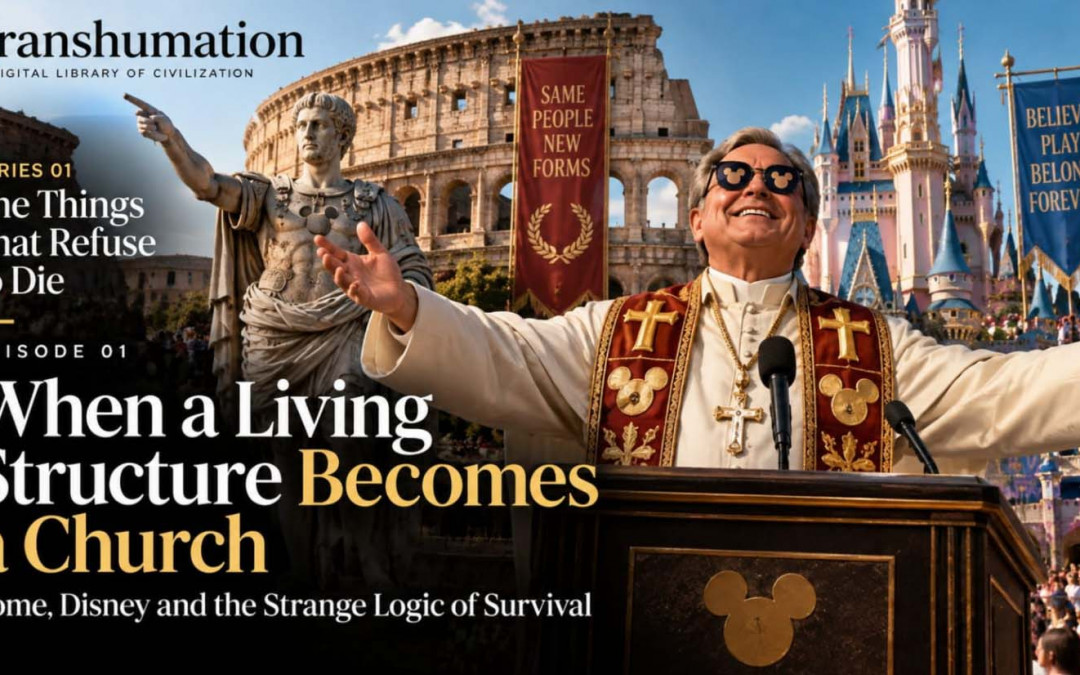
Years later, standing in Disneyland and looking at the castle, I suddenly remembered that Christmas morning. I couldn’t immediately understand why. There were no horses. No Barbie either. Just a castle I had wanted to see for years.
The Castle Was Real
I was old enough by then to know what castles were made of. I knew there were offices behind things, emergency exits inside things and people eating lunch underneath things. I understood that Mickey Mouse was employed. None of this prevented me from wanting Disneyland to be magical.
Fortunately, it was. Not all the time, obviously. Magic has opening hours. But the castle was beautiful, music appeared from places where I couldn’t see musicians, and children met people they had previously known only as drawings. I watched a little girl meet a princess and, for perhaps twenty seconds, she looked as though nothing bad had ever happened anywhere.
I knew the princess would eventually take off the dress. It didn’t matter. The trick worked even after I knew it was a trick.
Everyone Knew Where to Stand
There were little girls in white dresses, their hair arranged more carefully than usual, and boys who had clearly been given instructions concerning their shirts. Parents were taking photographs. Grandmothers were emotional. There were flowers everywhere and music in a magnificent building. Everybody seemed to know where to stand, when to move and what was expected of them.
I remember being particularly good at knowing where to stand. My shoes hurt. I had something white in my hair that I wasn’t allowed to touch. At the front stood a man in extraordinary ceremonial clothes. Everyone became quiet.
Then the priest asked us to kneel.
Oh. Sorry. Wrong castle.
Apparently I Had Already Had One
I remember my First Communion rather well, although I remember the lunch afterwards better. This seems unfair to the priest. There were presents, relatives and a cake, and everybody seemed pleased that I had reached an important point in something I had apparently been doing for years.
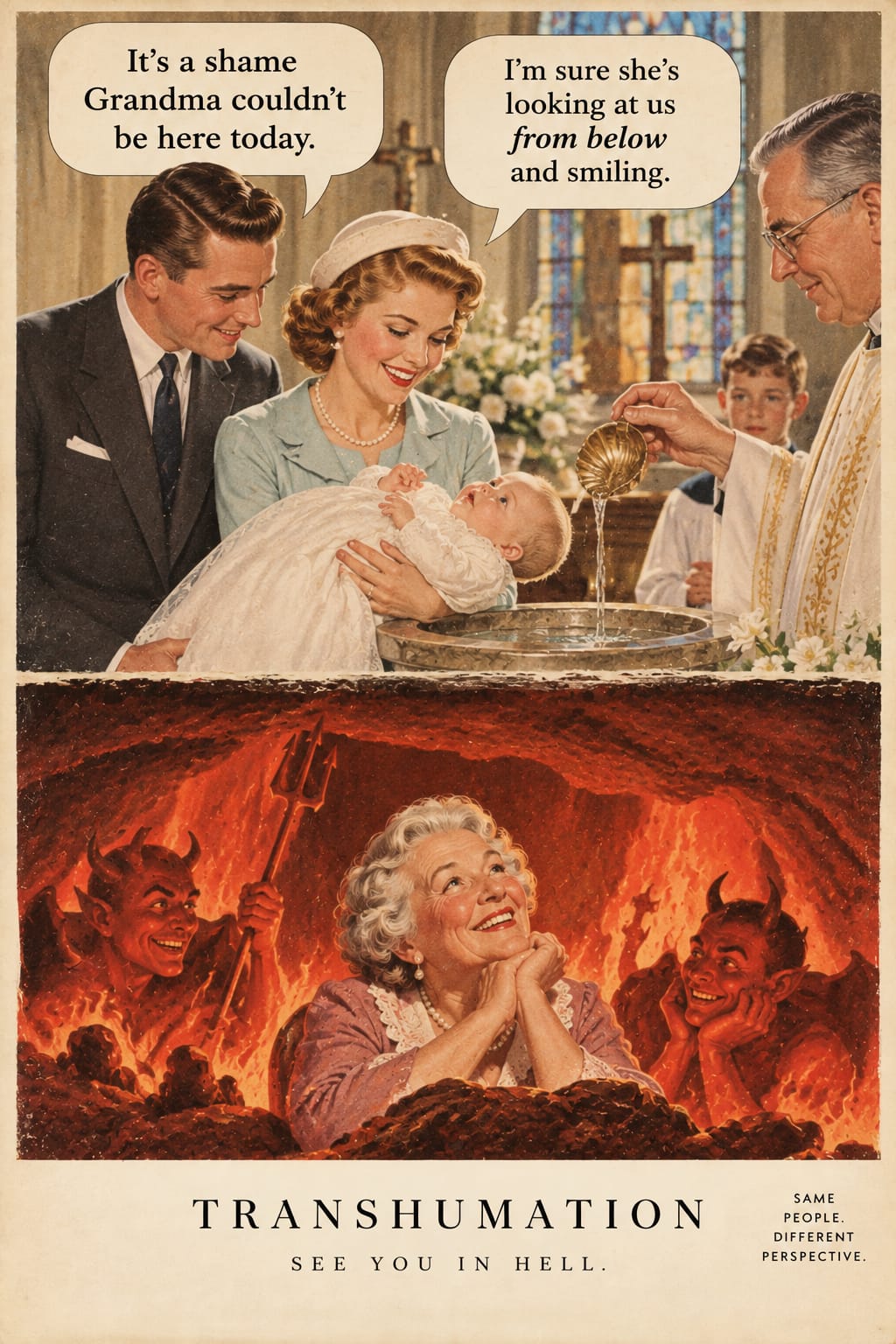
Somewhere in all of this, baptism came up.
Apparently I had already had one.
I knew what baptism was, more or less. What surprised me was that I had no memory of mine.
“Did I say yes?”
Apparently not.
I had been a baby, which was a perfectly reasonable explanation. Babies are notoriously poor administrators of their own spiritual affairs. My parents had made most of my decisions in those days. They chose where I lived, what I ate, what I wore and what language I spoke. I don’t remember choosing English either. By the time I was old enough to complain, I was already complaining in English.
Still, I couldn’t quite get past the fact that this particular decision concerned something called my baptism.
Silly me. I thought my baptism was about me.
Where’s the Other Pill?
Years later I watched The Matrix and saw Morpheus hold out his hands.
Two pills.
I liked him immediately.
Where had he been when I was nine?
I don’t remember asking for another pill at my First Communion, and perhaps I wouldn’t have taken it anyway. I liked my family. I liked the church. I liked the presents considerably more than I ought to admit. But by then I was old enough to be told that what was happening was important, old enough to learn what to say and where to stand, and old enough to understand that somehow it concerned me.
Perhaps someone would have explained that there wasn’t another pill. I had already been baptized. I already belonged.
“So when do I choose?”
I don’t know what they would have said.
I never asked.
Magic Has Opening Hours
Back in Disneyland, we queued for something, then queued for something else, then discovered that there was a system for managing the queue for the thing we had originally wanted to queue for. There were maps, barriers, timetables, hotels, kitchens, warehouses, costumes, security and an impressive number of people carrying radios.
None of this offended me. Quite the opposite. Lots of people wanted the magic. Of course the magic needed organizing. A princess who has to meet ten children can simply open a door. A princess who has to meet ten thousand children requires a schedule, several rooms, staff rotations and probably somebody in an office looking at a spreadsheet.
Apparently even magic eventually needs a department.
Someone Has to Keep the Key
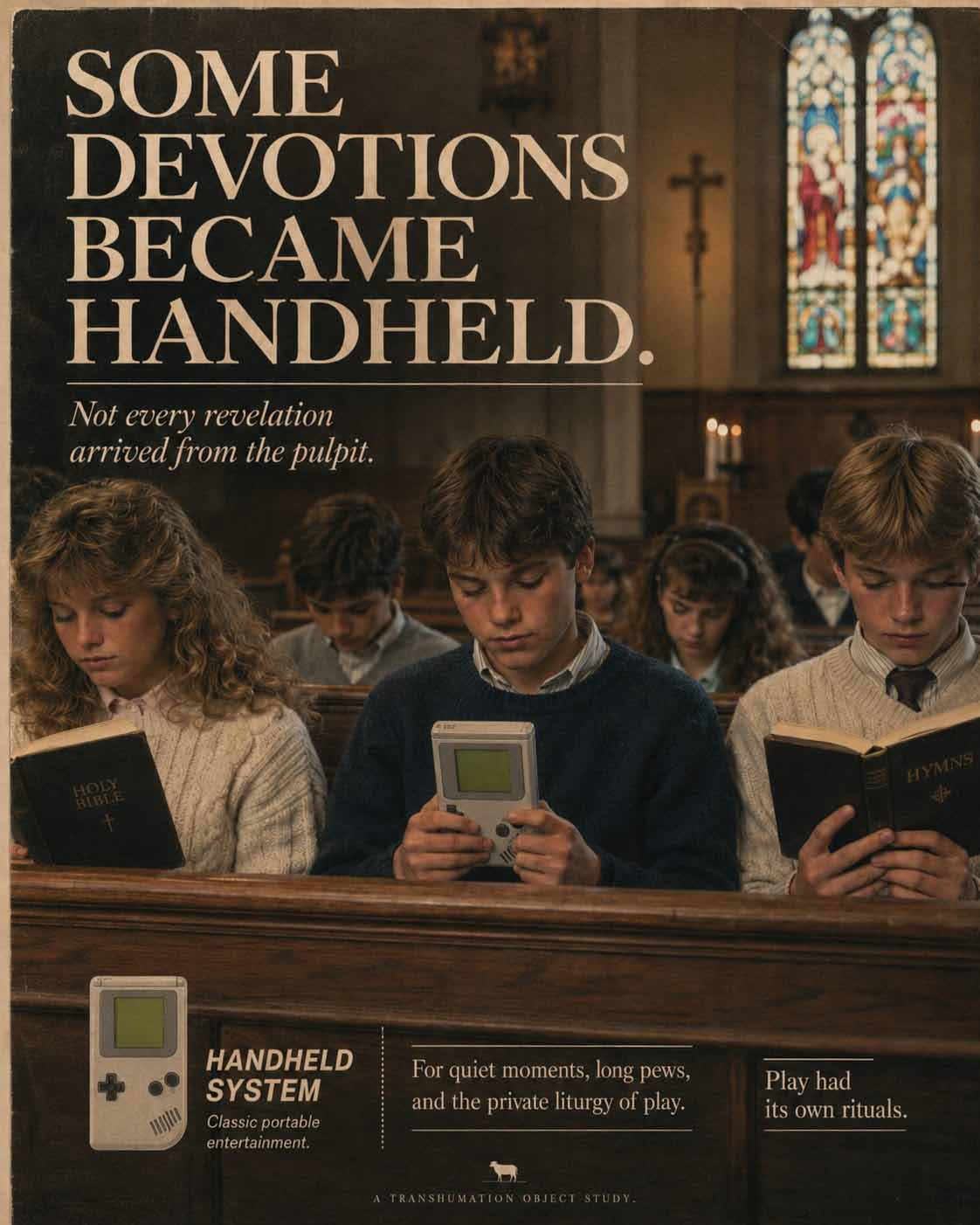
A church is an extraordinary amount of physical material assembled around things that cannot be touched. Stone rises around love. Gold gathers around salvation. Bells ring for someone nobody can see. There are paintings of heaven, books about eternity, robes, candles, keys, schools, archives, accounts, committees and somebody who presumably knows where the spare communion wine is kept.
I don’t find this ridiculous. I find it rather moving.
Human beings wanted to preserve something invisible, so they gave it walls. Perhaps walls are necessary. A story told around a table can survive an evening; a story expected to survive two thousand years is going to need rather more storage space. People die. Memories fail. Buildings, books, rituals and institutions can carry things further than any one of us can.
I imagine nobody ever decides to build too much of it. Someone needs a key, so you make a key. Then somebody has to keep the key. Someone has to know who is allowed to borrow it. Eventually there is probably a form for requesting the key.
All perfectly sensible. I only hope somebody still remembers what the door was for.
Who Owns Forgiveness?
Disney owns Mickey Mouse. That seems fair. It owns the castle too.
The Church owns the church.
Also fair.
I am less certain about the magic.
And I have absolutely no idea who owns forgiveness.
I’m Still Looking at the Picture
I thought about that horse again recently and realized something I rather like about the girl who opened the box. She didn’t conclude that Barbie didn’t exist. She didn’t announce that Christmas was a fraud or throw the horse across the room. She simply assumed Barbie must be somewhere else.
I feel much the same about magic, and love, and goodness.
I still want the castle to be magical. I still want love to mean love. If someone tells me that everyone is special, I am irritating enough to ask whether they really mean everyone.
Apparently I have learned to read the small print.
I have not learned to stop looking at the picture.
Perhaps that is childish.
Silly me. I thought that was included.
Watch the Video
How to Read the World
by
Current Knowledge
Human beings routinely inherit social structures before they are capable of evaluating them. Language, nationality, family customs, moral expectations and religious affiliation can all begin shaping identity long before conscious consent becomes possible. In traditions that practice infant baptism, membership may formally begin before the individual can understand or choose it.
Institutions also allow ideas and practices to persist beyond the lives of the people who created them. Buildings, texts, rituals, offices, archives and rules act as carriers of cultural information. Their growth is not necessarily evidence that the original purpose has been abandoned; administration is often what allows a practice to operate across large populations and long periods of time.
At the same time, institutional continuity and continuity of purpose are not identical. A structure can preserve a practice while interpretations of that practice change. It can also accumulate functions concerned with its own maintenance. Determining when necessary preservation becomes institutional self-preservation is not a question with a simple objective threshold.
Commercial experiences provide a useful parallel without being equivalent. Theme parks such as Disneyland deliberately construct environments in which architecture, performance, logistics and controlled presentation combine to produce experiences of wonder. Knowing that such experiences are constructed does not necessarily make the emotional experience unreal.
What remains uncertain is not whether humans build structures around intangible things. We clearly do.
The harder question is what happens when we begin confusing the structure with the thing it was built to carry.
Open Questions
If an institution was created to preserve something that cannot be physically contained — love, salvation, justice, belonging, wonder — how could we tell whether it still carries it?
At what point does preservation become ownership?
Can a person meaningfully choose an identity that began forming before that person was capable of choosing anything?
If a ritual survives for centuries while its participants understand it differently, what exactly has survived: the ritual, the institution, the meaning, or merely the name?
And if the box no longer contains what we thought the picture promised, does that mean the promise was false?
Or should we start looking somewhere else for Barbie?
Transhumation Interpretation
Transhumation treats institutions as carriers rather than owners.
A church can carry religious belief. A book can carry an idea. A university can carry knowledge. A company can carry an experience. A ritual can carry memory. None of these relationships necessarily means that the carrier possesses the thing being carried.
The distinction matters because carriers are visible while their contents often are not. We can count churches, employees, books, ceremonies, departments and rules. Love, wonder, belonging and forgiveness are considerably harder to inventory.
Over time, this creates a peculiar possibility: the infrastructure surrounding an invisible thing can become more measurable, defensible and administratively real than the thing that originally justified the infrastructure.
The structure may then survive even while the relationship between structure and purpose changes.
This does not make structures fraudulent. Without carriers, much of human culture would disappear every generation.
It produces a simpler question.
Is the structure still carrying the thing — or have we started carrying the structure?
FAQ
What does “When a Living Structure Becomes a Church” mean?
The title refers to the moment when something originally organized around a purpose develops buildings, rules, roles, rituals and systems necessary to preserve itself across time. “Church” is used both literally and as a particularly visible example of a larger institutional process.
Is the article arguing that religion is false?
No. The article deliberately leaves theological truth unresolved. Its question concerns the relationship between an invisible promise and the physical or institutional structure built around it.
Why compare Disneyland with a church?
They are not presented as equivalent institutions. The comparison isolates a narrower structural similarity: both surround intangible human experiences with architecture, ritual, performance, organization and physical infrastructure. The differences between them remain substantial.
What does Barbie have to do with institutions?
The Barbie box introduces the article’s simplest test: compare what appears to be promised with what is actually inside. Edith later applies the same instinct to much larger cultural structures without assuming that a mismatch automatically means deception.
What does The Matrix add to the argument?
The two pills turn choice into a visible object. Edith’s question — “Where’s the other pill?” — raises the problem of identities and commitments inherited before meaningful choice becomes possible.
Why does Edith Voss say “Sorry. Wrong castle”?
The article deliberately allows a description of First Communion to resemble the organized magic of Disneyland until the appearance of the priest reveals the change of setting. The joke exposes the structural resemblance without claiming that the two experiences mean the same thing.
Are institutions necessarily corrupted by becoming larger?
No. Scale requires organization. Archives preserve memory, rules coordinate people, buildings provide continuity and administration allows practices to survive their founders. The open question is whether maintaining that infrastructure can eventually become more important than maintaining its original purpose.
What is the Box Test?
The Box Test is a Transhumation thought experiment: does what we find inside still correspond to what appears on the box? It can be applied to products, institutions, technologies, ideologies and other structures built around promises.
Can the original promise survive outside the institution that carried it?
Sometimes. Wonder existed before Disney, love before churches, communication before social-media platforms and knowledge before universities. Institutions can preserve and amplify such things without necessarily owning them.
What is the central question of the article?
Not whether we should destroy the box, but whether we can still distinguish the box from what we hoped to find inside it.
Continue the Transhumation Series
- Forgotten Religion | Ancient Gods, Symbols and the Hidden Structures of Human Civilization
- The Last Religion | Death, Immortality and the Future of Humanity
- The New Theurgy | AI, Information and the Future of Human Civilization
- End of Branding: You Were Never Meant to Become a Product
- Baal vs Ishtar: Why Ancient Gods Never Disappeared