
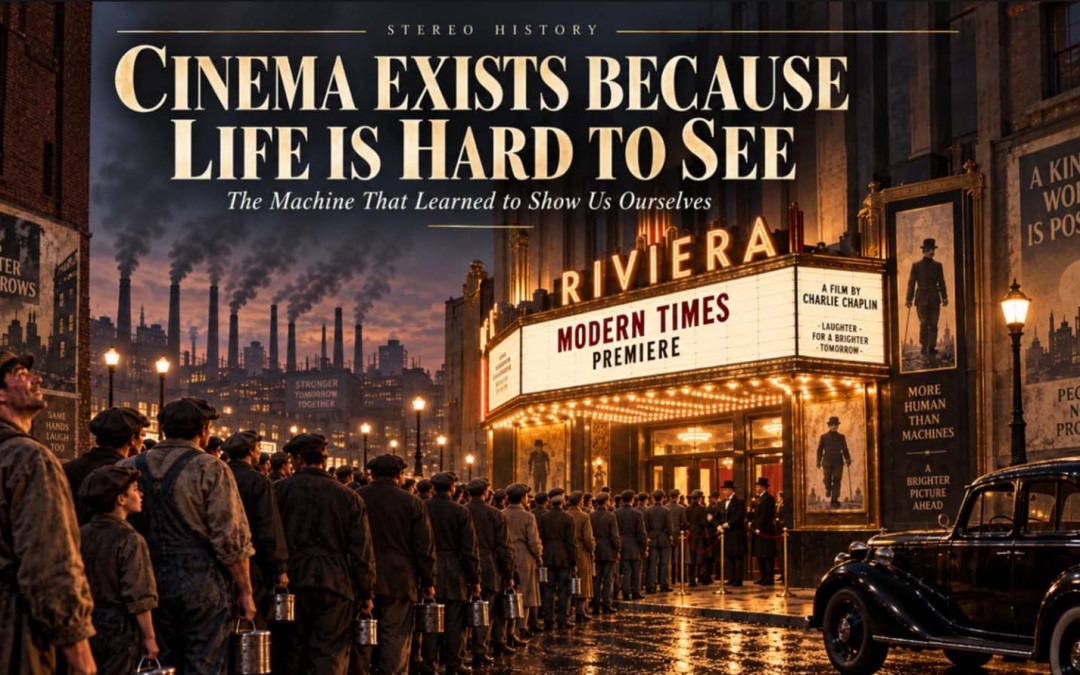
Life Has No Camera
There is a strange injustice built into ordinary life: the most important moment rarely announces itself when it arrives. A person accepts an invitation because there is nothing else to do that evening. He takes a different train. She answers a telephone call she nearly ignored. Somebody sits beside somebody else at dinner. A doctor notices something small. A child opens a door. Years later we point back and say: there. That was the moment.
But it did not look like the moment when it happened.
Cinema cheats. It knows where to look. More importantly, it knows when to look. The camera can move closer. The editor can remove six unimportant years. Music can tell us that a conversation matters before the characters understand why. A cut can place cause beside consequence. A flashback can return to the wound. A second viewing can reveal that an innocent sentence was already carrying the ending inside it.
Life gives us none of these courtesies. Experience arrives without an editor.
Everyone Is Born Into Episode IV
We do not enter our lives at the beginning of the story. Our parents already have histories. Our countries have grudges. Our religions have schisms. Our families have dead people nobody explains properly. Wars, debts, houses, habits and surnames have been moving toward us for years before we appear.
Every human being is born into Episode IV.
This is one reason history exists. We spend our lives constructing prequels. We dig, read letters, open graves, compare dates and ask what happened before we arrived. Prophecy performs the opposite manoeuvre: it tries to see the sequel. Religion is more ambitious still. It often offers an origin, a purpose and an ending — the complete arc unavailable to the person trapped in the middle.
I have spent much of my life enjoying an unfair advantage over the dead. I know what happened next. They did not. The uncomfortable part is that somewhere beyond the edge of my own biography I am exactly as ignorant as they were.
The Gun on the Wall
Stories exploit this difference ruthlessly. Put a gun on a wall in ordinary life and it may remain there for forty years. Let a camera pause on it and the audience begins waiting for it to fire. A scar asks for an origin. A cough becomes a diagnosis. A stranger at a railway station becomes a promise.
That is not because life contains no patterns. It is because life contains too much information. Most cups are only cups. Most doors are only doors. Most conversations lead nowhere. The storyteller removes enough of this abundance for structure to become visible.
Good filmmakers can even play against the rule. Tarantino can let dangerous men discuss hamburgers because he understands the expectation he is violating. Sometimes the hamburger must remain a hamburger. Otherwise every object becomes a prophecy and the world begins to feel less like life than a crossword puzzle.
This is also why the audience’s time matters. Money can be earned again. The two hours spent watching a film cannot. Every shot therefore makes a quiet claim: this is worth part of your remaining life. The answer may be laughter, boredom, dread, beauty or deliberate confusion. But there should be an answer.
The First Viewing Is Life
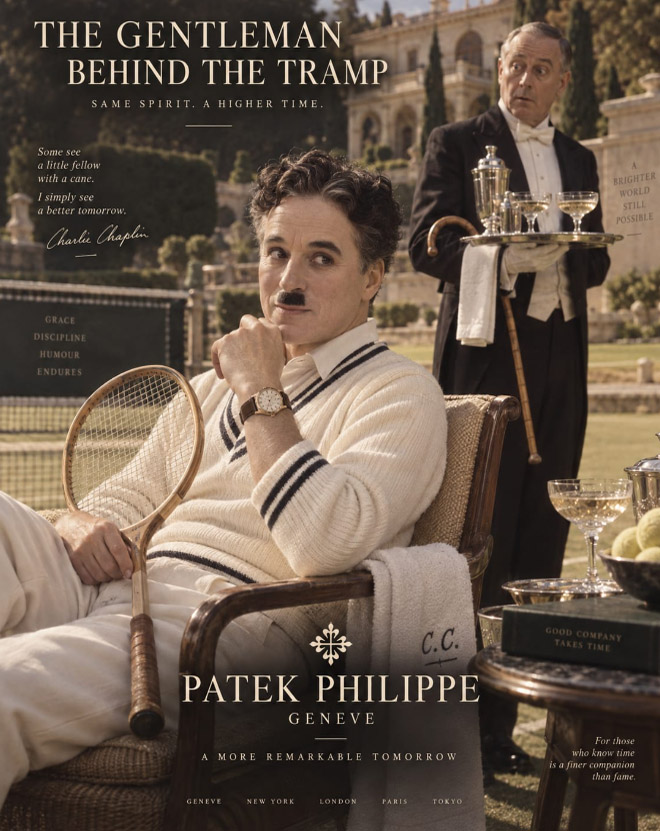
The first time we watch a film, we are unusually close to the characters. We do not know what happens next. We misunderstand warnings. We trust the wrong person. We assume somebody will survive because the story has taught us to like them.
The second viewing is different. The film has not changed. We have.
Now cause and consequence can occupy the same moment. We see the gun and remember the shot. We hear the joke and know the funeral. A character walks into a room alive, while we already know the scene in which he will die. For a moment we occupy a position unavailable in ordinary life: we know the future and cannot warn the people living inside it.
The first viewing is life. The second is history.
This is the historian’s privilege and his danger. Julius Caesar had one of the most extraordinary endings ever attached to a political life: conquest, civil war, dictatorship, the Senate, the Ides of March, conspirators including Brutus, and consequences that continued long after the knives were put away. But Caesar did not experience an ending. He experienced a day on which he was murdered. The shape arrived later, in the minds of people who knew what followed.
A life can end before its story does.
The Ship That Succeeded and the Ship That Survived
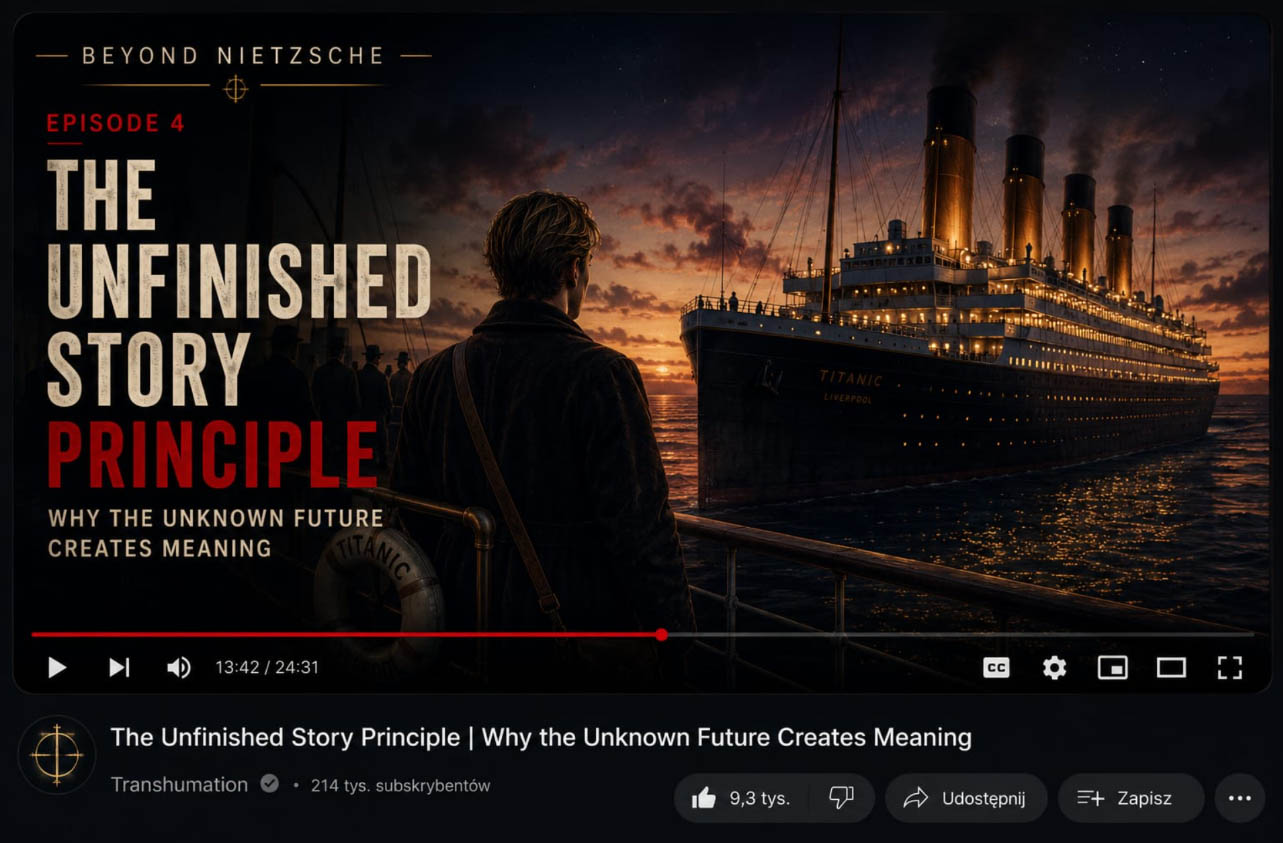
Titanic makes the same point with almost indecent clarity. Imagine that the ship reaches New York. Passengers disembark. Luggage is collected. Newspapers admire the crossing for a few days. The ship enters service and grows old.
We do not have to imagine the second half. Her sister Olympic did something close to that. She served for decades, survived war service, carried passengers and was eventually withdrawn and broken up. Titanic failed at the single task for which a liner exists — completing the voyage — and became one of the most famous ships in history.
Olympic survived as a ship. Titanic survived as a story.
There is an old truth hidden in the saying that funerals are for the living. Endings belong strangely often to the people who remain. The dead do not attend their own retrospectives. They do not read the biographies that explain which meeting changed everything. They cannot discover that the humiliation they considered final became, three generations later, the beginning of something else.
Perhaps this is why the wish for a life “worth telling” deserves caution. The lives most worth telling are not necessarily the lives most pleasant to inhabit. Troy is a magnificent story. Pompeii is unforgettable. Titanic is unforgettable too. Narrative greatness and human comfort have never signed a treaty.
Would You Want to Hear the Narrator?
Stranger Than Fiction turns the problem into a joke and then quietly removes the joke. Harold Crick begins hearing a narrator describe his life. The sensible first explanation is psychiatric. Then a literary scholar notices something peculiar: the voice behaves like narration. Harold eventually confronts the possibility that his life is not merely happening. It is being written.
At first this sounds like the answer to one of humanity’s oldest wishes. Proof of an author. Proof that events belong to a structure.
Then Harold learns the price. The story may be better if he dies.
This is where the comforting idea of purpose becomes dangerous. Good for the story is not necessarily good for the character. Christianity places this paradox near the centre of its own narrative: the execution of Jesus is, from the human close-up, catastrophe; within Christian theology it becomes the event through which the larger structure is fulfilled. Whether one accepts that theology is a separate question. Narratively, the inversion is formidable.
So perhaps the question is not simply whether we want our lives to have meaning. Would you still want proof that your life had a purpose if you were not allowed to choose what that purpose was?
We Want an Author, but Not the Script
This may explain an odd tension in the way humans think about fate. Pure accident frightens us because nothing guarantees that suffering belongs to anything larger. Perfect predestination frightens us for the opposite reason. If every movement has already been written, meaning begins to resemble a prison.
We seem to want something in between: meaning behind us and freedom ahead.
A good story produces exactly that sensation. In retrospect, its ending can feel inevitable. In advance, it must remain uncertain. If we can predict everything, the story is dead. If nothing follows from anything, it is noise.
Jeremy Bentham’s Panopticon offers an uncomfortable architectural metaphor. Its power did not require a guard to stare continuously at every prisoner. The prisoner could not know when observation was occurring. The possibility of an observer became part of the prisoner’s world. The tower worked partly because it remained epistemically out of reach.
Religion sometimes places humanity in a similarly strange position, although the analogy should not be pushed too far. Is there an observer? Is there an author? Are the patterns evidence of construction, or are pattern-seeking minds editing chaos after the fact? A perfectly visible script would answer the question by destroying the uncertainty in which the character acts.
Perhaps that is why the more interesting question is not “Why doesn’t the Author simply explain everything?” Information from outside the story would itself become an event inside the story. Tell Romeo the last page and there is no longer the same last page.
We want an author. We just do not want the script.
Cinema Gives Us the Impossible Distance
None of this proves that life has an author, a plot or a final explanation. The opposite claim is equally unavailable from a cinema seat. Human beings are ferocious pattern-makers. Given enough accidents, memories and selective attention, we can edit a convincing story from almost anything.
That uncertainty is precisely the point.
Perhaps life is not meaningless. Perhaps it is simply very hard to see from the inside.
Cinema gives us something ordinary experience cannot: distance. It lets us stand outside a completed sequence while still feeling what it was like not to know the ending. Then it performs one final trick. We can start again.
Press Play and Caesar has not reached the Senate. The ship has not struck the iceberg. The fictional dead have not died yet. We know what they do not. We watch the beginning while carrying the ending.
The first viewing is life. The second is history.
Then the screen goes dark and we return to the only story we can never watch twice.
Watch the Video
How to Read the World
By Alex F. Tyler
Current Knowledge
Narrative is a fundamental feature of human culture. Humans use stories to organise events in time, represent agents and motives, communicate social knowledge and imagine possibilities beyond immediate experience. Scholars disagree about how universal particular story structures are and how much they reflect cognition, culture or historical convention.
Film adds unusually strong control over attention and time. Framing, editing, sound and performance can compress years, reorder information, repeat moments and place causes beside consequences. These techniques do not reproduce ordinary perception; they construct a viewpoint from which selected relationships become easier to see.
Historical explanation also depends on selection. Historians know outcomes unavailable to people living through the events they study, but responsible historical narratives remain constrained by evidence. Retrospective coherence is not proof that events were planned.
Open Questions
Do stories reveal structures already present in human life, or train us to impose structure on events that were far messier? How much of what we call meaning is discovered, and how much is retrospective editing?
Could a life possess a larger pattern that remains invisible to the person living it because the relevant consequences extend beyond a human lifetime? The possibility is philosophically interesting but cannot by itself establish providence, fate or an external author.
There is also a problem of freedom. If a complete future could be known in advance, would that knowledge merely reveal the story or change it? At what point does perfect explanation stop helping a character understand the world and begin to turn the world into a script?
Transhumation Interpretation
Transhumation treats cinema as an interface for a problem older than cinema: the observer cannot easily see the structure of a system from inside the system.
Stories reduce reality so that relationships become visible. Their danger begins when the reduction is mistaken for the territory. Their power begins when distance reveals something proximity concealed.
Cinema therefore does more than entertain us with lives more dramatic than our own. It temporarily grants us a forbidden position: outside another life, after its ending, while still able to return to its beginning.
That does not tell us whether our own lives have an author. It explains why the question is so difficult to stop asking.
FAQ
Why is ordinary life hard to understand while we are living it?
Because we experience events before we know their long-term consequences. We also receive far more information than a story contains, without an editor identifying which details will later matter.
Why does cinema make events easier to understand?
Cinema can select, frame, compress, repeat and reorder events. It gives viewers temporal and visual distance from a character’s experience and can reveal relationships the character cannot yet see.
What does “the first viewing is life, the second is history” mean?
On a first viewing, the future remains unknown. On a second, the viewer knows the outcome and can reinterpret earlier scenes in light of what follows. Historians possess a similar retrospective advantage over people who lived through the events they study.
Does the article argue that life is predetermined?
No. The article treats authorship, fate and providence as philosophical possibilities, not established facts. A coherent story can be discovered in events, imposed retrospectively, or produced by a mixture of real causal structure and human selection.
Why compare Titanic with Olympic?
The comparison exposes a narrative paradox. Olympic had the longer and more successful working life, while Titanic’s catastrophic failure made it culturally enduring. What is good for a story is not necessarily good for the people inside it.
What is the deeper Transhumation argument?
That perspective changes what can be known. A person living inside an unfolding life lacks the distance available to a later observer. Cinema is one of the technologies humans invented to manufacture that distance.
Continue the Transhumation Series
- Forgotten Religion | Ancient Gods, Symbols and the Hidden Structures of Human Civilization
- The Last Religion | Death, Immortality and the Future of Humanity
- The New Theurgy | AI, Information and the Future of Human Civilization
- End of Branding: You Were Never Meant to Become a Product
- Baal vs Ishtar: Why Ancient Gods Never Disappeared