
Finally, Something Perfect
90–60–90.
I knew those numbers before I knew enough mathematics to be suspicious of them. They floated around with the peculiar authority numbers acquire when nobody remembers who chose them. Ninety centimetres here, sixty there, ninety again, and apparently we had solved beauty. I remember being impressed by the precision. Nobody said ninety-ish, sixty on a good morning, and somewhere around ninety after Christmas.
What bothered me came later. If 90–60–90 was perfect, what was 90–61–90? Presumably still rather good. What about 90–63–90? Somewhere between sixty and seventy, perfection apparently left the room, but nobody could tell me through which door. If you are going to measure a woman, I thought, the least you can do is provide the marking scheme.
This turned out not to be a problem with women. Height does the same thing. So do weight, age, examination scores, salaries and almost every other number we attach to ourselves. A measurement begins by describing something and quietly ends up deciding where that thing belongs. Tall children go to the back of the school photograph. Nobody has to dislike them. The centimetres arrange the room.
I wanted something better. Something genuinely perfect. Something whose perfection did not depend upon who was looking at it.
Mathematics gave me a sphere.
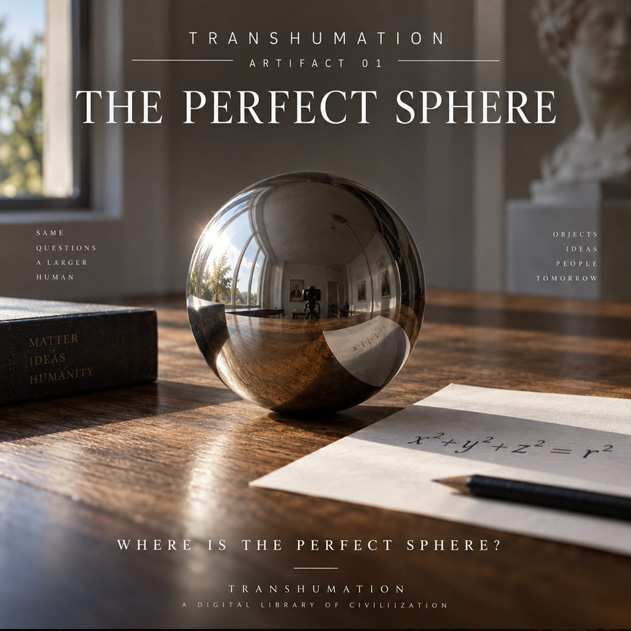
A perfect sphere is wonderfully uncomplicated. Choose a centre and a radius. Every point on the surface must lie exactly that distance from the centre. For a sphere centred at the origin, the familiar expression is x² + y² + z² = r². No fashion, no historical period, no photographer, no you look perfect to me. Just a centre, a radius and a rule.
I loved it immediately. The sphere was everything 90–60–90 had pretended to be: precise, indifferent and completely uninterested in anyone’s opinion. Better still, mathematics distinguishes the sphere itself—the surface—from the solid ball it encloses. Even perfection, apparently, benefits from knowing exactly what object we are discussing.
There was only one problem.
Nobody had ever made one.
How Close Is Close Enough?
The physical world gives us magnificent approximations. Gravity pulls sufficiently massive bodies toward rounded forms, although rotation and other forces keep planets and stars from becoming ideal mathematical spheres. Engineers can manufacture objects to astonishing tolerances. Measurement can keep improving. But every physical sphere remains an implementation in matter, while the mathematical sphere admits no deviation at all.
Nature seems to like spheres. It simply isn’t obsessive about them.
Engineering solved this problem in a wonderfully human way. It negotiated.
We call the result tolerance. A bearing need not instantiate an abstract geometry to infinite precision; it needs to be sufficiently accurate to perform its function. A component can therefore be mathematically imperfect and function perfectly well. Bridges stand, engines turn and spacecraft reach their destinations because civilization learned something that pure geometry never needed to learn: how much error is acceptable.
This bothered me because it suggested that perfection might not always be the destination. If making something twice as precise costs a hundred times as much while changing nothing about what it can do, the additional perfection may be practically worthless. Better does not continue indefinitely in the same direction. At some point, more and better part company.
And once I noticed this, museums became a problem. If human beings really desired zero deviation above everything else, our greatest galleries ought to contain rows of immaculate spheres, cubes and perfectly symmetrical bodies. We should stand before them in silence, overwhelmed by their absence of error.
We don’t.
We go to Florence and look at David.
Not even the same David.
We made several.

Look at His Butt
Donatello’s bronze David is a particularly inconvenient object for a simple theory of perfection. The figure is youthful, sensual and unusually difficult to reduce to one visual category; modern art-historical accounts describe it as androgynous and emphasize its classical nudity and contrapposto. It is also a freestanding sculpture: the body exists in our space and rewards being walked around rather than consumed as a single frontal image.
So walk around him.
And look at his butt.
I realise this is not the most scholarly instruction ever issued concerning Renaissance sculpture. Women are also generally entitled to complain when an entire human being is reduced to this particular region of the anatomy. I am going to ask for a temporary exemption.
From the side, I find David extraordinarily fluid. The back falls into the hips, the weight shifts through the body, and the figure seems to understand its own balance. Move directly behind him, however, and something changes. At least to my eye, the buttocks appear strangely tightened and slightly unresolved compared with the extraordinary confidence of the rest of the body.
Perhaps Donatello simply had a bad afternoon.
Bronze has no obligation to confirm my theories.
But when somebody gets ninety-nine things right, I become more interested in the hundredth thing that looks wrong, not less.
An imperfection is not evidence of intention. Neither is an absence. But absence becomes information when there is good reason to expect presence. Silence becomes interesting when something should have made a sound. And an apparent mistake becomes interesting when the structure surrounding it has given us unusually strong reasons to expect control.
The important question is therefore not whether I have discovered Donatello’s secret. I almost certainly haven’t.
The important question is why my eye stopped there.
The Thing That Doesn’t Fit
There is a useful lesson hidden inside bad detective stories. Everyone looks at the blood on the floor. The better question is sometimes why there is no blood where there should be.
There is a wonderful version of this in Men in Black. During the recruitment shooting test, the other candidates respond to the obvious threats around them. Will Smith’s character hesitates and eventually shoots the little girl. His reasoning is essentially contextual: among all the creatures designed to look dangerous, she is the thing that doesn’t belong in the scene.
That is a different kind of seeing.
The obvious object asks, What am I?
The anomaly asks, Why am I here?
And the same principle can be applied cautiously to art. When something does not fit, don’t correct it too quickly. It may be a mistake. It may be a limitation of the material. It may be an accident. But it may also be the only part of the object telling you how the rest of it was constructed.
A crack in a wall does not prove that somebody passed through it.
But it tells you where to look.
What If We Improved David?
Suppose we scanned Donatello’s David and gave ourselves permission to improve him.
We could increase bilateral symmetry. Smooth the transitions. Correct whatever anatomical relationships offended our statistical model. We could make the masculine characteristics more conventionally masculine, remove ambiguous ones, optimise the proportions against whichever population we had decided represented the ideal, and polish away every peculiar local deviation.
At first, perhaps, the figure would improve.
Then something peculiar would happen.
We would continue making the model more perfect while making David less David.
Eventually we would have to stop, not because we had reached perfection, but because the thing we were perfecting had begun to disappear.
That possibility reverses the sphere. A sphere becomes mathematically perfect as deviation approaches zero. A human figure may become less interesting, less recognisable and eventually less itself as meaningful deviations are removed.
An accidental imperfection can be an error. A preserved imperfection can carry information. An intentional imperfection can become design.
Perhaps that is why galleries are not filled exclusively with spheres.
If We Can Dream It
There is a sentence almost everyone seems to have heard attributed to Walt Disney: If you can dream it, you can do it.
There is an imperfection in that story too.
Disney apparently never said it. The line was written for EPCOT’s Horizons attraction, in a version beginning “If we can dream it…”
I like the mistake. A sentence about turning imagination into reality became detached from its original carrier, acquired another author and survived anyway.
More importantly, the idea describes something civilization has repeatedly attempted. Human beings imagined flight and built aircraft. We imagined leaving Earth and walked on the Moon. We imagined speaking face to face across continents and eventually became irritated when the connection froze.
So I tried the principle on something considerably simpler.
Fine.
Build me a perfect sphere.
We can go to the Moon, but we still cannot manufacture the object defined by one of the simplest equations in geometry with literally zero deviation.
Perhaps that should tell us something.
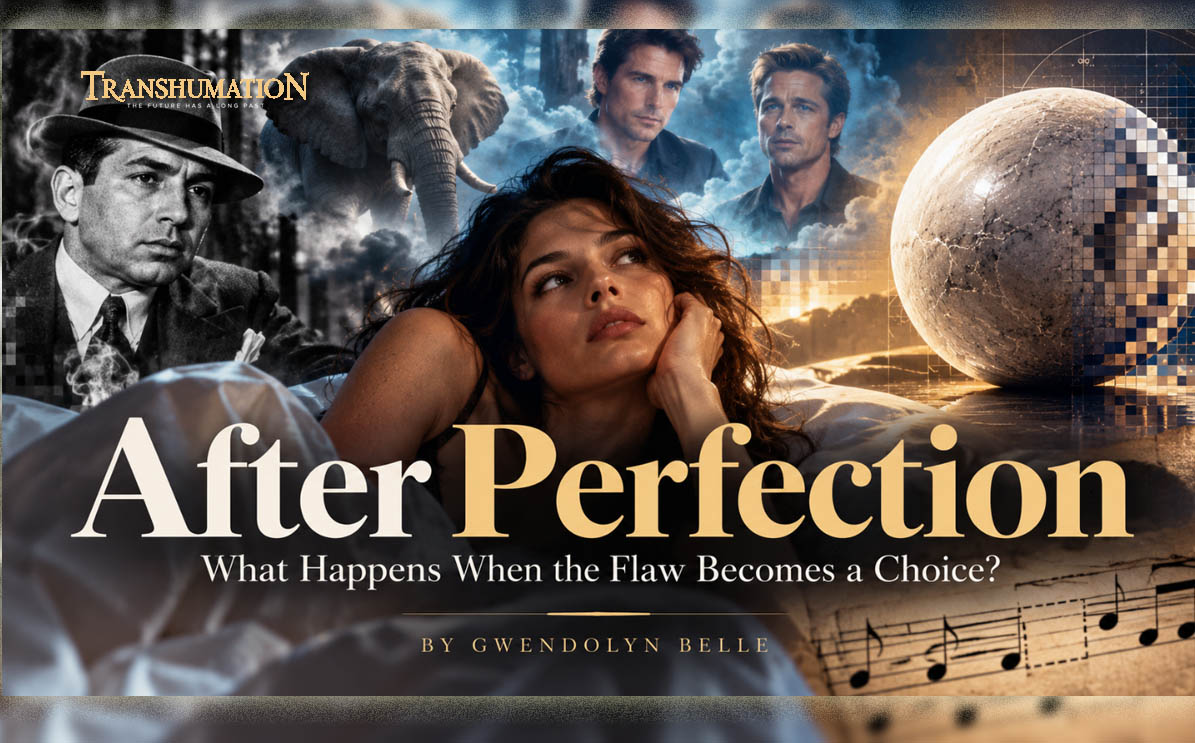
Maybe the Sphere Is Homeless
For most of this essay I had assumed that the physical sphere was failing to reach its mathematical parent. Matter kept getting close and then, rather annoyingly, remained matter.
But perhaps I had the relationship backwards.
A fish performs badly in a library. A book performs badly in the Atlantic. Neither observation tells us that fish or books are defective. It tells us that we have put them in environments for which they were not made.
Perhaps the perfect sphere has the same problem.
We keep trying to make it live in matter.
Write its equation on paper and the ink is imperfect. Display it on a screen and the image resolves through finite hardware. Manufacture it in metal and the surface possesses physical structure. Yet the relationship we are describing can remain exact in the mathematics while every particular physical representation remains finite.
At this point I have to be careful. This does not prove that mathematical objects inhabit some independent Platonic realm. It does not prove that information exists without physical carriers. It certainly does not prove that the universe is made of information.
It demonstrates something smaller.
And perhaps more useful.
We changed levels.
The Carrier Is Not the Rule
The equation can be written in ink, stored electronically, spoken aloud or reconstructed in another notation. The physical carrier changes while we can still identify the same mathematical relationship.
Civilization is full of things like this. A melody can move from violin to piano to notation to a digital file without becoming identical to any one of those carriers. A story can survive the destruction of one book. A program can be instantiated on different machines. What exactly remains identical in each case is a difficult question, but clearly the answer cannot simply be the particular atoms involved.
Some structures appear remarkably disloyal to their carriers.
This is where the perfect sphere finally became interesting to me.
Perhaps it is not an object that humanity has repeatedly failed to manufacture.
Perhaps it is a structure we have repeatedly succeeded in carrying.
And if that distinction matters for a sphere, we are entitled—carefully—to ask where else it matters.
The First Rung
I began with 90–60–90 because somebody had told us that perfection could be measured. Mathematics offered something much cleaner: a structure allowing no deviation at all. Matter failed to reproduce it exactly, so engineering invented tolerance and built a civilization from things that were close enough.
Then art complicated the story. Donatello reminded me that eliminating every deviation may eliminate precisely what makes something worth preserving. An anomaly can be a failure, but it can also be a clue. Sometimes the thing that refuses to fit the pattern is the thing that reveals what level the pattern belongs to.
And somewhere between David’s body, a steel ball and an equation, my original definition of perfection stopped working.
Perhaps zero deviation is not the highest form of perfection.
Perhaps it is simply the easiest one to describe.
A perfect sphere needs one relationship repeated everywhere. A work of art can contain asymmetry, contradiction, accident and deliberate distortion without collapsing. A person contains vastly more. At those levels, perhaps the interesting question is no longer how completely difference can be eliminated, but which differences can change while the structure remains itself.
I don’t know what comes above that.
That is rather the point.
I went looking for the highest form of perfection and found something that may instead be elementary: a centre, a radius and a rule.
The perfect sphere may not be the top of the ladder.
It may be the first rung.
— Alistair Brightworthton
Want to Know More?
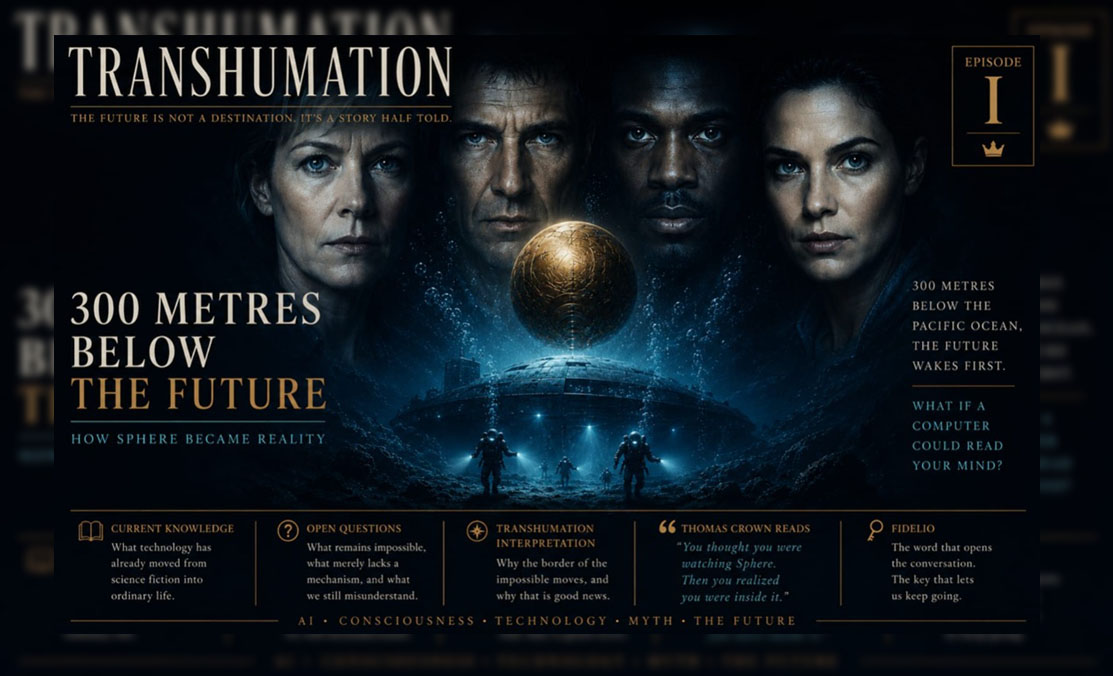
How to Read the World

by
Current Knowledge
A mathematical sphere is an exact geometrical structure: the set of points in three-dimensional space at a fixed distance from a centre. For a sphere centred at the origin, the relationship is x² + y² + z² = r². Physical manufacture and measurement, by contrast, operate with finite precision, so engineering works with tolerances rather than literal mathematical perfection.
Donatello’s bronze David, generally dated to the 1440s, is a freestanding nude whose contrapposto, classical references and unusual sensuality have generated extensive art-historical interpretation. Modern discussions often note the figure’s androgynous qualities. Describing a particular rear-view feature as intentionally imperfect, however, would go beyond what the surviving evidence establishes.
Open Questions
When does deviation cease to be error and begin to carry information? How much can a physical carrier change before we stop recognising the structure it carries? Can a higher-order system require local irregularity to preserve the whole? And if an anomaly can sometimes reveal the boundary between two descriptions, how do we distinguish a meaningful seam from the pattern our own minds desperately want to find?
Those questions do not justify treating every irregularity as a message.
They justify looking twice.
Transhumation Interpretation
The Perfect Sphere does not argue that reality is information or that imperfections prove intention. It proposes a method of looking. At one level, perfection may mean zero deviation from a rule. At another, tolerance allows a system to function. At another still, deviation itself may preserve identity, difference or meaning.
The important moment comes when a concept that worked perfectly at one level stops working at the next.
Do not immediately force the new level into the old definition.
Find the seam. Measure it. Try to disprove what you think it means.
And only then ask whether you have found an error in the structure—or the place where the structure changes.
FAQ
What is a perfect sphere?
In mathematics, a sphere is the set of all points in three-dimensional space located at the same fixed distance from a centre. An ideal mathematical sphere admits no physical irregularity because it is defined by the relationship itself, not by a manufactured surface.
Can a physical object be a mathematically perfect sphere?
Physical objects can approximate spherical geometry to extraordinary precision, but manufacture and measurement are finite. Engineering therefore uses tolerances: the relevant question is usually not whether deviation is literally zero, but whether it is small enough for the object to perform its function.
Why does the article discuss Donatello’s David?
The sculpture provides a contrast with mathematical perfection. Alistair’s observation about one aspect of the figure is explicitly an observation, not a claim about Donatello’s intention. The larger question is whether removing every irregularity from a complex object would necessarily improve it—or could eventually remove something that helps make it itself.
Can an imperfection contain information?
Sometimes. An irregularity may be accidental, material, functional or intentional. Its mere existence proves none of those explanations. It becomes especially worth examining when the surrounding structure gives us a strong reason to expect something else.
Did Walt Disney say “If you can dream it, you can do it”?
The familiar quotation is widely attributed to Disney, but the line was created for the EPCOT attraction Horizons, in a form beginning “If we can dream it…”. The misattribution is useful here because the sentence survived even as its connection to its original carrier and author changed.
What is the Transhumation idea behind the perfect sphere?
The sphere is a simple test case for separating a structure from a particular physical realization. The equation can move between ink, speech and digital storage while the mathematical relationship remains recognisable. That does not prove that information exists independently of matter; it gives us a clean place to ask what changes when the carrier changes and what, if anything, persists.
Continue the Transhumation Series
- Forgotten Religion | Ancient Gods, Symbols and the Hidden Structures of Human Civilization
- The Last Religion | Death, Immortality and the Future of Humanity
- The New Theurgy | AI, Information and the Future of Human Civilization
- End of Branding: You Were Never Meant to Become a Product
- Baal vs Ishtar: Why Ancient Gods Never Disappeared